Quranic Answer
The Holy Quran is a profound text that serves not only as a religious guide but also as a reflection on human emotions and psychological well-being. Across its verses, it delves into various aspects of human feelings, ranging from love and compassion to anger and despair. Understanding these emotional dimensions within the Quran can shed light on personal behavior, societal norms, and the human experience overall. One of the critical discussions about human emotions found in the Quran relates to the concept of the heart. Not the physical organ, but rather the metaphorical heart symbolizes wisdom, emotional depth, and spiritual consciousness. In Surah Al-Baqarah, verse 74, Allah states, 'Then their hearts became hard like rocks.' This poignant image illustrates how emotional numbness can arise when individuals distance themselves from their faith and spiritual practices. A hardened heart reflects a state of emotional detachment that can lead to insensitivity towards oneself and others. Many people either consciously or unconsciously suppress their emotions due to various social, psychological, or personal reasons. The Quran acknowledges this, urging believers to maintain a connection with God to keep their hearts soft and receptive. The state of the heart is crucial for emotional well-being. The Quran presents various ways to nourish the heart. By engaging with the teachings of Islam, reflecting on one's actions, and remembering Allah through prayers and supplications, individuals can experience emotional growth. Neglecting these practices often leads to a hardening of the heart, resulting in a lack of compassion and empathy. For example, the verse highlights that those who forget the remembrance of Allah can gradually lose their ability to connect with their feelings and the emotions of others. This loss may manifest in various forms, including chronic stress, anxiety, depression, or a general sense of isolation. Moreover, the Quran emphasizes the importance of gratitude in sustaining emotional health. In Surah Ar-Rahman, verses 13 and 14, it states, 'So which of the favors of your Lord would you deny?' This verse serves as a powerful reminder that acknowledging and appreciating the blessings in one's life fosters an emotional resilience and a proactive approach to life. Cultivating gratitude can transform one’s emotional landscape, enhancing feelings of joy, contentment, and overall well-being. When individuals regularly practice gratitude, they foster positive emotional states which counterbalance any negative feelings they might encounter. Furthermore, the Quran encourages emotional expression through kindness and forgiveness. Acts of kindness not only uplift others but also benefit the giver. In Matthew 5:7, we find a parallel sentiment: 'Blessed are the merciful, for they shall obtain mercy.' This highlights the reciprocal nature of kindness. By treating others with compassion, we create an environment where empathy flourishes. The practice of forgiveness is further emphasized in numerous verses, where believers are reminded that harboring grudges can lead to emotional distress and suffering. The Quran advocates for reconciliation and the release of negative emotions, which is vital for maintaining emotional balance. In a world filled with chaos and challenges, the teachings of the Quran serve as a guiding light. It reminds us that nurturing our emotional health is as important as fulfilling our spiritual obligations. Maintaining a continuous connection with God—through prayer, self-reflection, and gratitude—is fundamental for keeping our emotions alive. The Quran teaches that emotional well-being is profoundly linked to our relationship with the divine. By adhering to these teachings, we foster an environment where emotional growth and fulfillment is possible. In addition, engaging in community and building social connections is also emphasized in the Quran. Connection with others helps to alleviate feelings of loneliness and despair. The act of coming together for communal prayers fosters a sense of belonging and shared purpose, which in turn nurtures our emotional health. The importance of community as a support system cannot be overstated; collective worship and shared experiences contribute significantly to an individual’s well-being. Moreover, the Quran recognizes the impact of social justice on emotional health. When injustices prevail in society, they lead to widespread feelings of anxiety, discontent, and hopelessness. The Quran calls upon believers to advocate for justice and equity, aligning social responsibility with emotional well-being. When individuals see injustice and work towards remedying it, they not only uplift themselves but also inspire hope and resilience in others. This makes the Quran not only a spiritual guide but also a social reference, stressing the importance of emotional health in social contexts. In conclusion, the Quran offers invaluable insights into the realm of human emotions. It highlights the profound connection between spirituality and emotional well-being. Whether through cultivating gratitude, choosing kindness and forgiveness, maintaining a relationship with Allah, or advocating for social justice, these teachings come together to create a harmonious emotional landscape. In essence, a true understanding of one’s feelings and emotions as articulated in the Quran enables a more compassionate and fulfilled life. Thus, believers are encouraged to embrace their emotions fully and maintain their spiritual ties, ensuring that their hearts do not harden but remain soft, resilient, and capable of experiencing the full spectrum of human emotions.
Related Verses
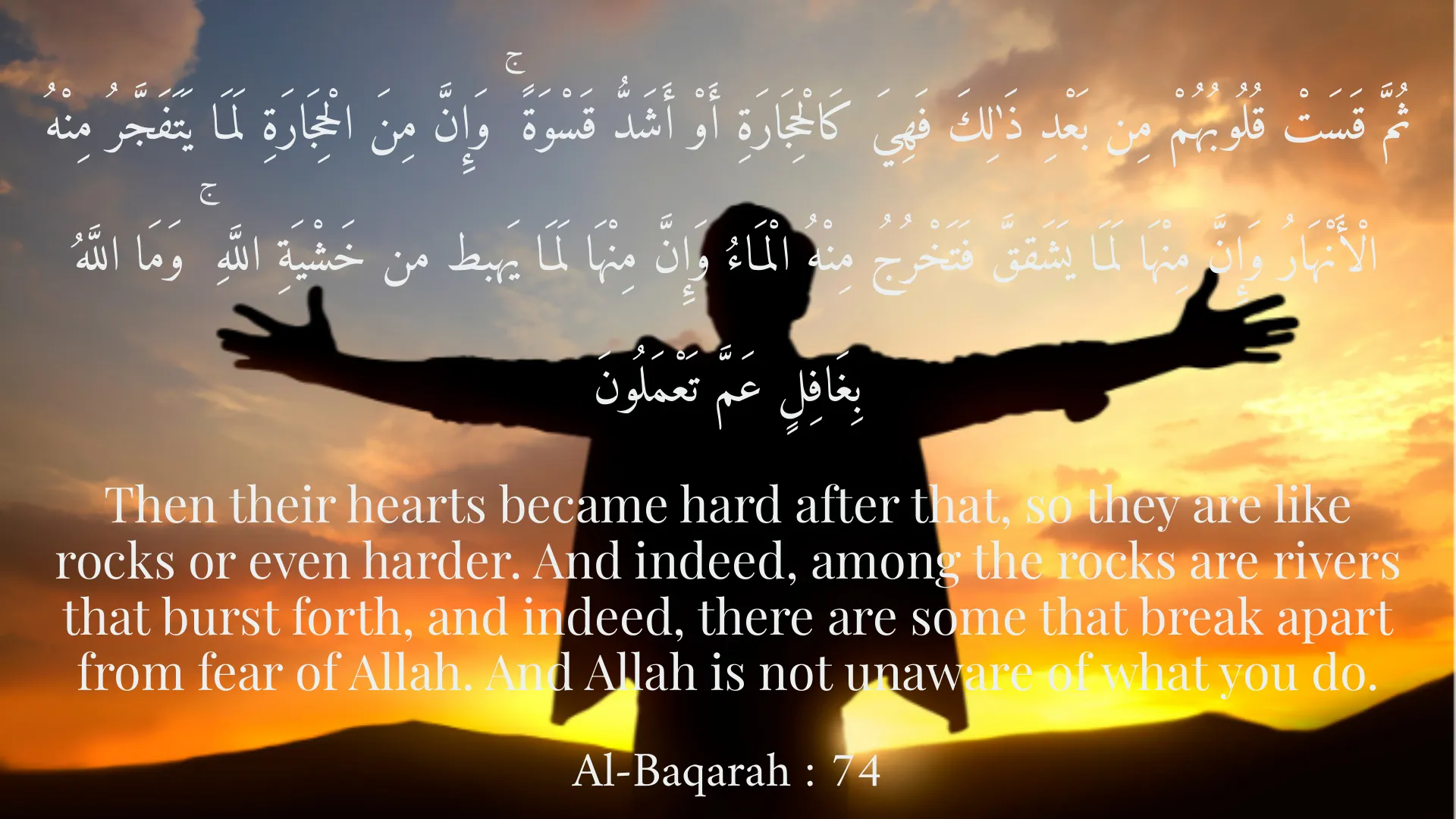
ثُمَّ قَسَتْ قُلُوبُهُمْ مِن بَعْدِ ذَٰلِكَ فَهِيَ كَالْحِجَارَةِ أَوْ أَشَدُّ قَسْوَةً ۚ وَإِنَّ مِنَ الْحِجَارَةِ لَمَا يَتَفَجَّرُ مِنْهُ الْأَنْهَارُ وَإِنَّ مِنْهَا لَمَا يَشَققَّ فَتَخْرُجُ مِنْهُ الْمَاءُ وَإِنَّ مِنْهَا لَمَا يَهبط من خَشْيَةِ اللَّهِ ۚ وَمَا اللَّهُ بِغَافِلٍ عَمَّ تَعْمَلُونَ
Then their hearts became hard after that, so they are like rocks or even harder. And indeed, among the rocks are rivers that burst forth, and indeed, there are some that break apart from fear of Allah. And Allah is not unaware of what you do.
Al-Baqarah : 74
Short Story
One day, a man named Ahmad was walking in the cold winter, feeling distant from his emotions and wondering why he felt numb. He recalled the verses of the Quran and decided to fill his heart with the remembrance of God. After a while, his emotions were revived, and he returned to kindness and humanity.