Quranic Answer
The question, "Why do some people get tired of religion?" is a profound and challenging one that encompasses various dimensions of human psychology, sociology, and spirituality. The Holy Quran does not explicitly use the phrase "getting tired of religion," but it frequently addresses the reasons and factors that lead to turning away, weakening of faith, and inclination towards worldly life, which can ultimately result in such a state. Understanding these reasons from a Quranic perspective helps us comprehend the roots of this phenomenon and identify ways to counteract it. One of the primary reasons the Quran points to is the prevalence of worldly love over the Hereafter. Humans are inherently drawn to the beauties and pleasures of this world. If this inclination exceeds its bounds, and the primary goal of life shifts from seeking divine pleasure to accumulating wealth, status, and fleeting pleasures, then religion and its duties might appear burdensome and restrictive. The Quran warns against this in numerous verses, including Surah At-Tawbah, verse 38, which states: "O you who have believed, what is [the matter] with you that, when you are told to go forth in the cause of Allah, you adhere heavily to the earth? Are you satisfied with the life of this world rather than the Hereafter? But what is the enjoyment of worldly life compared to the Hereafter except a [very] little?" This verse clearly indicates that clinging to this world and preferring it over divine values makes progress on the path of religion feel heavy. When one's heart is filled with love for the world and its manifestations, there is no longer room for the light of faith and spiritual serenity, and acts of worship and religious decrees turn into dry, soulless duties that bring nothing but exhaustion and boredom. In such a state, instead of finding peace and meaning in religion, the individual views it as an obstacle to achieving their worldly goals, and gradually moves away from it. This detachment manifests as indifference, weakness, and ultimately, weariness of religion, because the spiritual source of energy and inspiration no longer functions for them and only feels like a heavy burden. Another reason is a deficiency in deep understanding and contemplation (Tadabbur) of divine verses and the wisdom of divine laws. Some individuals reduce religion to a set of dry rituals and restrictive rules, without grasping the wisdom, beauty, and depth of divine messages. The Quran repeatedly emphasizes contemplation of its verses, as in Surah Muhammad, verse 24: "Then do they not reflect upon the Qur'an, or are there locks upon [their] hearts?" A lack of contemplation and reflection on the meanings of the Quran and the conduct of the Prophets causes religion to transform from a guide for life and a source of peace into an added burden. If an individual does not understand the meaning of prayer, grasp the wisdom of fasting, or comprehend the philosophy behind divine commandments, it is natural for their performance to be difficult and tiring. Islam is in harmony with human nature, and its commandments are ordained for human growth and perfection; however, if this harmony is not understood, a sense of alienation and weariness will emerge. Religion is not merely a collection of commands, but a roadmap to true happiness, and if one does not read and understand this map, they will become lost and weary on the journey. This superficial understanding prevents one from tasting the sweetness of faith, and consequently, the individual loses motivation to continue on the path and quickly becomes disheartened. Divine trials and tribulations (Ibtila') can also be a factor in the weakening and weariness of faith, especially if an individual does not properly confront them. The Quran asserts that life is a stage for divine tests, and no one is exempt from it. Surah Al-Ankabut, verses 2 and 3 state: "Do people think that they will be left alone because they say, 'We believe,' and will not be tested? But We have certainly tested those before them, and Allah will surely make evident those who are truthful, and He will surely make evident the liars." When an individual faces life's difficulties and adversities and assumes that their faith should protect them from all hardships, they might fall into despair and hopelessness. If they lack a proper understanding of the philosophy of divine trials and do not exercise patience and reliance on God, these calamities can divert them from the path of religion, leading to feelings of exhaustion and futility. Whereas the Quran considers trials as a means of purification, strengthening faith, and growth for believers. Someone who expects to be immune from all suffering through piety, when faced with difficulties, becomes frustrated and may become "tired" and abandon the path of religion, oblivious to the fact that these very trials are stairways for the ascent of the human soul. Satan's whispers (Waswas) and carnal desires (Hawa) are another factor that can weaken faith and lead a person towards getting tired of religion. Satan is always lying in wait to mislead humanity from the straight path and to make divine commandments appear difficult and useless in their eyes. In Surah Al-Baqarah, verses 168 and 169, Allah says: "O mankind, eat from whatever is on earth [that is] lawful and good and do not follow the footsteps of Satan. Indeed, he is to you a clear enemy. He only orders you to evil and immorality and to say about Allah what you do not know." Satan attempts to discourage humans by beautifying sins and exaggerating the difficulties of religion. If an individual does not resist these temptations and succumbs to their desires, they gradually distance themselves from religion and develop feelings of weariness and disinterest, because adhering to divine boundaries becomes challenging for them, and they tend to be drawn towards false freedoms. This pull towards sin and away from spirituality automatically makes the individual flee from anything that reminds them of religious duties and responsibilities, leading to feelings of weariness and aversion. Furthermore, a lack of experiencing spiritual sweetness and tranquility can also contribute to this weariness. The Quran states that hearts find rest in the remembrance of Allah. Surah Ar-Ra'd, verse 28: "Those who have believed and whose hearts are assured by the remembrance of Allah. Unquestionably, by the remembrance of Allah hearts are assured." If an individual practices religion but this remembrance and heartfelt connection with God do not form within them, and they merely suffice with outward actions, they will not experience that inner peace and contentment. Consequently, religion will become bland and burdensome for them. Religion is a living, dynamic relationship with the Creator, not just a set of rules. If this deep connection is not established and the heart remains deprived of spiritual nourishment, an individual might feel empty and tired, eventually seeking something else to fill their inner void. This feeling of inner "emptiness," despite performing outward religious duties, is the most significant factor for weariness and discouragement from the path of spirituality. In conclusion, weariness of religion largely stems from misunderstanding, lack of depth in comprehension, dominance of worldly inclinations, and succumbing to temptations. The Quran, while explaining these reasons, also offers solutions: reliance on God, patience in trials, contemplation of verses, struggle against one's lower self, and strengthening the heartfelt connection with God through genuine remembrance and worship. These are all tools that safeguard believers against weariness and turning away from religion, helping them taste the sweetness of faith and remain steadfast on the divine path and truly enjoy it.
Related Verses
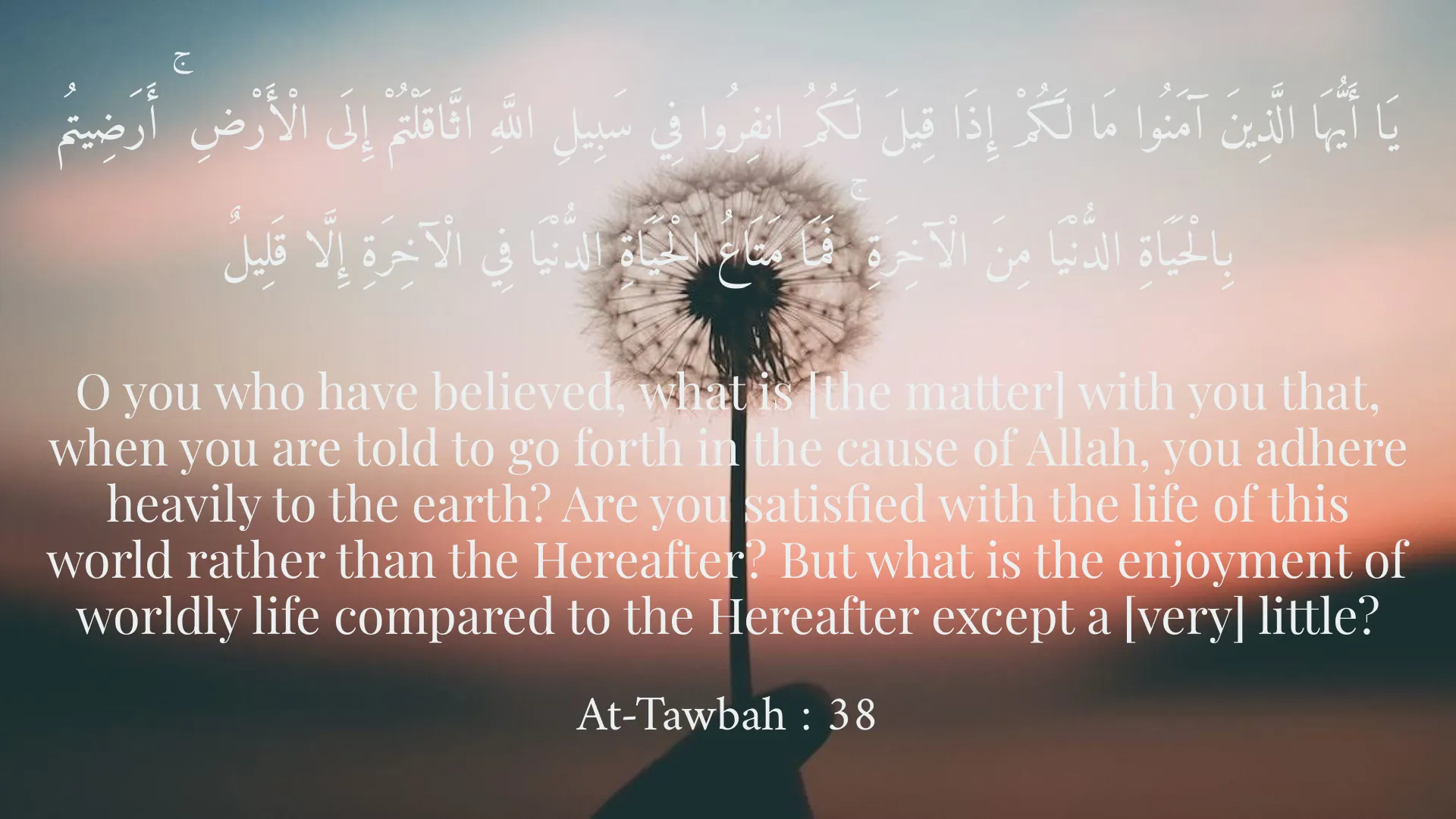
يَا أَيُّهَا الَّذِينَ آمَنُوا مَا لَكُمْ إِذَا قِيلَ لَكُمُ انفِرُوا فِي سَبِيلِ اللَّهِ اثَّاقَلْتُمْ إِلَى الْأَرْضِ ۚ أَرَضِيتُم بِالْحَيَاةِ الدُّنْيَا مِنَ الْآخِرَةِ ۚ فَمَا مَتَاعُ الْحَيَاةِ الدُّنْيَا فِي الْآخِرَةِ إِلَّا قَلِيلٌ
O you who have believed, what is [the matter] with you that, when you are told to go forth in the cause of Allah, you adhere heavily to the earth? Are you satisfied with the life of this world rather than the Hereafter? But what is the enjoyment of worldly life compared to the Hereafter except a [very] little?
At-Tawbah : 38
أَحَسِبَ النَّاسُ أَن يُتْرَكُوا أَن يَقُولُوا آمَنَّا وَهُمْ لَا يُفْتَنُونَ * وَلَقَدْ فَتَنَّا الَّذِينَ مِن قَبْلِهِمْ ۖ فَلَيَعْلَمَنَّ اللَّهُ الَّذِينَ صَدَقُوا وَلَيَعْلَمَنَّ الْكَاذِبِينَ
Do people think that they will be left alone because they say, 'We believe,' and will not be tested? But We have certainly tested those before them, and Allah will surely make evident those who are truthful, and He will surely make evident the liars.
Al-Ankabut : 2-3
الَّذِينَ آمَنُوا وَتَطْمَئِنُّ قُلُوبُهُم بِذِكْرِ اللَّهِ ۗ أَلَا بِذِكْرِ اللَّهِ تَطْمَئِنُّ الْقُلُوبُ
Those who have believed and whose hearts are assured by the remembrance of Allah. Unquestionably, by the remembrance of Allah hearts are assured.
Ar-Ra'd : 28
Short Story
It is narrated that in a time not long past, there lived a merchant named Farid, who in the early days of his endeavors, was a pious and faithful man. Every morning he would go to the mosque, and in the evenings, he would engage in remembrance and prayer, earning his livelihood through lawful means. However, with the passage of time, as his wealth increased and his trade flourished, his heart gradually inclined towards the world, and he became heedless of God's remembrance. The accumulation of wealth and worldly gatherings so engrossed him that his prayers were missed, and he abandoned reciting the Quran. He had grown weary of religious devotion and worship, viewing them as obstacles to his worldly progress and pleasures. His heart became devoid of any spiritual tranquility, and despite his vast wealth, he felt an emptiness and restlessness. One night, he dreamt that he was wandering in a dry, barren desert, and no matter how much he ran, he reached nowhere. He was thirsty and tired, burning from within. Suddenly, he heard a voice saying, "O Farid, you abandoned the water of life and pursued a mirage. The water of life was the remembrance of God and righteous deeds, which you sold for the fleeting pleasures of this world." Farid awoke with fear and trembling. From that day forward, Farid awakened from his heedless slumber and realized that true contentment lay not in accumulating wealth, but in peace of mind and connection to the infinite divine source. He returned to religion and worship, but this time with a deeper understanding and a more genuine love. He understood that whatever he spent in the way of God would never diminish but would instead be blessed. Farid's life was once again illuminated by the light of faith, and he tasted the sweetness of servitude that no worldly wealth could ever provide him.