Quranic Answer
The question of why some individuals undergo rapid transformation while others remain resistant to change requires a profound exploration of the teachings of the Holy Quran. The Quran, as a divine revelation, meticulously delves into the complex nature of human existence, the internal and external forces shaping one's character, and the factors leading to guidance and misguidance. This observed phenomenon—where some people swiftly undertake self-correction and alter their life paths, while others stubbornly cling to their ignorance or sin despite the clearest signs and reasons—is explicable from a Quranic perspective. One of the most pivotal concepts in addressing this question is the "state of the heart" and an individual's "inner capacity." The Quran frequently alludes to the condition of hearts: some are alive and vigilant, ready to embrace truth, while others are hardened, ailing, or even sealed. In Surah Al-Baqarah, verse 7, Allah states: "Allah has set a seal upon their hearts and upon their hearing, and over their vision is a veil. And for them is a great punishment." This sealing is not a divine compulsion towards error but rather a consequence of an individual's repeated choices to reject truth and turn away from divine signs. When a heart, due to arrogance, prejudice, or persistent heedlessness, deprives itself of the light of guidance, change naturally becomes difficult or impossible. Conversely, pure and receptive hearts, upon hearing a single verse, witnessing a miracle, or encountering wise counsel, quickly soften and incline towards truth. A striking example is the magicians of Pharaoh, who, upon witnessing the miracle of Moses' staff, immediately believed, and even Pharaoh's threats could not deter them from their newfound path. This demonstrates that at that moment, their hearts possessed the capacity to accept truth, and the veils were lifted from their sight. Another crucial factor is "Divine Guidance." Although humans possess free will and the choice between right and wrong rests with them, the ultimate guidance and success in transformation come from Allah Almighty. The Quran states: "Indeed, you do not guide whom you like, but Allah guides whom He wills" (Al-Qasas, verse 56). This verse does not imply that Allah guides or misguides without reason; rather, it indicates that the success of guidance and the spiritual touch of truth are in His hands. He grants this success to those who take the first step themselves, possess sincere intentions, and prepare their hearts to receive the truth. Those who change quickly are often the ones who inherently possess a hidden readiness to receive guidance, and with the first ray of divine light, a spark is ignited within them. Furthermore, "individual effort and struggle" play an immensely significant role. The Quran emphasizes that Allah does not alter the condition of any people unless they strive to change what is within themselves. "Indeed, Allah will not change the condition of a people until they change what is in themselves" (Ar-Ra'd, verse 11). This verse articulates a profound and universal divine law. Those who change quickly are usually individuals who, in their subconscious, are actively seeking truth, peace, or relief from suffering, and when they discover the path, they rush towards it with all their might. They actively strive for self-transformation. Conversely, those who lack the desire for effort and struggle, or whose pride and prejudice prevent them from seeing their weaknesses, naturally remain slow or stagnant on the path of transformation. "Internal and external obstacles" also influence the speed of change. Internal obstacles include ego, arrogance, greed, envy, and worldliness, which can strongly bind a person to their current state. Those clinging to these negative traits cannot easily step out of their comfort zone and accept change. External obstacles include environmental influences, bad company, social pressures, or even the fear of losing worldly positions. The Quran strongly forbids blind adherence to ancestors or a majority society that is on falsehood. Those who change quickly often possess the courage to relinquish worldly attachments and resist external pressures, while those who resist remain ensnared by these attachments and fears. The "depth of influence of divine verses and signs of creation" also varies. For some, a small sign in nature, an unfortunate event, or even hearing a Quranic verse is enough to remove the veils from their hearts and transform their life's direction. These individuals possess sensitive souls and awakened hearts that quickly respond to the call of their innate nature (fitra). However, for others, even great miracles and numerous warnings are ineffective because their hearts have become hardened by disbelief and sin, preventing the light of guidance from penetrating. This difference in susceptibility reflects a difference in individuals' "existential state" and "spiritual readiness." In conclusion, the variation in the speed of human change is the result of a complex interaction between internal factors (such as the heart's readiness, the degree of sincere intention, and individual effort) and external factors (such as encountering divine signs, the admonitions of prophets and divine saints), and certainly, the will and decree of Allah, who grants success and guidance to those who are worthy and prepared. The Quran invites us to reflect on these truths so that we may free ourselves from the chains of obstacles and step towards positive and perfecting changes. This requires self-awareness, pure intention, and reliance on Allah. Whoever treads this path diligently will experience quicker and deeper positive transformation within themselves.
Related Verses
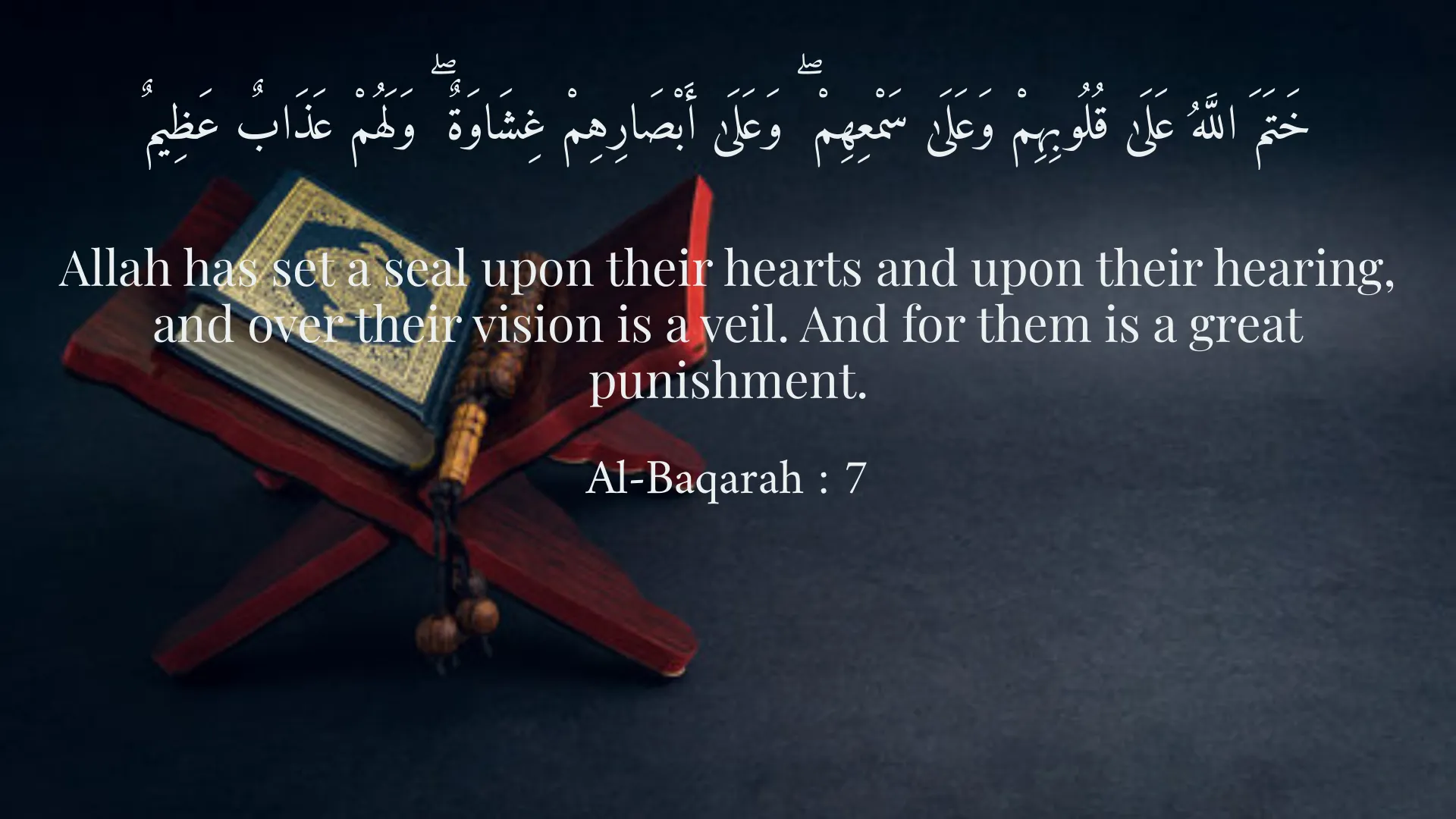
خَتَمَ اللَّهُ عَلَىٰ قُلُوبِهِمْ وَعَلَىٰ سَمْعِهِمْ ۖ وَعَلَىٰ أَبْصَارِهِمْ غِشَاوَةٌ ۖ وَلَهُمْ عَذَابٌ عَظِيمٌ
Allah has set a seal upon their hearts and upon their hearing, and over their vision is a veil. And for them is a great punishment.
Al-Baqarah : 7
وَمِنْهُم مَّن يَسْتَمِعُ إِلَيْكَ ۖ وَجَعَلْنَا عَلَىٰ قُلُوبِهِمْ أَكِنَّةً أَن يَفْقَهُوهُ وَفِي آذَانِهِمْ وَقْرًا ۚ وَإِن يَرَوْا كُلَّ آيَةٍ لَّا يُؤْمِنُوا بِهَا ۚ حَتَّىٰ إِذَا جَاءُوكَ يُجَادِلُونَكَ يَقُولُ الَّذِينَ كَفَرُوا إِنْ هَٰذَا إِلَّا أَسَاطِيرُ الْأَوَّلِينَ
And among them are those who listen to you, but We have placed over their hearts coverings, lest they understand it, and in their ears deafness. And if they should see every sign, they would not believe in it. Even when they come to you arguing with you, those who disbelieve say, 'This is not but legends of the former peoples.'
Al-An'am : 25
لَهُ مُعَقِّبَاتٌ مِّن بَيْنِ يَدَيْهِ وَمِنْ خَلْفِهِ يَحْفَظُونَهُ مِنْ أَمْرِ اللَّهِ ۗ إِنَّ اللَّهَ لَا يُغَيِّرُ مَا بِقَوْمٍ حَتَّىٰ يُغَيِّرُوا مَا بِأَنفُسِهِمْ ۗ وَإِذَا أَرَادَ اللَّهُ بِقَوْمٍ سُوءًا فَلَا مَرَدَّ لَهُ ۚ وَمَا لَهُم مِّن دُونِهِ مِن وَالٍ
For him are successive [angels] before him and behind him who protect him by the decree of Allah. Indeed, Allah will not change the condition of a people until they change what is in themselves. And when Allah intends for a people ill, there is no repelling it. And there is not for them besides Him any patron.
Ar-Ra'd : 11
إِنَّكَ لَا تَهْدِي مَنْ أَحْبَبْتَ وَلَكِنَّ اللَّهَ يَهْدِي مَن يَشَاءُ ۚ وَهُوَ أَعْلَمُ بِالْمُهْتَدِينَ
Indeed, you do not guide whom you like, but Allah guides whom He wills. And He is most knowing of the [rightly] guided.
Al-Qasas : 56
Short Story
One day, in a king's court, there were two advisors. The king consulted a wise sage, and the sage said, "O King! The prosperity and misfortune of people depend on the purity of their hearts and the sincerity of their intentions. Whoever has a heart open to the light of truth will drink the words of truth like honey and benefit from them; but for one whose heart is veiled by ignorance, thousands of admonitions are fruitless." One of the advisors, a man of good nature, immediately reflected upon hearing these words and decided from that day forth to keep his heart pure and ready to accept any truth. He swiftly transformed and became a trustworthy advisor to the king and a helper to the people. However, the other advisor, whose heart was filled with arrogance and envy, mocked the sage's words, saying, "These are the words of dervishes and are useless for governing a kingdom." Not only did he not change, but his malice grew, and eventually, due to his ill-will and pride, he was banished from the court. The sage smiled and said, "Indeed, hearts are like different vessels; some are filled with a single gesture, while others are not quenched even by an ocean of knowledge."