Quranic Answer
The Quran, the holy book of Islam, is not merely a scriptural text but a comprehensive guide to the moral and spiritual life of its followers. Among the several profound concepts it explores, one particularly noteworthy theme is that of the "hardness of heart." This principle is deeply rooted in the awareness of servitude to Allah and responding sensitively to His divine signs. In contemporary discourse, the hardness of heart can be understood as an emotional or spiritual numbness that deprives individuals of their capacity for compassion, understanding, and faith. In its essence, the Quran encourages a state of consciousness where the heart remains pliable and receptive to divine guidance. To delve into the nature of hardness of heart, we need to consider the Quranic depiction of such a spiritual condition. Allah states in Surah An-Najm (Chapter 53, Verse 32), "Have you seen those who purify themselves, while Allah alone purifies whom He wills?" This verse alludes to the misguided notion of self-purification that many individuals harbor. By attempting to cleanse themselves through their actions without recognizing that true purification comes from Allah, these individuals embody a form of self-righteousness that leads to the hardening of their hearts. The act of ignoring divine signs and failing to acknowledge God's omnipotence contributes to a disconnection from the grace and mercy that can soften the heart. In another crucial verse, Surah Al-Baqarah (Chapter 2, Verse 74) states, "Then, after that, your hearts became hardened." This statement is a reminder of how humans can become subject to the hardness of heart, especially when they persistently fail to heed the divine messages that are meant to guide them. The hardening of the heart may stem from spiritual vulnerability, continuous transgression, and a consistent failure to remember Allah's verses. It creates a vicious cycle where the individual’s disobedience leads to a further distancing from their creator. Historically, the Quran offers various narratives of communities that faced dire consequences due to the hardness of heart. For instance, the people of Prophet Musa (Moses) witnessed numerous miracles, yet they continued to defy Allah's directives. Their persistent refusal to submit led to spiritual blindness and a hardened state of heart that ultimately resulted in their downfall. Such depictions serve as warnings for contemporary believers, highlighting the consequences of neglecting divine reminders. In the face of this potentially harrowing reality, the Quran also provides pathways to soften the heart and heal spiritual wounds. Acts of kindness, charity (Sadaqah), and sincere repentance (Tawbah) are pivotal practices that counteract the hardness of heart. Engaging in charity not only aids those in need but also fosters a sense of compassion and connectedness. It is an act that mirrors God's mercy towards His creation, thus encouraging the believer to cultivate a more empathetic heart. Likewise, repentance allows an individual to reconnect with Allah and seek forgiveness for their shortcomings. This process of returning to Allah and asking for pardon is a powerful means of softening one's heart, as it signifies humility and acknowledgment of one’s faults. Moreover, regular participation in prayers (Salah) and remembrance of Allah (Dhikr) is essential for maintaining a soft heart. These acts serve to continuously remind the believer of Allah's presence and omnipotence. Engaging in prayer allows for reflection and personal contact with the divine, acting as a spiritual balm that soothes the heart. Similarly, engaging in Dhikr can help center the mind and redirect the focus towards appreciation of God's attributes and guidance. In essence, these practices sustain a consciousness of servitude that aids in warding off the hardness of heart. Reflections on Quranic verses also play a crucial role in this journey. By contemplating the meanings and implications of the Quran, individuals can cultivate deeper understanding and awareness of Allah's messages. This reflexive engagement not only enhances one's spiritual knowledge but also strengthens the connection to God, thereby insulating against the innate tendency toward heart hardness. The Quran provides a multitude of verses that encourage believers to reflect upon themselves and the creation around them, reminding them of their purpose and connection to the divine. In conclusion, the theme of the hardness of heart found throughout the Quran serves as both a cautionary tale and a path to spiritual fulfillment. Human beings, inherently vulnerable to spiritual numbness, must remain vigilant in their efforts to connect with Allah through acts of kindness, prayer, remembrance, and reflection. By actively practicing these principles, followers can soften their hearts, enhance their capacities for empathy and understanding, and ultimately strengthen their relationship with Allah. As the Quran illustrates, hearts, when left neglected, can become hardened; however, the grace and mercy of Allah, accessed through sincere devotion and actions, can continuously rejuvenate and enlighten the human spirit.
Related Verses
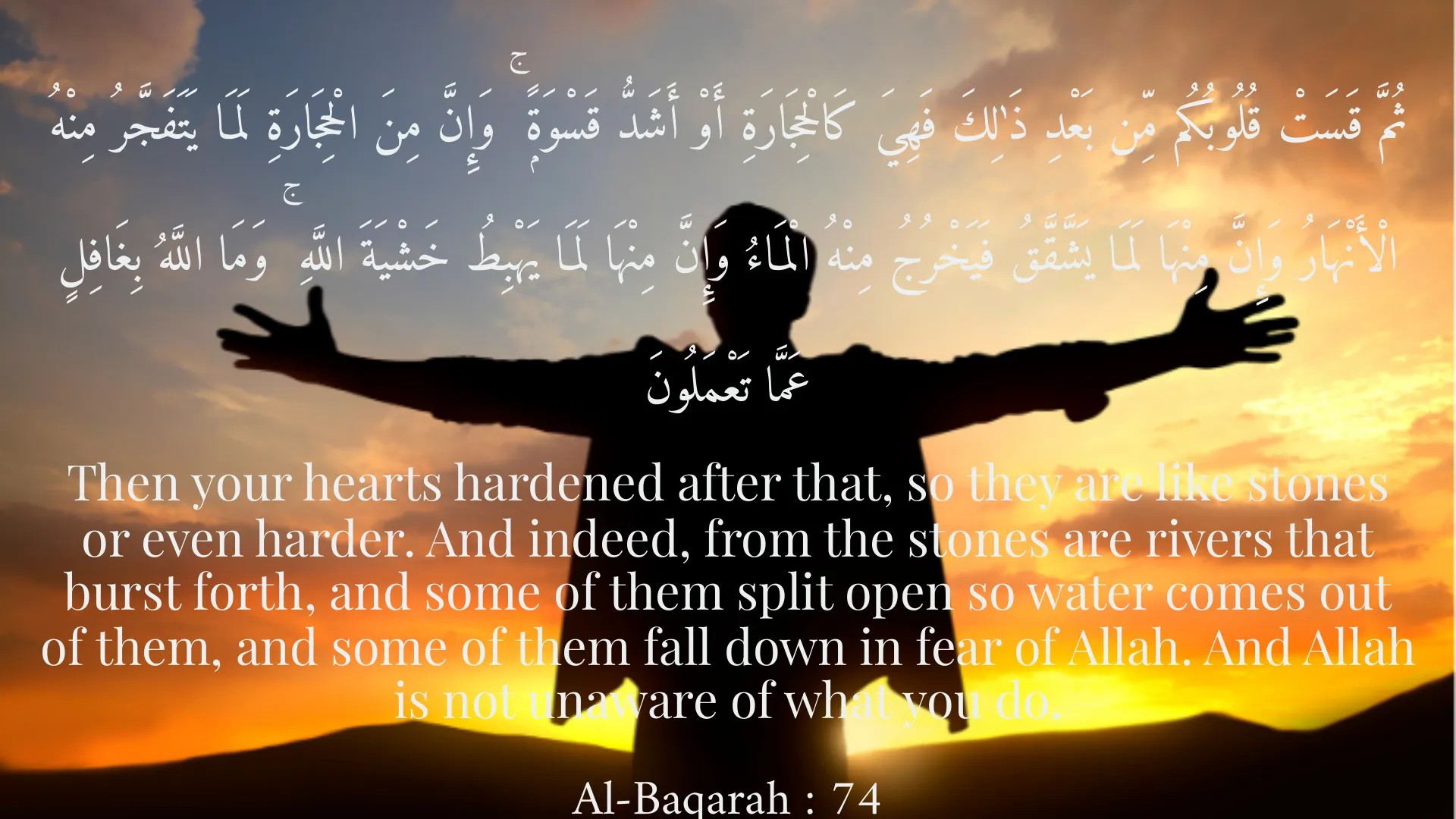
ثُمَّ قَسَتْ قُلُوبُكُم مِّن بَعْدِ ذَٰلِكَ فَهِيَ كَالْحِجَارَةِ أَوْ أَشَدُّ قَسْوَةًۭ ۚ وَإِنَّ مِنَ الْحِجَارَةِ لَمَا يَتَفَجَّرُ مِنْهُ الْأَنْهَارُ وَإِنَّ مِنْهَا لَمَا يَشَّقَّقُ فَيَخْرُجُ مِنْهُ الْمَاءُ وَإِنَّ مِنْهَا لَمَا يَهْبِطُ خَشْيَةَ اللَّهِ ۚ وَمَا اللَّهُ بِغَافِلٍ عَمَّا تَعْمَلُونَ
Then your hearts hardened after that, so they are like stones or even harder. And indeed, from the stones are rivers that burst forth, and some of them split open so water comes out of them, and some of them fall down in fear of Allah. And Allah is not unaware of what you do.
Al-Baqarah : 74
أُو۟لَـٰئِكَ أَخْمَتُ قُلُوبُهُمْ
They are those whose hearts have become hard.
An-Najm : 32
Short Story
Once upon a time in a small village, there lived a man named Ahmad. He was a good person but gradually became hardened of heart, forgetting about God. One day, while walking, he encountered a hungry child. Remembering the verses of the Quran, he decided to help the child. By doing this good deed, Ahmad felt a renewed sense of purpose and realized that Allah was always with him. From that day on, he dedicated himself to remembering God and doing good deeds for others, transforming his life completely.