Quranic Answer
Your question delves into a profound aspect of the human relationship with the Divine, touching upon a critical dimension of faith. In Islamic teachings, particularly within the Holy Quran, both the concept of 'fear of God' (Taqwa) and 'love of God' (Mahabbah) are extensively addressed. However, these two notions are not contradictory; rather, they are complementary and essential components of a complete spiritual journey. When someone fears God but does not love Him, it often signifies an incomplete or superficial understanding of the Divine essence and the nature of the human relationship with the Creator. The Islamic concept of 'fear of God,' or 'Taqwa,' does not refer to the terror one might feel towards a tyrant or an oppressive ruler, a fear that paralyzes or generates resentment. Instead, Taqwa signifies vigilance, mindfulness, piety, and a conscious avoidance of anything that might incur divine displeasure. This fear is rooted in respect and awe for God's boundless majesty, power, and wisdom. Simultaneously, it is a fear born of awareness regarding one's responsibilities to the Creator. A person possessing Taqwa fears displeasing God, not out of dread of His punishment alone, but out of a deep concern for damaging their precious relationship with their Lord or falling short of His immense grace and mercy. This type of fear serves as a profound motivator for performing good deeds and refraining from sins, as one continuously strives to remain on the path of divine pleasure and avoid deviation. So, why might some individuals stop at this stage of fear and fail to progress to the stage of genuine love? 1. Misconception of Divine Attributes: A primary reason is an incomplete or imbalanced understanding of God's attributes. The Quran introduces Allah with numerous names and attributes: He is Al-Rahman (The Most Merciful) and Al-Rahim (The Especially Merciful), but also Al-Shadid al-Iqab (Severe in Punishment). He is Al-Ghafur (The Oft-Forgiving) and Al-Wadud (The Most Loving), yet also Al-Qahhar (The Subduer) and Al-Jabbar (The Compeller). If an individual focuses exclusively on God's attributes of power, justice, and wrath, while neglecting His attributes of mercy, forgiveness, grace, and love, then fear naturally dominates their heart, leaving little room for love to blossom. True faith requires a balance between 'Khawf' (fear of God's justice) and 'Raja'' (hope in God's mercy). A genuine believer fears divine retribution but is equally hopeful of divine forgiveness and boundless grace, and it is this hope that ignites the flame of love within their heart. Without understanding the depth and breadth of God's mercy, true love cannot take root. 2. Focus on Rituals and Superficial Aspects of Religion: Sometimes, an individual's religious education or experiences overly emphasize the performance of rituals and adherence to outward religious laws, neglecting the spiritual and mystical dimension of the relationship with God. Religion is not merely a collection of dos and don'ts; it is a path to establishing a deep, heartfelt, and loving connection with the Creator of the universe. If someone performs acts of worship solely out of fear of Hellfire or merely to gain entrance into Paradise, and these actions do not emanate from the depths of their being, genuine love for God will not develop. In such a scenario, God might be perceived merely as a powerful legislator rather than a compassionate and loving Beloved. 3. Lack of Contemplation on Divine Blessings: One of the most effective ways to cultivate love for God is through reflection and contemplation on His countless blessings. From the perfect creation of humanity to the provision of sustenance, guidance, health, family, and all the myriad bounties of life – all are manifestations of God's grace and generosity. If an individual remains oblivious to these blessings and takes them for granted, the sense of gratitude, and consequently, love for the source of these blessings, will not grow within them. The Quran repeatedly invites humanity to ponder upon creation and divine blessings to lead them towards greater knowledge and love of God. 4. Impact of Sins and Negligence: Sins and excessive attachment to worldly desires can create a veil between a person and God. When the human heart becomes preoccupied with material pursuits and fleeting worldly pleasures, the light of divine love within it diminishes. Sin not only increases the fear of punishment but also distances the individual from God, causing them to lose the spiritual sweetness of closeness to Him. This distance reduces love, leaving only the shadow of fear. 5. Satanic Whisperings: Satan constantly strives to lead humanity astray. One of his primary methods is to exaggerate God's wrathful attributes and instill despair and hopelessness in the human heart. By whispering that one's sins are too great to be forgiven, Satan attempts to sever the human connection of hope and love with God, thereby trapping the individual solely within the confines of fear of punishment. The Holy Quran emphasizes this essential balance: In Surah Al-Baqarah, Verse 165, Allah states: "And [yet], among the people are those who take other than Allah as equals [to Him]. They love them as they should love Allah. But those who believe are stronger in love for Allah." This verse clearly indicates that love for Allah is the highest degree of affection, and true believers possess the strongest love for their Lord. Furthermore, in Surah Al-Ma'idah, Verse 54, it is mentioned: "O you who have believed, whoever of you reverts from his religion – Allah will bring forth [in place of them] a people He loves and who love Him." This verse describes a reciprocal relationship of profound love, where Allah loves His servants, and His servants, in turn, love Him. This mutual love transcends mere fear. In conclusion, fear (Taqwa) and love for God are two sides of the same coin. The fear of God should be a fear born of reverence, mindfulness, and avoidance of ingratitude, paving the way for deeper love. When a person achieves a true understanding of God's mercy, forgiveness, beauty, and grandeur, their fear of disobedience and separation from the Beloved will be perfected, accompanied by an intense love and yearning for closeness and His pleasure. It is then that worship transforms from a mere obligation into a spiritual delight, and from a heavy burden into a loving ascent. Therefore, fear without love is an incomplete state that calls for a deeper understanding and a heartfelt surrender to the boundless essence of the Divine.
Related Verses
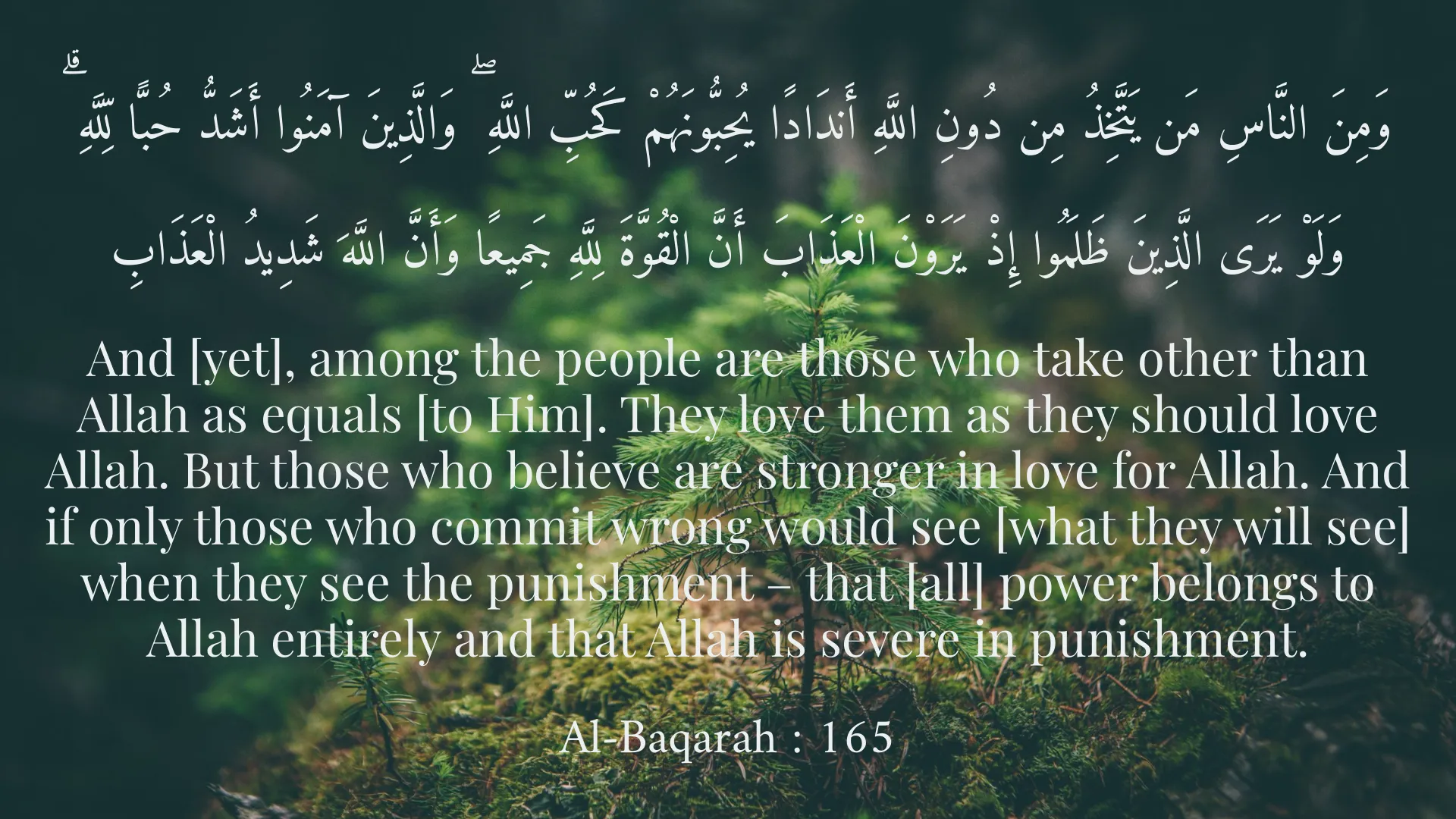
وَمِنَ النَّاسِ مَن يَتَّخِذُ مِن دُونِ اللَّهِ أَندَادًا يُحِبُّونَهُمْ كَحُبِّ اللَّهِ ۖ وَالَّذِينَ آمَنُوا أَشَدُّ حُبًّا لِّلَّهِ ۗ وَلَوْ يَرَى الَّذِينَ ظَلَمُوا إِذْ يَرَوْنَ الْعَذَابَ أَنَّ الْقُوَّةَ لِلَّهِ جَمِيعًا وَأَنَّ اللَّهَ شَدِيدُ الْعَذَابِ
And [yet], among the people are those who take other than Allah as equals [to Him]. They love them as they should love Allah. But those who believe are stronger in love for Allah. And if only those who commit wrong would see [what they will see] when they see the punishment – that [all] power belongs to Allah entirely and that Allah is severe in punishment.
Al-Baqarah : 165
يَا أَيُّهَا الَّذِينَ آمَنُوا اتَّقُوا اللَّهَ حَقَّ تُقَاتِهِ وَلَا تَمُوتُنَّ إِلَّا وَأَنتُم مُّسْلِمُونَ
O you who have believed, fear Allah as He should be feared and do not die except as Muslims [in submission to Him].
Al-Imran : 102
يَا أَيُّهَا الَّذِينَ آمَنُوا مَن يَرْتَدَّ مِنكُمْ عَن دِينِهِ فَسَوْفَ يَأْتِي اللَّهُ بِقَوْمٍ يُحِبُّهُمْ وَيُحِبُّونَهُ أَذِلَّةٍ عَلَى الْمُؤْمِنِينَ أَعِزَّةٍ عَلَى الْكَافِرِينَ يُجَاهِدُونَ فِي سَبِيلِ اللَّهِ وَلَا يَخَافُونَ لَوْمَةَ لَائِمٍ ۚ ذَٰلِكَ فَضْلُ اللَّهِ يُؤْتِيهِ مَن يَشَاءُ ۚ وَاللَّهُ وَاسِعٌ عَلِيمٌ
O you who have believed, whoever of you reverts from his religion – Allah will bring forth [in place of them] a people He loves and who love Him, humble toward the believers, powerful against the disbelievers; they strive in the cause of Allah and do not fear the blame of a blamer. That is the favor of Allah; He bestows it upon whom He wills. And Allah is all-Encompassing and Knowing.
Al-Ma'idah : 54
Short Story
It is narrated in Saadi's Gulistan that there was a very powerful king whose subjects all obeyed him and carried out his commands, but not out of love, rather out of fear of his severe punishments. One wise vizier said to the king, "O King, if your subjects fear you, that is your power, but if they love you, that is your justice and kindness which sustains the kingship." The king pondered the vizier's words and decided to change his approach, becoming kinder to his subjects. Gradually, he saw that the subjects' fear gave way to respect and love, and their service became heartfelt, not just out of compulsion. In this way, the king's rule benefited both the people and gained God's pleasure, for heartfelt love is more valuable than any fear.