Quranic Answer
The concept of death and the life hereafter is one of the most fundamental truths repeatedly emphasized in the Holy Quran. However, many people tend to shy away from the remembrance of death and contemplating it. This aversion to death has deep psychological and spiritual roots, some of which are addressed in the Quran. One of the primary reasons for this evasion is humanity's intense attachment to the worldly life (Dunya) and its fleeting pleasures. Humans are naturally inclined towards what is material and tangible, and the allurements of this world, including wealth, power, beauty, and status, can so engross a person that they become oblivious to the ultimate and eternal truth. The Quran repeatedly speaks about the transient nature of this world and the permanence of the Hereafter, often admonishing this excessive attachment to Dunya. Through self-deception, individuals tend to perceive their lives as very long, nurturing false hopes for a distant future in this world. This 'tul al-amal,' or prolonged hopes, distances them from the reality of death, making them believe they have ample time for repentance, rectifying mistakes, and preparing for the Hereafter. Another reason is the heedlessness (Ghaflah) that stems from worldly preoccupations. Daily routines, entertainment, and the relentless pursuit of livelihood can so immerse an individual that they find no opportunity to reflect on their ultimate destination. This heedlessness creates a veil between a person and the truth of death, preventing them from preparing for it. Satan (Shaytan) also plays a significant role in this regard. The Quran frequently mentions Satan's whispers, whose aim is to mislead humans and divert them from the remembrance of God and the Hereafter. Satan, by making false promises and embellishing the world in human eyes, pushes them towards sin and heedlessness, preventing them from thinking about the consequences of their actions. He desires for people to be so consumed by worldly pleasures that they do not even find time to contemplate death, and consequently, remain unprepared for it. Furthermore, the fear of the unknown and the dread of accountability for one's deeds are other reasons for shunning the remembrance of death. Death is a gateway to a realm of which humans have no direct experience. This unfamiliarity can inherently be frightening. Moreover, for those who have performed few good deeds or committed many sins, death signifies facing divine accountability and the repercussions of their actions. This fear of punishment, or of losing the chance to make amends, leads individuals to prefer not to dwell on this grim reality. The Quran repeatedly highlights the consequences of sin and the importance of repentance and returning to God, encouraging believers to hold themselves accountable before divine reckoning. Finally, the remembrance of death can be bitter and sorrowful, as it reminds individuals of losing loved ones and leaving behind all that they have acquired in this world. This emotional aspect also leads some people to prefer avoiding this thought to escape its grief and sadness. However, in Islamic teachings, the remembrance of death is not merely a deterrent or a frightening factor but is presented as an awakening and an impetus for improving life and performing righteous deeds. A person who remembers death is less enslaved by the allure of the world, thinks more about the Hereafter, hastens to do good, and shuns sins. For this reason, the Quran and the Sunnah of the Prophet (PBUH) constantly advise Muslims not to be heedless of death, considering it a bridge to eternal felicity. This reminder helps individuals properly set their life priorities and understand that the ultimate purpose of creation is not merely to enjoy this world, but to prepare for an everlasting life in the proximity of divine mercy. Thus, fleeing from the remembrance of death is, in essence, fleeing from an unavoidable truth and losing an opportunity for spiritual growth and perfection.
Related Verses
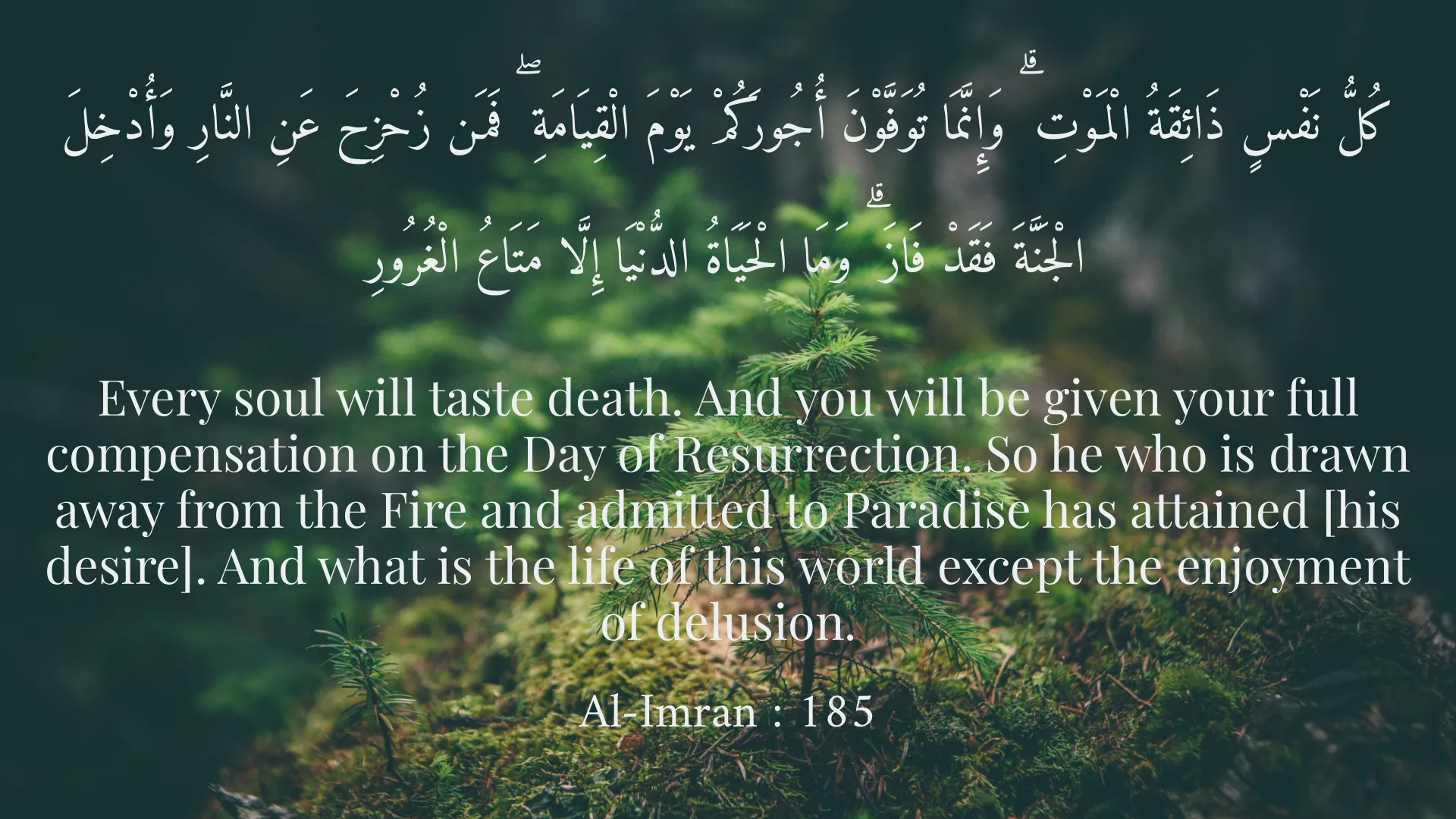
كُلُّ نَفْسٍ ذَائِقَةُ الْمَوْتِ ۗ وَإِنَّمَا تُوَفَّوْنَ أُجُورَكُمْ يَوْمَ الْقِيَامَةِ ۖ فَمَن زُحْزِحَ عَنِ النَّارِ وَأُدْخِلَ الْجَنَّةَ فَقَدْ فَازَ ۗ وَمَا الْحَيَاةُ الدُّنْيَا إِلَّا مَتَاعُ الْغُرُورِ
Every soul will taste death. And you will be given your full compensation on the Day of Resurrection. So he who is drawn away from the Fire and admitted to Paradise has attained [his desire]. And what is the life of this world except the enjoyment of delusion.
Al-Imran : 185
اعْلَمُوا أَنَّمَا الْحَيَاةُ الدُّنْيَا لَعِبٌ وَلَهْوٌ وَزِينَةٌ وَتَفَاخُرٌ بَيْنَكُمْ وَتَكَاثُرٌ فِي الْأَمْوَالِ وَالْأَوْلَادِ ۖ كَمَثَلِ غَيْثٍ أَعْجَبَ الْكُفَّارَ نَبَاتُهُ ثُمَّ يَهِيجُ فَتَرَاهُ مُصْفَرًّا ثُمَّ يَكُونُ حُطَامًا ۖ وَفِي الْآخِرَةِ عَذَابٌ شَدِيدٌ وَمَغْفِرَةٌ مِّنَ اللَّهِ وَرِضْوَانٌ ۚ وَمَا الْحَيَاةُ الدُّنْيَا إِلَّا مَتَاعُ الْغُرُورِ
Know that the life of this world is only amusement and diversion and adornment and boasting among yourselves and competition in increase of wealth and children - like the example of a downpour whose resulting plant growth pleases the disbelievers; then it dries and you see it [become] yellow; then it becomes [scattered] debris. And in the Hereafter is severe punishment and forgiveness from Allah and approval. And what is the life of this world except the enjoyment of delusion.
Al-Hadid : 20
إِنَّ الَّذِينَ لَا يَرْجُونَ لِقَاءَنَا وَرَضُوا بِالْحَيَاةِ الدُّنْيَا وَاطْمَأَنُّوا بِهَا وَالَّذِينَ هُمْ عَنْ آيَاتِنَا غَافِلُونَ
Indeed, those who do not expect the meeting with Us and are satisfied with the life of this world and feel secure therein and those who are heedless of Our signs -
Yunus : 7
Short Story
It is said that in ancient times, there was a king who was diligently occupied with accumulating treasures and jewels. He was so engrossed in worldly pleasures that he never thought of departing from this transient abode. One day, as he sat on his palace balcony gazing at his lush gardens, a pious dervish passed by. The king, out of pride, asked, "O dervish, in this fleeting world, what remains for you?" The dervish replied with a calm smile, "O king, what remains for me is that from which you flee, and what you seek is that which you will lose. I have made the remembrance of death my provision for the journey, while you have chosen heedlessness towards it." The king pondered over these words and realized how attachment to this fleeting world blinds a person to eternal truth, and that only the remembrance of death can awaken a person to prepare for the journey to the Hereafter.