Quranic Answer
The Holy Quran, a divine guide for humanity, delves deeply into the essence of human nature and its inclinations. While the Quran does not explicitly state the phrase “some people do not want to change,” it profoundly elaborates on various human traits and conditions that lead to resistance towards truth, guidance, and self-improvement. These underlying factors are the root causes of an individual’s unwillingness to embrace positive and constructive transformation. Indeed, inner change and development towards perfection are central themes in the Quranic message, and resistance to such change is considered a primary obstacle to spiritual and moral growth. To understand this resistance, we must delve into the depths of the human psyche and the influence of internal and external factors from a Quranic perspective. One of the most prominent reasons the Quran highlights for rejecting change and truth is arrogance and pride (kibr). Iblis (Satan) was the first being to defy God's command out of arrogance, refusing to prostrate before Adam. This defiance was not due to ignorance but stemmed from self-aggrandizement and a sense of superiority, which prevented him from accepting the truth. Pharaoh serves as another prime example of arrogance; despite witnessing clear miracles, he adamantly refused to accept Moses's call and change his ways. Arrogance acts as a formidable veil over one's intellect and heart, obscuring truths and preventing the acknowledgment of mistakes. An arrogant person believes they do not need guidance and stubbornly clings to their own opinions, even if those opinions lead them astray. This trait not only prevents personal change but also makes individuals resistant to environmental changes, robbing them of the flexibility necessary for survival and progress. The Quran repeatedly warns about the fate of the arrogant, describing their path as one leading to perdition. This self-centered characteristic is a serious impediment to individual and societal development, as arrogant individuals miss opportunities for learning and advancement, remaining in a state of intellectual stagnation. Another significant factor is blindly following ancestors and false traditions (taqlid al-abaa). Many previous nations resisted divine prophets, asserting, “We found our fathers upon this way, and we are following in their footsteps” (Al-Baqarah: 170). This uncritical imitation, devoid of reflection and reasoning, forms a major barrier to accepting truth and changing for the better. Due to habit and attachment to inherited customs, people become unwilling to critically examine them, closing their eyes to new truths. This resistance to change often arises from a fear of the unknown or the apprehension of losing identity and social status intertwined with old traditions. Such individuals prefer to remain within the safe confines of their habits rather than expose themselves to new ideas and methods that might disturb their comfort. The Quran condemns such blind imitation, inviting humans to ponder and reflect on God's signs and creation, so they may choose their path with insight and awareness. This type of resistance not only hinders individual progress but also traps society in a cycle of repetition and stagnation. Following vain desires and excessive attachment to worldly life (hawa wa hubb ad-dunya) also represents a significant impediment to change. The Holy Quran repeatedly cautions against pursuing carnal desires and fleeting worldly aspirations. Those whose sole aim is worldly pleasure, accumulation of wealth and status, and immediate gratification are unwilling to detach themselves from these material bonds to achieve perfection and divine pleasure. Change demands self-discipline, struggle against one's lower self, and sometimes foregoing immediate pleasures. However, a heart enslaved by the world and its desires prefers to remain in its current state, shying away from the difficulties of change (Al-Jathiyah: 23). Such individuals interpret reality based on their own inclinations and wishes, rather than on truth, thereby rejecting anything that conflicts with their personal interests and material pleasures. They refuse to accept truths that might compel them to alter their lifestyle or abandon undesirable habits. This attachment to the world and heedlessness of the Hereafter traps individuals in an endless cycle of unfulfilled desires, depriving them of the opportunity to reflect on higher life purposes. Hardness of hearts (qaswat al-qulub) and an unwillingness to accept truth is another factor mentioned in the Quran. Repeated sins, continuous heedlessness, and persistence in falsehood gradually harden and darken the human heart, to the extent that it loses its capacity to comprehend truth and accept guidance (Al-Ma'idah: 13). This hardening of the heart is a consequence of repeated human choices on the path of deviation, not an arbitrary fate. When the heart becomes hard, admonitions and divine verses no longer penetrate it, and the person becomes resistant to any positive change or transformation. This state is akin to arid, barren land upon which the rain of divine mercy falls, yet the water cannot penetrate. Such individuals not only lack the desire to change but sometimes adopt a hostile stance towards those seeking change and reform. This phenomenon indicates that unwillingness to change is not merely a passive choice but sometimes the result of a prolonged process of persistence in error and ignoring the calls of innate nature and reason. Finally, the Quran also refers to the sealing or veiling of hearts (khatm wa tab' ala al-qulub) (Al-Baqarah: 7). This state is a direct and inevitable consequence of an individual's persistence in disbelief, rejection of truth, and continuous defiance. It means that in response to a person's free choice to continuously deny the truth, God seals their heart so that they can no longer perceive it. This sealing is a divine retribution for those who, by their own volition, have closed the doors of guidance upon themselves. These individuals neither desire change nor acquire the ability to understand and discern the right path, precisely because they themselves chose that path. This sealing of the heart does not imply a complete deprivation of free will, but rather a natural and logical outcome of the deviant path chosen by human will. In summary, the Quranic perspective on why some people resist change stems from internal attributes and inclinations such as arrogance, blind imitation, attachment to worldly desires and passions, and ultimately, the hardening of the heart, which can lead to a divine sealing. These factors impede proper insight and the acceptance of truth, trapping individuals in a cycle of stagnation and lack of progress. Nevertheless, the Quran always keeps the door of repentance and return open, fostering hope for change and reform for those who sincerely seek it. This path requires self-awareness, introspection, and a genuine desire to embark on the path of truth.
Related Verses
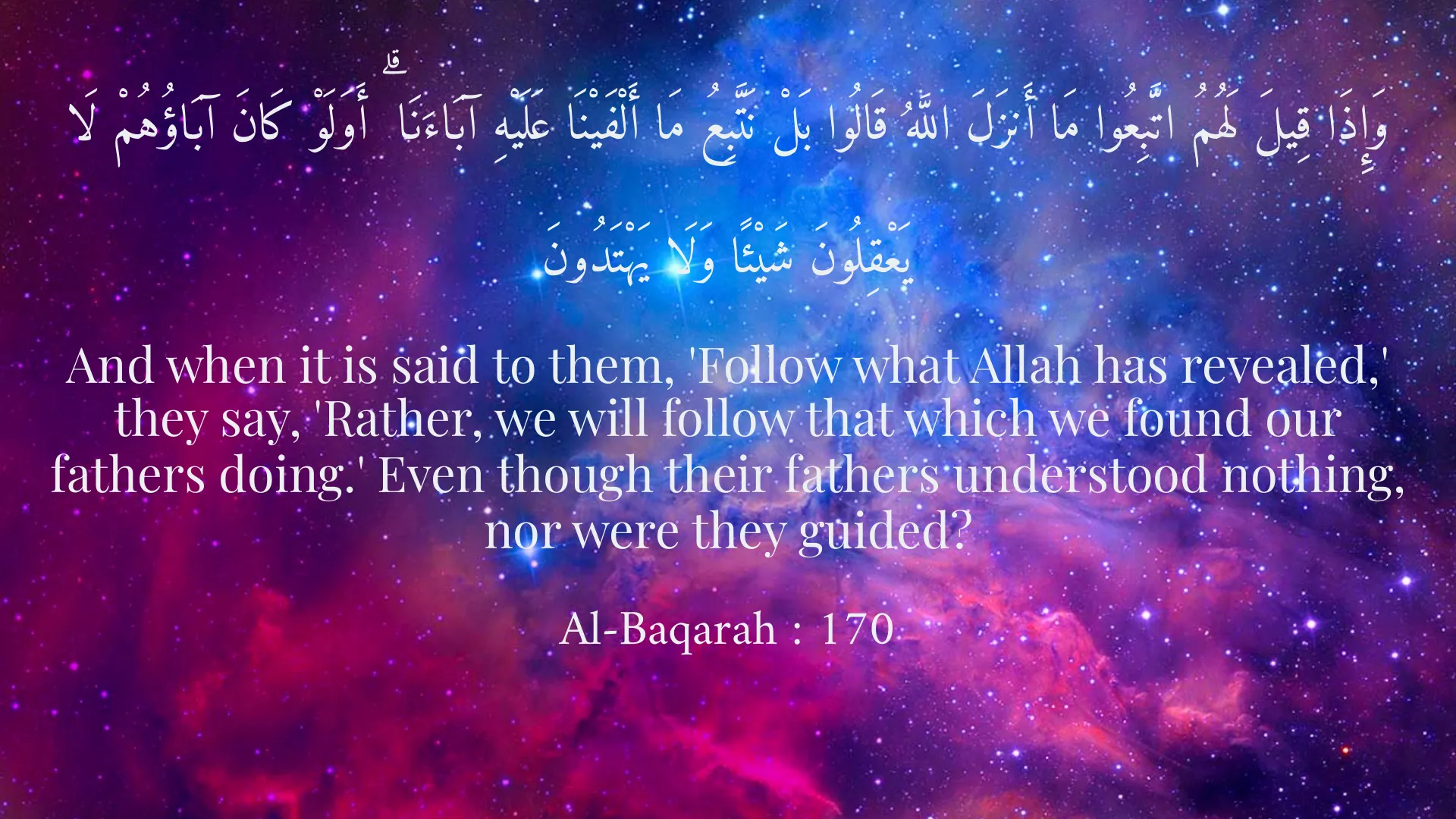
وَإِذَا قِيلَ لَهُمُ اتَّبِعُوا مَا أَنزَلَ اللَّهُ قَالُوا بَلْ نَتَّبِعُ مَا أَلْفَيْنَا عَلَيْهِ آبَاءَنَا ۗ أَوَلَوْ كَانَ آبَاؤُهُمْ لَا يَعْقِلُونَ شَيْئًا وَلَا يَهْتَدُونَ
And when it is said to them, 'Follow what Allah has revealed,' they say, 'Rather, we will follow that which we found our fathers doing.' Even though their fathers understood nothing, nor were they guided?
Al-Baqarah : 170
أَفَرَأَيْتَ مَنِ اتَّخَذَ إِلَٰهَهُ هَوَاهُ وَأَضَلَّهُ اللَّهُ عَلَىٰ عِلْمٍ وَخَتَمَ عَلَىٰ سَمْعِهِ وَقَلْبِهِ وَجَعَلَ عَلَىٰ بَصَرِهِ غِشَاوَةً ۗ فَمَن يَهْدِيهِ مِن بَعْدِ اللَّهِ ۚ أَفَلَا تَذَكَّرُونَ
Have you seen he who takes his desire as his god, and Allah has sent him astray due to knowledge and has set a seal upon his hearing and his heart and put over his vision a veil? So who will guide him after Allah? Then will you not be reminded?
Al-Jathiyah : 23
خَتَمَ اللَّهُ عَلَىٰ قُلُوبِهِمْ وَعَلَىٰ سَمْعِهِمْ ۖ وَعَلَىٰ أَبْصَارِهِمْ غِشَاوَةٌ ۖ وَلَهُمْ عَذَابٌ عَظِيمٌ
Allah has set a seal upon their hearts and upon their hearing, and over their vision is a veil. And for them is a great punishment.
Al-Baqarah : 7
Short Story
It is narrated in Saadi's Gulistan that a wise elder, no matter how much he advised a young man to abandon his erroneous ways, found no success. The Sheikh said, "My son, do not tread this path, for its end is nothing but regret!" The youth replied with a laugh, "Father, my heart is attached to what I have learned, and I cannot change my habits." The Sheikh sighed and said, "Habit is a cage that traps the bird of the soul and breaks the wings of insight. He who remains in the cage of habit will never taste the freedom and flight in the sky of truth." The story of that young man is a reminder of those who, due to their attachment to old habits and thoughts, deprive themselves of positive change and evolution, thus missing out on new opportunities. May our hearts always remain open and receptive to the breeze of change and renewal.