Quranic Answer
The question of why humans get tired of repetition delves deep into understanding human nature and the wisdom behind creation. Although the Holy Quran does not directly address the phrase "fatigue from repetition," contemplating divine verses and Quranic teachings regarding human creation, their purpose in life, and the characteristics of the universe can provide illuminating answers. Fundamentally, God has created humans as dynamic, inquisitive beings constantly seeking growth and development. These characteristics are inherently at odds with mere stasis and pure repetition, as aimless and meaningless repetition can lead to stagnation and languor. One of the most significant reasons for fatigue from repetition stems from human fitra (innate disposition). The Quran repeatedly refers to the ever-changing and evolving nature of the universe. Day and night, seasons, plant growth, the cycle of life and death—all are signs of dynamism and innovation in divine creation. God Himself is introduced as the Creator and Sustainer of the universe, constantly engaged in creation and management of affairs (Surah Ar-Rahman, verse 29: "Every day He is in [another] manifestation"). Humans, who are Allah’s "vicegerents" on earth and created for development and flourishing, have a nature that aligns with this dynamism. The desire for innovation, discovery, experiencing new things, and progress is an inseparable part of their being. Mere repetition, without accompanying growth and transcendence, fails to satisfy this innate need and gradually gives rise to feelings of fatigue and ennui. This need for variety and growth manifests not only in worldly affairs but also in acts of worship. Although acts of worship like prayer may seem repetitive in form, their purpose is not mechanical repetition but rather the deepening of connection, increasing spiritual presence, and achieving khushu' (humility and devotion). Each prayer is a fresh opportunity for spiritual elevation and closer proximity to God. Fatigue from worship occurs when one loses sight of its inner meaning and primary purpose, contenting themselves only with its outward, repetitive form. In truth, repetition in worship is a tool for remembering, consolidating, and internalizing spiritual truths, not a cause for boredom. Furthermore, the Quran describes worldly life as an arena for tests and trials (Surah Al-Mulk, verse 2: "[He] who created death and life to test you [as to] which of you is best in deed"). Tests and challenges inherently involve change, encountering new situations, and stepping out of the comfort zone of repetition. If life were entirely repetitive and monotonous, there would be insufficient scope for the emergence of patience, gratitude, reliance on God, creativity, and moral growth. It is these changes and ups and downs that polish the essence of human existence and propel them towards perfection. Fatigue from repetition can be a sign that the human soul seeks new experiences and lessons from different situations to actualize its potential and progress along the path of evolution. Quranic verses regarding the beauty and diversity of creation (such as the variety of colors, fruits, languages, and different creatures) also support the idea that God loves diversity, and humans are naturally inclined towards it. This diversity in creation is both a sign of divine power and wisdom and a response to the innate human need for change and novelty. Therefore, fatigue from repetition can be seen as a reflection of the human being's inquisitive and evolving nature, which constantly seeks growth, discovery, and transformation, and detests stagnation and idleness. This fatigue is not a flaw, but an internal motivation that drives humans toward new horizons and deeper meanings, lest they become trapped in a useless and aimless cycle and deviate from their primary purpose of creation, which is seeking perfection and divine proximity. Ultimately, humans are in search of a meaning beyond daily repetitions, and this search guides them towards God, the source of all meaning and purpose.
Related Verses
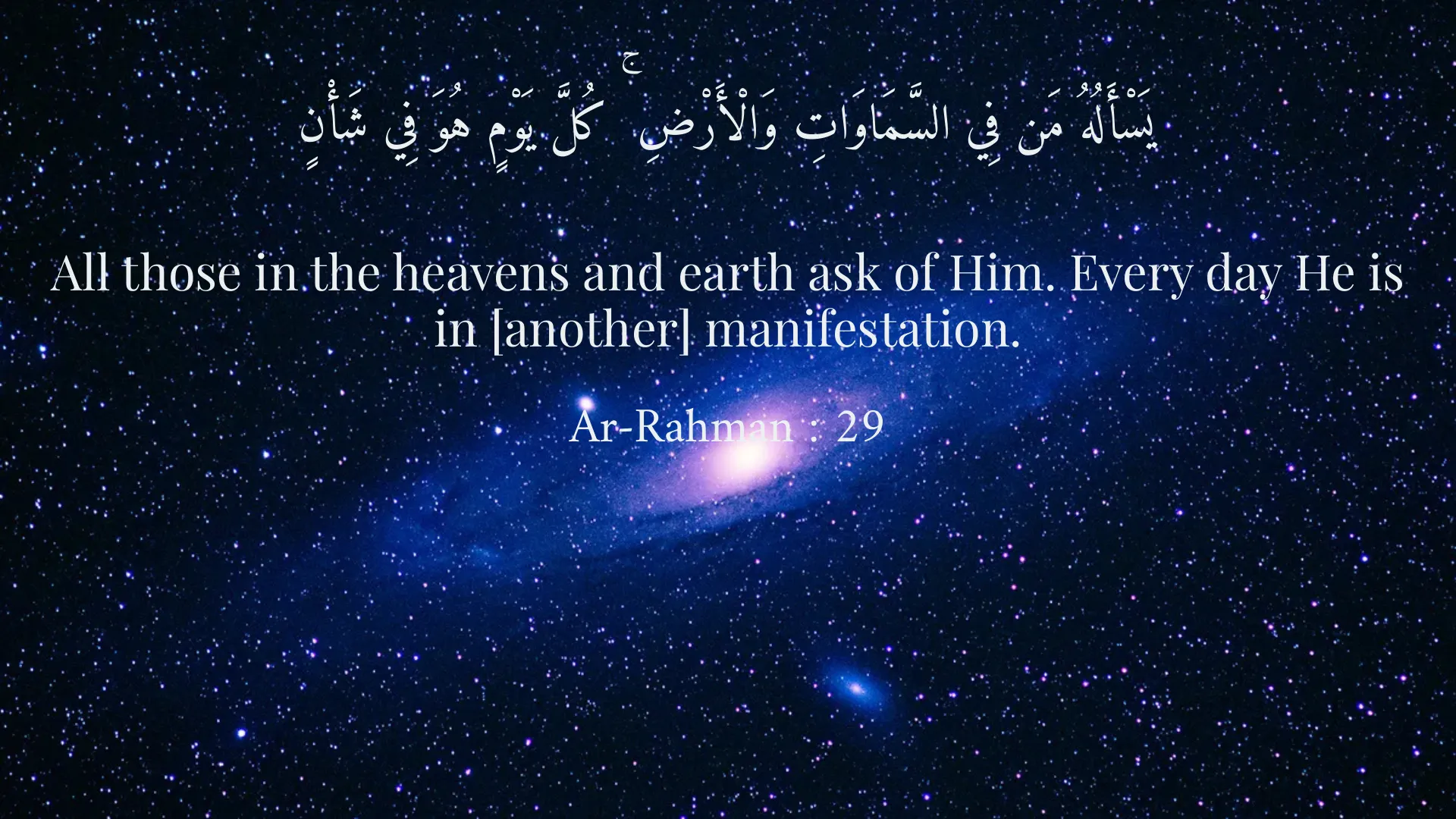
يَسْأَلُهُ مَن فِي السَّمَاوَاتِ وَالْأَرْضِ ۚ كُلَّ يَوْمٍ هُوَ فِي شَأْنٍ
All those in the heavens and earth ask of Him. Every day He is in [another] manifestation.
Ar-Rahman : 29
الَّذِي خَلَقَ الْمَوْتَ وَالْحَيَاةَ لِيَبْلُوَكُمْ أَيُّكُمْ أَحْسَنُ عَمَلًا ۚ وَهُوَ الْعَزِيزُ الْغَفُورُ
[He] who created death and life to test you [as to] which of you is best in deed - and He is the Exalted in Might, the Forgiving.
Al-Mulk : 2
وَمِنْ آيَاتِهِ خَلْقُ السَّمَاوَاتِ وَالْأَرْضِ وَاخْتِلَافُ أَلْسِنَتِكُمْ وَأَلْوَانِكُمْ ۚ إِنَّ فِي ذَٰلِكَ لَآيَاتٍ لِّلْعَالِمِينَ
And of His signs is the creation of the heavens and the earth and the diversity of your languages and your colors. Indeed in that are signs for those of knowledge.
Ar-Rum : 22
Short Story
It is said that in ancient times, there was a king who possessed everything: magnificent palaces, lush gardens, and servants who carried out his every command without delay. But after years, the king felt a weariness and boredom from this monotonous and uneventful life. Every day, the same repetitive tasks, the same foods, the same flattering words. One day, he summoned his wise vizier and said: "O Vizier, despite all these blessings, my heart is weary of this repetition. It is as if my soul is trapped in a golden cage. What remedy do you suggest?" The vizier smiled and replied: "O King, the human soul is like flowing water; if it stays in one place, it becomes cloudy and stagnant; but if it is constantly in motion and change, it remains clear and life-giving. This fatigue is a sign of your soul's innate desire for dynamism and innovation." The king asked: "So, what is the remedy?" The vizier replied: "You must break free from this cycle of repetition. Go among the people, inquire about their well-being, attend to their problems, learn a new craft, or even engage in farming in a small field and feel the joy of a seed sprouting and a flower blooming. Then you will see that every day has a new purpose and task, and every moment holds a fresh meaning." The king acted upon the vizier's advice. He traveled, sat and mingled with ordinary people, learned new skills, and sometimes even personally engaged in state affairs instead of merely giving orders. It was not long before boredom departed from him, and his life became full of enthusiasm, vitality, and meaning. He realized that happiness lies not in stagnation, but in movement and diversity, and this desire for change is itself a divine mercy, so that humanity may be freed from stagnation and aimlessness.