Quranic Answer
Neglect refers to the act of overlooking reality and failing to pay attention to important truths in life. It is an unfortunate yet common phenomenon that manifests in various aspects of our daily experiences: relationships, spiritual practices, responsibilities, and even self-care. As modern life becomes increasingly complicated and fast-paced, the instances of neglect are likely to escalate, leading many individuals to a life defined not by intention and purpose, but rather by distractions and superficial engagements. In this essay, we delve into the intricacies surrounding neglect, its root causes as discussed in the Holy Quran, and the powerful reminder of accountability and the importance of awareness that can help redirect human focus towards meaningful existence. People can become neglectful for various reasons, some of which have been highlighted in the Holy Quran. One primary reason for neglect is the distractions and temptations of worldly life. Surah Al-Imran, verse 185, serves as a poignant reminder of this notion: 'Every soul will taste death, and you will all be paid your due on the Day of Judgment.' This verse encapsulates the transient nature of earthly pleasures and the inevitable reality of death. In a world saturated with distractions—ranging from technology to the ceaseless pursuit of material gain—individuals may find themselves preoccupied to the extent that they forget their deeper purpose for existence. The incessant noise of life often drowns out the subtle yet profound reminders to be present and conscientious about one’s choices. Further emphasizing this sentiment, Surah Al-Mu'minun, verse 70 states, 'Are they who do not believe in Our signs oblivious?' Here, the focus shifts towards faith as the antidote to ignorance and neglect. This verse reinforces the importance of recognizing and reflecting upon the divine signs that permeate our lives. The neglect of these signs, whether in the form of natural wonders or moments of introspection, leads individuals down a path of oblivion. Ignorance can be seen as a catalyst for neglect; when people disregard the wisdom inherent in spiritual teachings, they often make choices that are contrary to their best interests, thus losing touch with the elements that provide true substance to their lives. Moreover, neglect may also stem from the trap of succumbing to one's desires and passions. This struggle is deeply explored in various parts of the Quran, including Surah Al-Isra, verse 70, which mentions that Allah has honored humankind and conferred upon them dignity. This verse is a reminder of the inherent worth and responsibility bestowed upon each individual. When one prioritizes fleeting satisfactions over the deeper desires for fulfillment and purpose, neglect becomes not just a possibility, but a reality. Our desires, when unchecked, can mislead us into prioritizing immediate gratification rather than engaging with the profound questions of existence and accountability that provide lasting satisfaction. Reflecting on the tragedy of neglect in our current society, it becomes evident that it is not merely an oversight but a silent thief of potential, relationships, and spiritual clarity. The consequences of neglect can resonate through generations, affecting not only personal lives but also communities, societies, and ultimately, the larger human experience. By being distracted, individuals might miss out on nurturing relationships with loved ones, fail to cultivate their spiritual lives, or neglect their own well-being. This neglect is particularly concerning because it is often accompanied by a sense of entrapment, as individuals find themselves spiraling deeper into a cycle of distraction, leading to feelings of emptiness and despair. In combating neglect, the Quran provides clear guidance. The importance of mindfulness and remembrance of God is repeatedly emphasized as a means to rise above the cacophony of modernity. Engaging in daily prayers, reflecting on divine wisdom, and seeking knowledge can anchor individuals, enabling them to remain cognizant of their responsibilities, both to themselves and to others. Moreover, it advocates for a balance; a reminder that life should not solely revolve around worldly demands but should also include spiritual enrichment and connectivity. Therefore, perhaps the most vital takeaway from this discourse is the necessity of establishing an intention to remain focused on what truly matters in life. It is crucial to cultivate an awareness of the divine signs, allowing oneself to be guided by the knowledge that every action has a consequence and that every moment is an opportunity to choose a path of remembrance over neglect. A well-rounded life anchored in spirituality will combat the distractions and preserve one's awareness of life’s fleeting nature. Furthermore, fostering a sense of community can act as a buffer against neglect. Individuals supporting each other in their journeys can create a culture of mindfulness, enhancing personal accountability and inviting social responsibility. In essence, the collective remembrance of God, driven by a shared commitment to pursue truth and meaning, serves as a palpable reminder that life is a precious gift that should not be taken lightly. As we navigate our lives filled with responsibilities, aspirations, and distractions, it is essential to remain vigilant against the pulls of neglect. By intentionally remembering Allah and embracing the truth, individuals can remain grounded and purposeful, leading lives characterized by awareness, fulfillment, and genuine connection. Overall, neglect can easily occur in human life, yet through the remembrance of God and the pursuit of truth, one can steer clear of it, emerging with a deeper appreciation of life’s fleeting beauty and a commitment to live fully and faithfully.
Related Verses
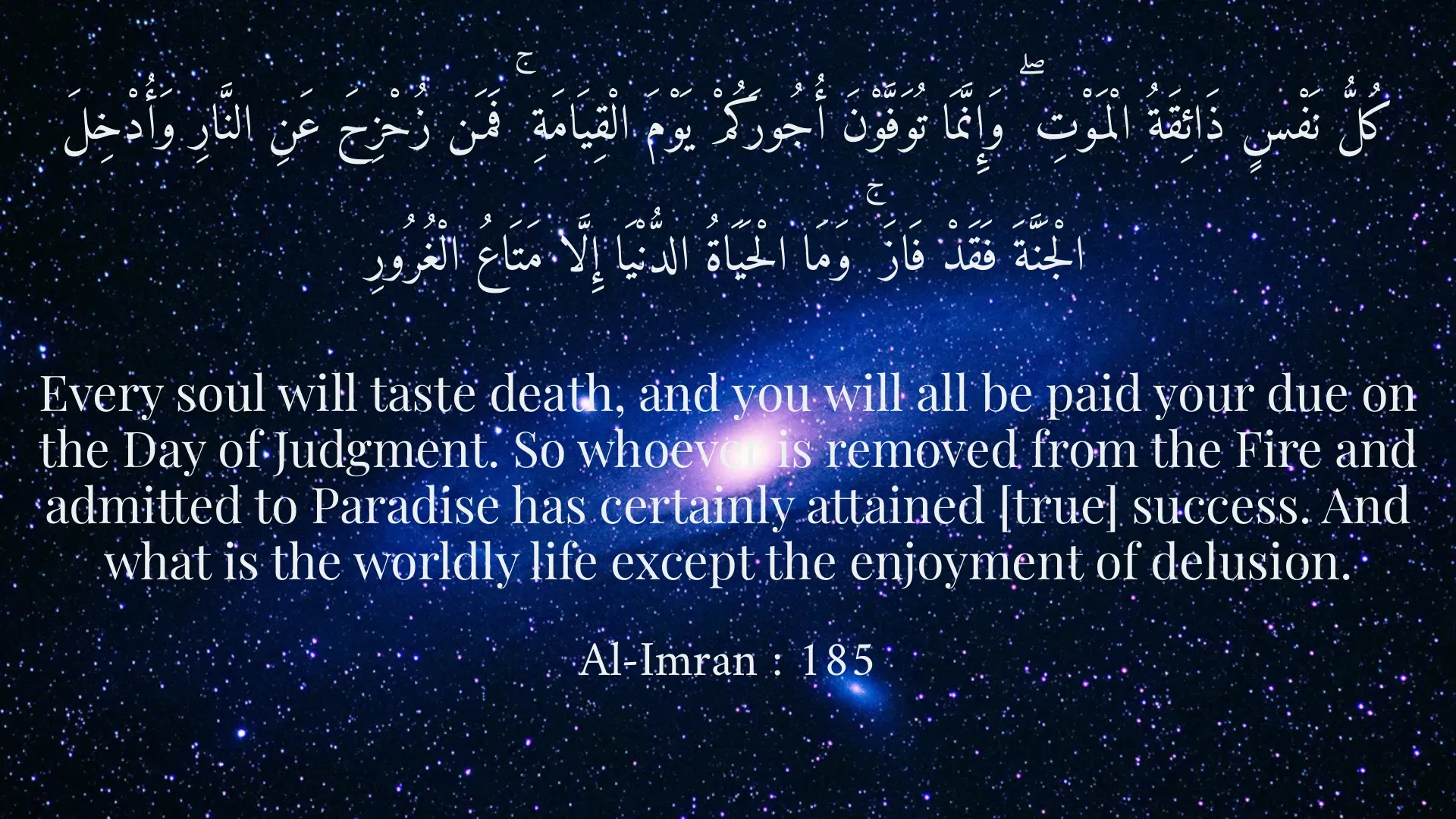
كُلُّ نَفْسٍ ذَائِقَةُ الْمَوْتِ ۖ وَإِنَّمَا تُوَفَّوْنَ أُجُورَكُمْ يَوْمَ الْقِيَامَةِ ۚ فَمَن زُحْزِحَ عَنِ النَّارِ وَأُدْخِلَ الْجَنَّةَ فَقَدْ فَازَ ۚ وَمَا الْحَيَاةُ الدُّنْيَا إِلَّا مَتَاعُ الْغُرُورِ
Every soul will taste death, and you will all be paid your due on the Day of Judgment. So whoever is removed from the Fire and admitted to Paradise has certainly attained [true] success. And what is the worldly life except the enjoyment of delusion.
Al-Imran : 185
أَمْ لَهُمْ قُلُوبٌ لَّا يَفْقَهُونَ بِهَا أَمْ لَهُمْ أَعْيُنٌ لَّا يُبْصِرُونَ بِهَا أَمْ لَهُمْ آذَانٌ لَّا يَسْمَعُونَ بِهَا ۚ قُلُ ادْعُوا أَشْرَكَائَكُمْ ثُمَّ كِيدُونِي فَلَا تُنظِرُونِ
Or do they have hearts by which to discern, or do they have eyes by which to see, or ears by which to hear? Say, 'Call your associates and devise against me and give me no respite.'
Al-Mu'minun : 70
وَلَقَدْ كَرَّمْنَا بَنِي آدَمَ وَحَمَلْنَاهُمْ فِي الْبَرِّ وَالْبَحْرِ وَرَزَقْنَاهُمْ مِنَ الطَّيِّبَاتِ وَفَضَّلْنَاهُمْ عَلَى كَثِيرٍ مِّمَّنْ خَلَقْنَا تَفْضِيلًا
And We have certainly honored the children of Adam and carried them on the land and the sea and provided for them of the good things and preferred them over much of those We created.
Al-Isra : 70
Short Story
One day, Adel was walking and lost in thought. He felt that he had been negligent in his life and was not pursuing any of his goals. He recalled the verses of the Quran and realized that he needed to remember God and pay attention to his responsibilities. He decided to spend a few minutes each day in remembrance of God and, in addition, show kindness to his parents. After a few days, Adel noticed positive changes in his life and felt a deeper sense of satisfaction.