Quranic Answer
This is a profoundly deep and insightful question that many individuals, even sincere believers, encounter at various stages of their lives. The feeling of helplessness or despair might, at first glance, seem contradictory to the concept of faith and reliance upon the Almighty God. However, the truth is that this feeling can be an integral part of one's spiritual journey and has roots in human nature and divine traditions, as illuminated by the Holy Quran. Let us delve deeper into this topic from a Quranic perspective. The Holy Quran consistently describes worldly life as a realm of trials and tribulations. Allah Almighty, in numerous verses, emphasizes the truth that human life is intertwined with hardships, challenges, and tests. For instance, in Surah Al-Baqarah, verse 155, Allah states: “And We will surely test you with something of fear and hunger and a loss of wealth and lives and fruits, but give good tidings to the patient.” This verse clearly indicates that fear, hunger, loss, and hardship are inherent parts of worldly existence, and their purpose is to test human faith. Therefore, feeling helpless can be a natural consequence of facing these trials, not necessarily an kind of indication of a lack of faith. These trials are opportunities to gauge the strength of our faith and to see how much we truly trust in divine promises. One of the primary reasons for feeling helpless is the inherent weakness of human nature. The Quran repeatedly highlights humanity's hasty and impatient disposition. In Surah Al-Isra, verse 11, it states: “And man is ever hasty.” This hastiness often causes individuals to quickly lose hope in the face of problems and fall into a state of helplessness, as they lack the patience and endurance to await relief. This weakness is part of the human constitution, and faith serves as a tool to overcome these weaknesses, rather than eliminating them entirely. A true believer is one who, despite these inherent weaknesses, still seeks refuge in the eternal power of Allah, knowing that only Allah can resolve all difficulties. Another crucial point is the quality of reliance (Tawakkul) and trust in God. Faith is not merely a belief of the heart; it also encompasses practical and complete reliance on the Divine Essence. Sometimes, our faith exists on a theoretical level, but in practice, when confronted with significant challenges, this reliance wavers. Instead of entrusting all our affairs to Allah and leaving the outcome to Him (after having exerted the necessary effort), we become overly attached to superficial causes and means. When these means prove ineffective or become inaccessible, we experience helplessness. True Tawakkul, however, is knowing that although means are important, the ultimate and absolute power belongs only to Allah, and He is the best Disposer of affairs. In Surah At-Talaq, verse 3, the Quran affirms: “And whoever relies upon Allah – He is sufficient for him. Indeed, Allah will accomplish His purpose. Allah has already set for everything a [decreed] extent.” This verse assures us that if we possess genuine reliance, Allah is sufficient for us, and there is no power greater than Him to manage affairs better. This verse provides strong reassurance for anxious hearts. Satanic whispers (Waswas) also play a significant role in fostering feelings of helplessness. Satan constantly lies in wait for believers to weaken their faith and instill despair and hopelessness in their hearts. He tries to make humans lose hope in Allah's mercy by conjuring negative thoughts, exaggerating problems, and implanting a sense of loneliness and abandonment. In Surah An-Nas, Allah instructs us to seek refuge in Him from the whisperer who withdraws. Awareness of this satanic role helps individuals view these feelings not as a weakness in their own faith but as an attack from an adversary, enabling them to resist it and seek refuge in Allah. Furthermore, a misunderstanding of divine decree (Qadar) can contribute to feelings of helplessness. When individuals fail to comprehend that everything happens by Allah’s decree, or misinterpret it as fatalism rather than divine wisdom, they may feel powerless. True understanding of Qadar involves recognizing that while we strive and plan, the ultimate outcome rests with Allah, and His wisdom is beyond our full comprehension. This understanding fosters inner peace and acceptance, mitigating the feeling of being utterly lost. Individuals might perceive an affliction as evil, while in reality, it is a good decreed by Allah to purify them or elevate their status, as stated in Surah Al-Baqarah, verse 216: “But perhaps you hate a thing and it is good for you; and perhaps you love a thing and it is bad for you. And Allah Knows, while you know not.” This awareness transforms one's perspective on difficulties and helps them face challenges with a broader outlook and greater reliance. So, what are the solutions? The Holy Quran provides powerful remedies to overcome this sense of helplessness: 1. Patience and Prayer (As-Sabr wa As-Salah): In Surah Al-Baqarah, verse 153, we read: “O you who have believed, seek help through patience and prayer. Indeed, Allah is with the patient.” Patience, here, does not mean passive resignation or giving up, but perseverance and steadfastness in the face of difficulties, without losing hope. Active patience involves striving to resolve the problem and then relying on Allah. Prayer is the strongest means of connection with Allah and a profound source of tranquility and strength. When a person finds themselves before the Almighty in prayer, all burdens of their heart are lightened, and they feel that there is no refuge except Him, and He is sufficient for them. Prayer is the pillar of religion and the most soothing act for the soul and body. 2. Remembrance of Allah (Dhikr Allah): The Quran states: “Those who have believed and whose hearts are assured by the remembrance of Allah. Unquestionably, by the remembrance of Allah hearts are assured.” (Surah Ar-Ra'd, verse 28). The remembrance of Allah, whether through verbal articulation (Tasbeeh, Tahleel, Takbeer, recitation of Quran) or through the heart (reflection on His signs and verses, presence of heart at every moment), brings inner peace and alleviates anxiety. Recalling Allah's infinite power, mercy, and knowledge liberates an individual from the feeling of helplessness and assures them that they are always under the watch and support of an All-Powerful Being from whom nothing is hidden. 3. Supplication (Du'a) and Humble Entreaty: Direct communication with Allah through du'a is a door of hope that never closes. When a person raises their hands in supplication, they are essentially acknowledging their own limited power and that their sole reliance is on Allah. This admission of weakness before the absolute Divine power is, paradoxically, a source of strength and submission, leading to a deep spiritual connection. Allah says in Surah Ghafir, verse 60: “And your Lord says, 'Call upon Me; I will respond to you.'” This promise is the greatest source of hope for believers, assuring them that no supplication goes unanswered, although the answer may manifest differently from what we expect or desire. 4. Reflection on Divine Wisdom (Hikmah): Sometimes, individuals do not understand the divine wisdom behind their trials. The Quran states: “But perhaps you hate a thing and it is good for you; and perhaps you love a thing and it is bad for you. And Allah Knows, while you know not.” (Surah Al-Baqarah, verse 216). This awareness and deeper insight change one's perspective on difficulties and help them face challenges with a broader outlook and greater reliance, because they know that Allah desires the best for His servants, even if it appears difficult on the surface. Ultimately, the feeling of helplessness can be a powerful reminder that the only true refuge is Allah Almighty. If managed correctly, and instead of succumbing to it, one seeks refuge in Allah, this feeling can lead to immense spiritual growth and proximity to the Divine. A believer who navigates this path will find that with every challenge and difficulty, their faith does not weaken but rather its roots grow deeper and stronger. So, whenever this feeling approaches you, consider it a sign to return more profoundly to your Lord, for He is the true “Maladh and Malja’” (refuge and recourse) for all His servants, and nothing is beyond His power and mercy.
Related Verses
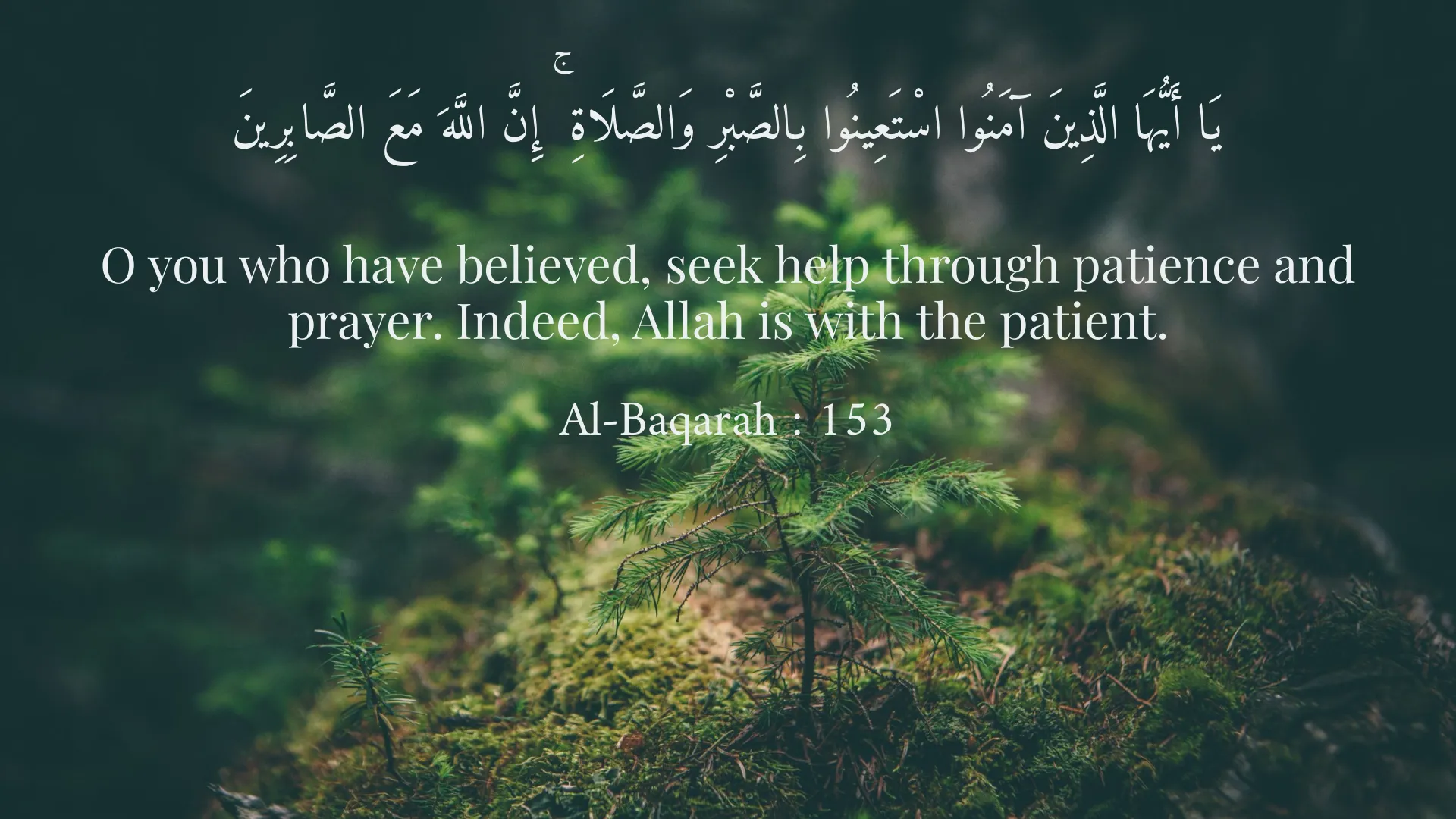
يَا أَيُّهَا الَّذِينَ آمَنُوا اسْتَعِينُوا بِالصَّبْرِ وَالصَّلَاةِ ۚ إِنَّ اللَّهَ مَعَ الصَّابِرِينَ
O you who have believed, seek help through patience and prayer. Indeed, Allah is with the patient.
Al-Baqarah : 153
الَّذِينَ آمَنُوا وَتَطْمَئِنُّ قُلُوبُهُم بِذِكْرِ اللَّهِ ۗ أَلَا بِذِكْرِ اللَّهِ تَطْمَئِنُّ الْقُلُوبُ
Those who have believed and whose hearts are assured by the remembrance of Allah. Unquestionably, by the remembrance of Allah hearts are assured.
Ar-Ra'd : 28
وَمَن يَتَوَكَّلْ عَلَى اللَّهِ فَهُوَ حَسْبُهُ ۚ إِنَّ اللَّهَ بَالِغُ أَمْرِهِ ۚ قَدْ جَعَلَ اللَّهُ لِكُلِّ شَيْءٍ قَدْرًا
And whoever relies upon Allah – He is sufficient for him. Indeed, Allah will accomplish His purpose. Allah has already set for everything a [decreed] extent.
At-Talaq : 3
Short Story
One day, a virtuous merchant named Sabir became separated from his caravan during a long journey and got lost in a barren desert. The scorching sun beat down on him, and thirst and hunger had sapped his strength. His heart grew constricted, and a feeling of utter helplessness overcame him. But having held faith in God for a lifetime, he suddenly remembered the Quranic verses: "Unquestionably, by the remembrance of Allah hearts are assured." He closed his eyes and with his whole being, from the depths of his heart, sought refuge in his Lord, whispering, "My Lord, You are the refuge of the helpless, You are the Provider beyond measure." His prayer had not yet finished when a cool breeze caressed his face, and the scent of water reached his nostrils. With astonishment, he opened his eyes and saw, not far away, a clear spring gushing from the heart of a rock. He rushed towards the spring, drank water, and offered prayers of gratitude. It was at that moment he understood that even at the peak of helplessness, true faith and reliance never abandon a person, and Allah is always their refuge and helper.