Quranic Answer
The feeling of being tired of oneself, or feeling weary of one's own state, is a profound and sometimes unsettling experience that many people encounter at various stages of life. The Quran does not explicitly use the term 'tired of oneself,' but it profoundly addresses the roots and dimensions of this human experience from a divine and comprehensive perspective. This state often signals an internal imbalance or a deviation from the divine human nature and the righteous path of life ordained by God. From the Quranic viewpoint, a human being is a complex creature, fashioned from a divine spirit and a material body, with their ultimate purpose being the servitude to and closeness with God. When a person deviates from this main path or neglects their essential being, they may experience this kind of weariness and disillusionment. One of the most significant reasons highlighted by the Quran is heedlessness of God's remembrance and the true purpose of creation. Human beings are instinctively drawn towards perfection, tranquility, and meaning. The remembrance of God (Dhikr) and maintaining a continuous connection with the Creator of the universe is the primary source of spiritual peace and vitality. In Surah Ar-Ra’d, verse 28, the Holy Quran states: "Those who have believed and whose hearts are assured by the remembrance of Allah. Unquestionably, by the remembrance of Allah hearts are assured." When a person distances themselves from this source of tranquility, their heart becomes afflicted with anxiety, emptiness, and fatigue. Becoming preoccupied with worldly matters and fleeting pleasures, without paying attention to a higher purpose, can lead to a sense of meaninglessness and weariness from daily life, and even from oneself. Humans naturally seek lasting satisfaction, and when they seek it only in material and transient things, they experience a void and exhaustion upon attaining or losing them. Another reason is excessive focus on materialism and worldly attachments. The Quran repeatedly refers to the transient nature of the world and warns humanity against excessive attachment to it. In Surah Al-Hadid, verse 20, we read: "Know that the worldly life is only amusement and diversion and adornment and boasting among yourselves and competition in increase of wealth and children..." When a person's sole concern becomes accumulating wealth, gaining status, or pursuing worldly pleasures, and they perceive these as the ultimate goals of life, they eventually reach a point of emptiness and fatigue. This is because these matters can never satisfy their deep spiritual and emotional needs. Such attachments to the world place a heavy burden on a person, leading to exhaustion and weariness, as they are constantly plagued by the fear of loss and envy of others' possessions, thereby robbing them of peace. Engaging in sin and neglecting repentance can also contribute to self-weariness. Sins cloud the mirror of the heart and create a distance between a person and God. This distance inherently leads to darkness, unrest, and a feeling of heaviness in the soul. The Quran always keeps the door of repentance open and describes divine mercy as boundless. Failure to repent and persistence in sin not only deprives one of divine blessings but also imposes a heavy psychological burden that can manifest as self-weariness, dissatisfaction, and perpetual discontent. Humans are inherently pure and seek goodness, and when they act against their innate nature, they experience internal conflict, which manifests as spiritual fatigue. Even when a person loses patience and gratitude in the face of problems and difficulties, they may experience this exhaustion. The Quran in Surah Al-Baqarah, verse 155, states: "And We will surely test you with something of fear and hunger and a loss of wealth and lives and fruits, but give good tidings to the patient." These difficulties, if not accompanied by patience and reliance on God, can drag a person into despair and weariness. Solutions from the Quranic Perspective: The Holy Quran offers several solutions to overcome this state, all of which lead to a return to the monotheistic nature (fitra) and the divine path. Constant remembrance of God (Dhikr), which includes prayer, recitation of the Quran, supplication, and contemplation of divine verses, is the most important way to achieve peace of heart and alleviate spiritual fatigue. Patience (Sabr) and trust (Tawakkul) in the face of difficulties, contentment and avoiding excessive worldly attachment, repentance (Tawbah) and seeking forgiveness, and serving others are other strategies that free a person from the grip of self-weariness and restore meaning, purpose, and renewed vitality. Ultimately, this weariness can be a sign of a need for inner transformation, an invitation to re-evaluate priorities and return to the source of life and peace, which is Allah the Almighty. With this approach, even weariness can transform into a factor for growth and elevation, guiding a person towards experiencing true satisfaction and peace. A Quranic life is one where meaning and purpose flow at every moment, and this is the greatest antidote to self-weariness.
Related Verses
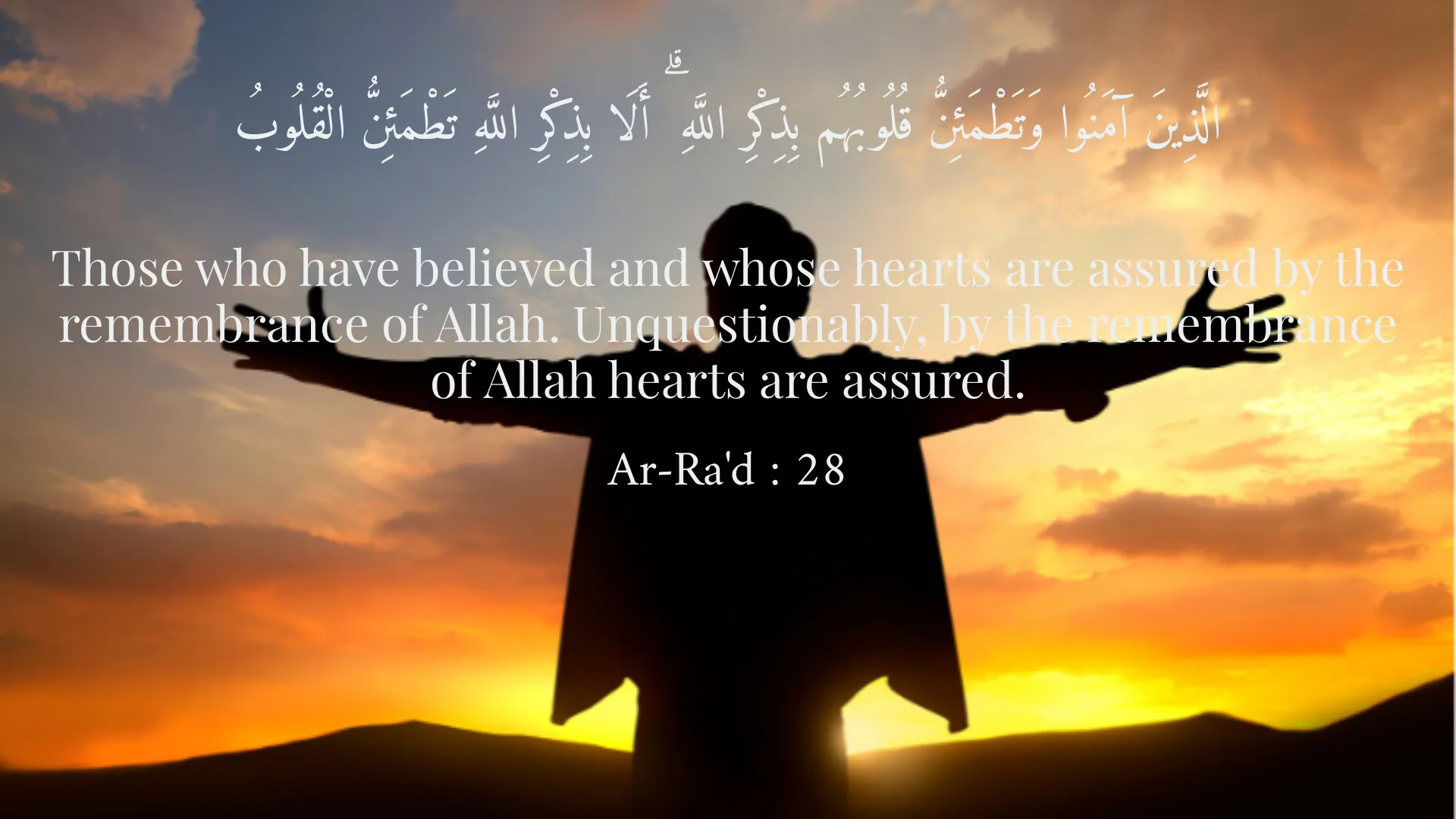
الَّذِينَ آمَنُوا وَتَطْمَئِنُّ قُلُوبُهُم بِذِكْرِ اللَّهِ ۗ أَلَا بِذِكْرِ اللَّهِ تَطْمَئِنُّ الْقُلُوبُ
Those who have believed and whose hearts are assured by the remembrance of Allah. Unquestionably, by the remembrance of Allah hearts are assured.
Ar-Ra'd : 28
وَمَنْ أَعْرَضَ عَن ذِكْرِي فَإِنَّ لَهُ مَعِيشَةً ضَنكًا وَنَحْشُرُهُ يَوْمَ الْقِيَامَةِ أَعْمَىٰ
And whoever turns away from My remembrance - indeed, he will have a difficult life, and We will gather him on the Day of Resurrection blind.
Taha : 124
اعْلَمُوا أَنَّمَا الْحَيَاةُ الدُّنْيَا لَعِبٌ وَلَهْوٌ وَزِينَةٌ وَتَفَاخُرٌ بَيْنَكُمْ وَتَكَاثُرٌ فِي الْأَمْوَالِ وَالْأَوْلَادِ ۖ كَمَثَلِ غَيْثٍ أَعْجَبَ الْكُفَّارَ نَبَاتُهُ ثُمَّ يَهِيجُ فَتَرَاهُ مُصْفَرًّا ثُمَّ يَكُونُ حُطَامًا ۗ وَفِي الْآخِرَةِ عَذَابٌ شَدِيدٌ وَمَغْفِرَةٌ مِّنَ اللَّهِ وَرِضْوَانٌ ۚ وَمَا الْحَيَاةُ الدُّنْيَا إِلَّا مَتَاعُ الْغُرُورِ
Know that the worldly life is only amusement and diversion and adornment and boasting among yourselves and competition in increase in wealth and children - like the example of a rain whose [resulting] plant growth pleases the disbelievers; then it dries and you see it [become] yellow; then it becomes [scattered] debris. And in the Hereafter is severe punishment and forgiveness from Allah and approval. And what is the worldly life except the enjoyment of delusion.
Al-Hadid : 20
Short Story
Once upon a time, in a city in Persia, there lived a wealthy merchant who was perpetually discontent. He owned a grand house, a garden brimming with precious fruits, and a caravan of camels that carried his riches to every corner of the world. Yet, whenever someone inquired about his well-being, he would sigh and say, 'My heart is weary from all this wealth and anxiety. I have neither peace nor satisfaction with myself. It seems the more I possess, the more tired I become of myself.' A wise neighbor, who had spent his life in contentment and remembrance of God, once told him: 'My friend! You have accumulated the treasures of the world, but you have forgotten the treasure of inner peace. Saadi says: 'A restless heart that is heedless of the Beloved's remembrance, becomes preoccupied with worldly possessions and status, but never finds ease.' Your soul craves spiritual nourishment, not merely the hoarding of wealth. When the heart distances itself from the remembrance of its Creator, even if the body lives in luxury and comfort, the soul feels estranged and weary. Come, give a little of what you have and gladden a heart, then you will see how weariness departs from you and a deep satisfaction takes its place.' The merchant heeded the wise man's advice, and through charity and caring for others, he tasted true peace and was no longer tired of himself.