Quranic Answer
The question of why human beings experience suffering and 'misery' is one of the deepest and most fundamental inquiries that has occupied the human mind throughout history. This question becomes particularly complex when juxtaposed with the concept of an all-merciful and just Creator. From the perspective of the Holy Quran, the universe and worldly life are founded upon divine wisdom and justice, and no suffering is without purpose or without a reason. Almighty God is not an oppressor or a tyrant; He never wrongs His servants. Rather, His creation is based on what is good and beneficial. Therefore, what we sometimes refer to as 'misery' actually encompasses multiple dimensions and reasons that require a deeper understanding of the cosmic order and the philosophy of creation. First and perhaps most importantly is the philosophy of 'divine testing and trial.' The Quran explicitly states that worldly life is a stage for the testing and trial of humanity. God created humans and places them in various trials to reveal their inner essence, their levels of patience, gratitude, faith, and willpower. These trials can manifest as poverty, illness, loss of loved ones, fear, hunger, and various calamities. The purpose of these trials is not merely to inflict suffering, but rather for human education and spiritual development. Just as gold is refined in a furnace to remove impurities and become purer, humans are matured through the furnace of events and hardships. Their faith is strengthened, and they attain higher spiritual stages. Many prophets and divine saints, who are prime examples of humanity, experienced the greatest sufferings and hardships in their lives, and these difficulties led to their spiritual elevation and closeness to God. These trials are not only for assessing faith but also for purifying the soul and cleansing the heart from worldly attachments and material dependencies. A person who seeks refuge in God during hardships and exercises patience will receive immense rewards in both this world and the hereafter. The second important factor is 'human free will and its consequences.' God has granted humans the power of choice and free will. Humans are free to choose the path of truth or falsehood, good or evil, justice or oppression. Many of the calamities and problems that afflict human beings are the direct result of their own actions and choices, both individually and collectively. For instance, corruption, injustice, war, greed, and avarice are all sources of much human 'misery' and suffering, created by humans themselves. The Holy Quran states: "And whatever strikes you of disaster – it is for what your hands have earned; but He pardons much." (Surah Ash-Shura, 42:30). This verse clearly indicates that a significant portion of hardships are either natural or divine consequences of our improper behaviors. These consequences can occur individually (e.g., illness due to neglecting health) or collectively (e.g., famine due to mismanagement or oppression). God gives humans the opportunity to choose and returns the results of these choices to them so they may learn and reform. Thirdly, there is 'divine justice and wisdom.' God is the absolute Just and the incomparable Wise. He never wrongs anyone, and all His actions are based on justice and wisdom. Sometimes, what appears to be 'misery' from our limited perspective is actually part of a larger, wise plan that we are unable to fully comprehend. An apparent suffering might lead to an individual's spiritual growth, the awakening of a society, or the prevention of greater calamities. For example, a severe illness might lead a person to self-awareness and repentance, or prevent them from falling into greater sins. Or the poverty of an individual might lead them to patience and contentment, bringing them to stations that wealth could never achieve. On the other hand, these very 'miseries' might serve as expiation for sins, saving the individual from torment in the hereafter. This perspective broadens our understanding of divine justice, which is part of His universal justice permeating all existence. The fourth factor is the 'transient nature of this world.' This world is not a place of complete recompense, and one cannot expect everything to unfold according to perfect justice or immediate reward and punishment. This world is a passage and a test, not the abode of final reward. Both worldly pleasures and pains are temporary. True peace and eternal bliss are in the Hereafter, promised to the righteous and the patient. Therefore, comparing people's situations in this world without considering their ultimate destiny in the Hereafter is incomplete. It is possible for a person to appear 'miserable' in this world but attain eternal happiness in the Hereafter through patience and gratitude. Conversely, a person might be immersed in worldly blessings but, due to ingratitude and oppression, face torment in the Hereafter. This perspective teaches us that the primary criterion for measuring happiness or misery is not solely worldly conditions, but rather the ultimate outcome and destiny in the Hereafter. Finally, these sufferings and hardships also serve as a means of 'remembrance and awakening.' Sometimes, people become engrossed in comfort and ease, forgetting God and the primary purpose of creation. In such circumstances, a jolt or a calamity can awaken them from their heedlessness and guide them back towards God and spiritual values. Many individuals have completely changed the course of their lives and been guided towards righteousness and piety after experiencing a great hardship. This demonstrates that even within what we call 'misery,' there is immense potential for growth, transformation, and guidance. Therefore, God's allowance of suffering is not out of indifference but out of His ultimate wisdom, mercy, and justice, designed for the spiritual development and guidance of humanity.
Related Verses
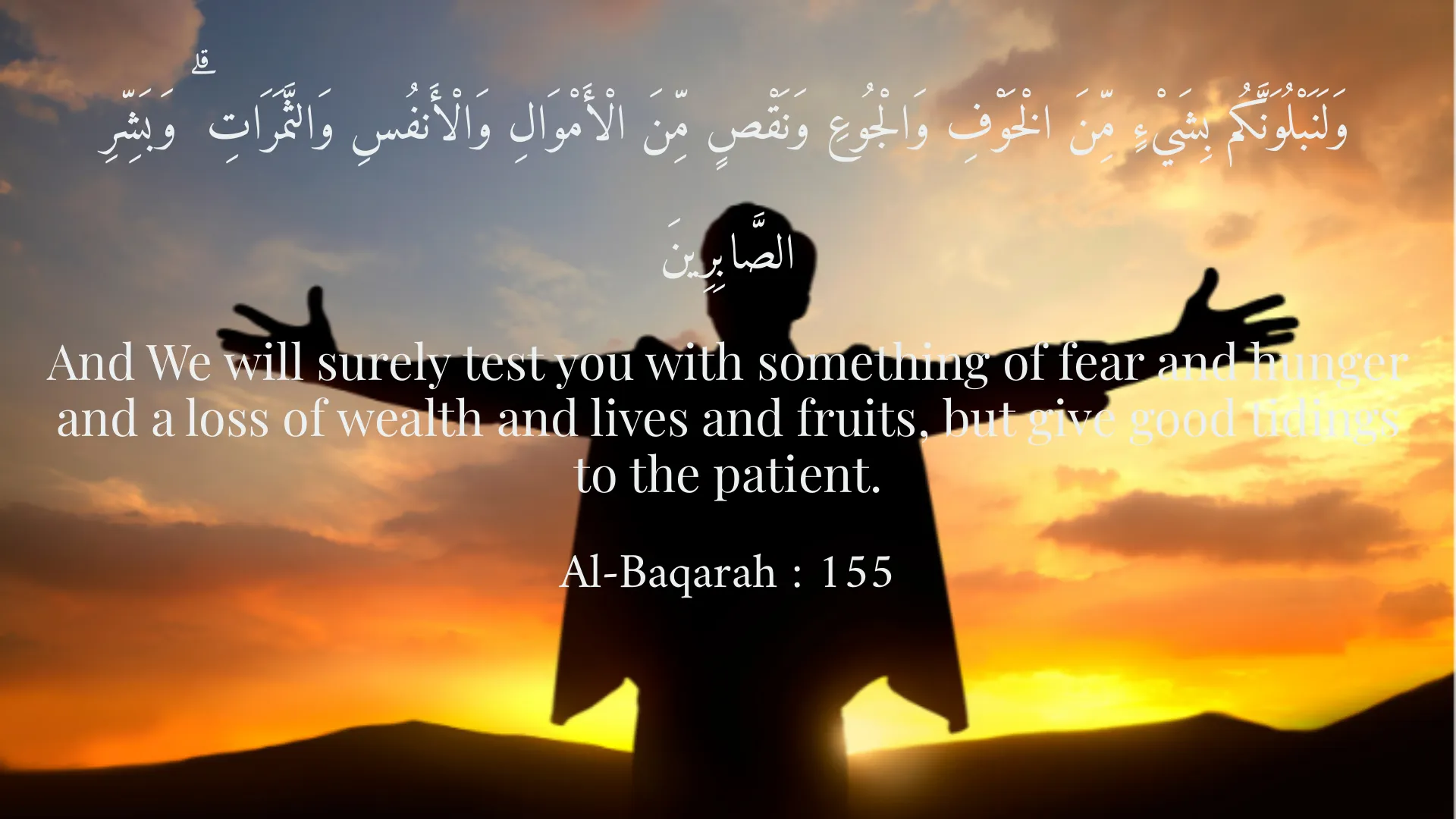
وَلَنَبْلُوَنَّكُم بِشَيْءٍ مِّنَ الْخَوْفِ وَالْجُوعِ وَنَقْصٍ مِّنَ الْأَمْوَالِ وَالْأَنفُسِ وَالثَّمَرَاتِ ۗ وَبَشِّرِ الصَّابِرِينَ
And We will surely test you with something of fear and hunger and a loss of wealth and lives and fruits, but give good tidings to the patient.
Al-Baqarah : 155
أَحَسِبَ النَّاسُ أَن يُتْرَكُوا أَن يَقُولُوا آمَنَّا وَهُمْ لَا يُفْتَنُونَ
Do people think that they will be left to say, 'We believe' and they will not be tried?
Al-Ankabut : 2
وَلَقَدْ فَتَنَّا الَّذِينَ مِن قَبْلِهِمْ ۖ فَلَيَعْلَمَنَّ اللَّهُ الَّذِينَ صَدَقُوا وَلَيَعْلَمَنَّ الْكَاذِبِينَ
But We have certainly tried those before them, and Allah will surely make evident those who are truthful and will surely make evident the liars.
Al-Ankabut : 3
وَمَا أَصَابَكُم مِّن مُّصِيبَةٍ فَبِمَا كَسَبَتْ أَيْدِيكُمْ وَيَعْفُو عَن كَثِيرٍ
And whatever strikes you of disaster - it is for what your hands have earned; but He pardons much.
Ash-Shura : 30
Short Story
One day, a king with a troubled face and an anxious heart approached a dervish who lived with immense contentment in a corner of the bazaar. The king asked, 'O Dervish, with all this wealth and power, I am in constant suffering and worry, and my heart is never at ease. Yet you, who possess nothing, always seem joyful and peaceful. What is the secret to your happiness?' The dervish smiled and replied, 'O King, your suffering comes from your heart being attached to this world and what is in it; your heart worries about loss and yearns for what it lacks. But I have entrusted my heart solely to God, and I know that whatever He decrees is best. If a blessing comes, I am grateful, and if a calamity, I am patient. This world is a temporary abode, and its sorrows are fleeting. True peace resides in the heart of a believer who accepts God's decree with grace.' The king found solace in the dervish's profound words and understood that misery and happiness lie not in wealth and status, but in the heart and perspective of a person.