Quranic Answer
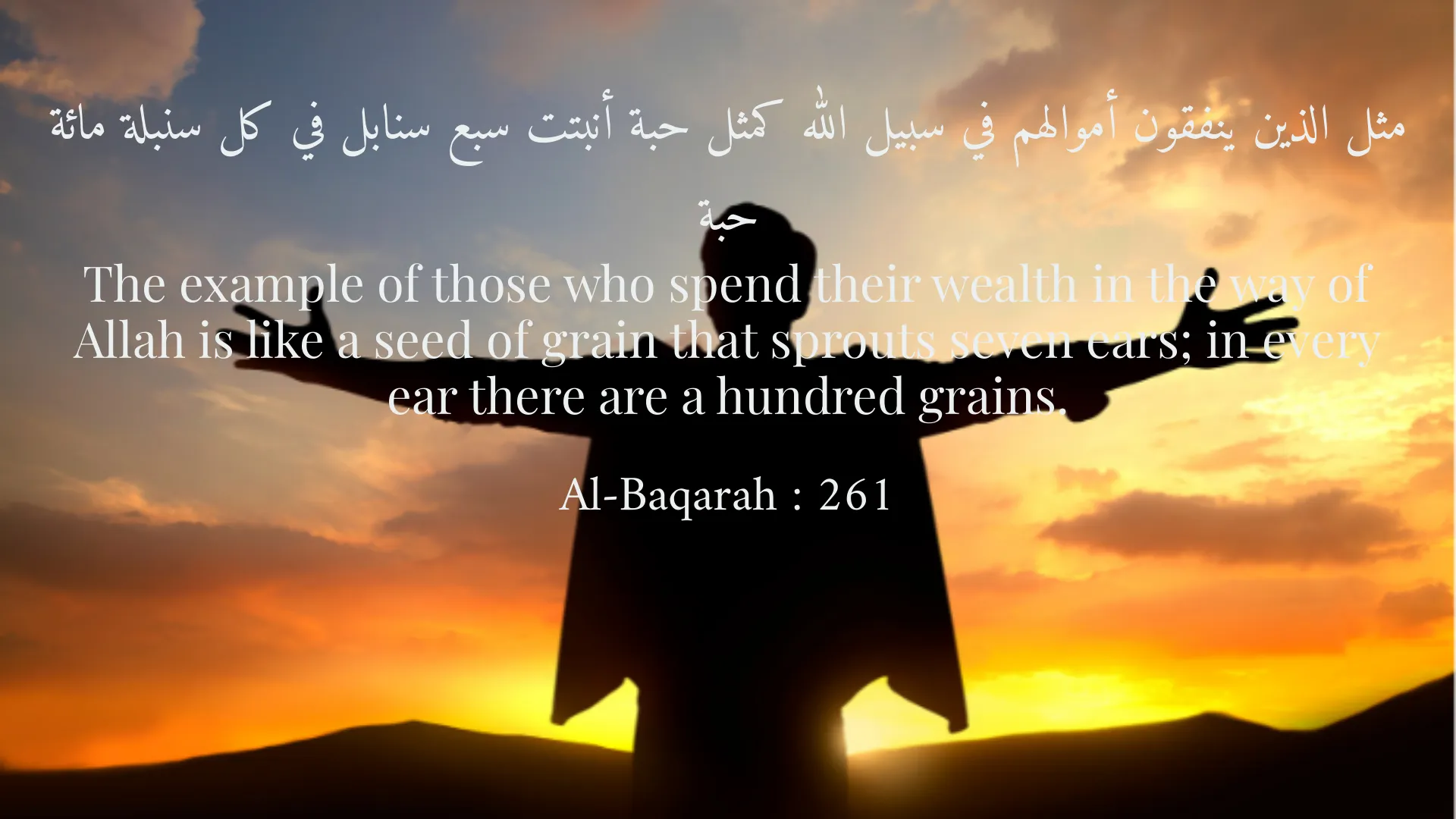
In the Holy Quran, Allah bestows His blessings upon His servants, with some being favored more than others. This inherent distinction in the distribution of blessings can often be attributed to the varied intentions and efforts that individuals invest in their lives and their faith. As articulated in Surah Al-Baqarah, verse 261, it states, 'The example of those who spend their wealth in the way of Allah is like a seed of grain that sprouts seven ears; in every ear there are a hundred grains.' This profound verse acts as a powerful illustration of the principle of divine return on investment when one contributes in the path of Allah. Here, the concept of giving is equated to planting a seed, with the subsequent promise of bountiful yields. By investing in the way of Allah, one does not merely anticipate a financial return; instead, they embrace a comprehensive blessing that transcends material wealth to encompass wisdom, health, and spiritual tranquility. This notion also invites reflection on the broader spiritual implications of one's actions. There are innumerable interpretations of what it means to spend in the way of Allah. It transcends the mere act of giving charity; it encapsulates all forms of benevolence, including encouraging others in righteous deeds, striving for justice, or working selflessly for the betterment of one's community. Each of these actions contributes to the collective spiritual fabric of society. By highlighting the exponential nature of returns, the Quran emphasizes not just the act of giving but the magnitude of rewards that accompany genuine intent. This indicates that the rewards of charity and righteous acts extend beyond the immediate gains one may observe. Furthermore, the Quran advocates for a balanced approach to wealth and its utilization. In Surah Al-Isra, verse 32, Allah instructs: 'And do not approach the wealth of the orphan except in a way that is best until he reaches maturity.' This verse underscores the moral obligation to respect others' rights, particularly vulnerable populations like orphans. Such teachings point toward a core principle within Islam—the emphasis on ethical behavior in the pursuit and management of wealth. Ensuring that one's actions align with the dictates of scripture ensures an equitable distribution of blessings amidst the community, promoting societal growth rooted in fairness and justice. Blessings, therefore, are not randomly distributed; rather, they manifest in response to individuals' deeds and intentions. Individuals are reminded that the path to receiving blessings is illuminated by sincere piety and unwavering commitment to following Allah's commands. The bridge between righteousness and divine favor is forged by efforts that reflect a deep-seated understanding of the sacred duty one carries in life. This reflection indicates a broader societal critique of contemporary norms, particularly in understanding wealth, power, and spiritual fulfillment. Companies and individuals are often preoccupied with accumulating material wealth as a primary indicator of success. However, the Quran presents an alternative expectation—a richness of character, wisdom, and social responsibility. These attributes, when nurtured alongside wealth, create a holistic approach to wealth management that is deeply rooted in ethical considerations and accountability. Indeed, the Quran elucidates that the pursuit of money should not come at the expense of moral integrity. Striving for wealth must marry itself with compassion, humility, and a sincere devotion to serving others. This is widely evident in the actions of those revered in Islamic tradition, whose lives exemplified caring for the less fortunate even amid personal riches. Importantly, the lessons underscore the need for self-assessment, prompting individuals to consistently reflect upon their intentions and actions. Amidst the fast pace of life, the questions demand asking: "Are my efforts aligned with the virtuous path?" or "Am I contributing towards enhancing the quality of lives around me?" This kind of introspection reinforces the commitment to piety—being aware that with each good deed, blessings multiply infinitely not just materially but through fulfilling personal growth. Through the Quran’s teachings, believers are urged to recognize that blessings can manifest in unexpected forms. Often, they appear as spiritual insight, a supportive community, good health, or the quiet contentment of mind and heart. In carrying out their daily endeavors with sincerity and virtuous intentions, believers invite a wealth that far exceeds any monetary measure. They learn to appreciate that life's true treasures lie in shared generosity and abundant blessings witnessed through spiritual clarity and community welfare. Ultimately, to harness Allah's blessings means aligning life’s actions with ethical and moral standards, staying steadfast in faith, and fostering an environment where all can thrive. The Quran reveals that it is the quality of one’s character and the sincerity of intentions that provokes the flow of divine favor. As such, it enjoins the believers to strive continuously towards righteousness in every aspect of existence—laying the groundwork for a prosperous and enriched life that honors divine promises through relentless efforts and unwavering faith.
Related Verses
مثل الذين ينفقون أموالهم في سبيل الله كمثل حبة أنبتت سبع سنابل في كل سنبلة مائة حبة
The example of those who spend their wealth in the way of Allah is like a seed of grain that sprouts seven ears; in every ear there are a hundred grains.
Al-Baqarah : 261
وَلا تَقْرَبُوا مَالَ الْيَتِيمِ إِلَّا بِالَّتِي هِيَ أَحْسَنُ حَتَّى يَبْلُغَ أَشُدَّهُ
And do not approach the wealth of the orphan except in a way that is best until he reaches maturity.
Al-Isra : 32
Short Story
Once upon a time, there was a young man named Adel who believed in God and always thought about how to earn His pleasure. He had heard that Allah grants blessings to His servants but did not know how to benefit from them. Adel decided to start with the best intentions and deeds. He began to make a plan to help the needy and pray for the success of others. Soon, his life was filled with blessings and he felt peace and happiness because of his efforts.