Quranic Answer
Addressing the question of why one's faith sometimes fluctuates requires a deep understanding of human nature and a comprehensive look at Quranic teachings. The Holy Quran views faith not as a static, fixed state, but rather as a dynamic journey and an ongoing process. Fluctuations in faith are, in fact, a natural part of every individual's spiritual path, and Allah (SWT) has addressed this dynamism and its influencing factors in numerous verses. One of the primary reasons for faith fluctuation is the very nature of this worldly life. We live in a world filled with challenges, temptations, and distractions. The Quran repeatedly warns us about the allure and transient nature of this life. When an individual becomes engrossed in material pursuits and daily concerns, they may become heedless of Allah and the ultimate purpose of creation. This heedlessness can gradually weaken faith and cause it to fluctuate. Excessive attachment to wealth, children, status, and the fleeting beauties of this world can distance a person from spirituality and empty the heart of the light of faith. Surah Al-Hadid, verse 20, beautifully illustrates this point: "Know that the life of this world is only play and amusement, pomp and mutual boasting among you, and rivalry in respect of wealth and children." This serves as a warning against letting these deceptive matters divert one from the remembrance of Allah and the Hereafter. Divine trials and tests also play a significant role in faith fluctuation. Allah (SWT) repeatedly emphasizes in the Quran that He tests humanity with hardships, fear, hunger, and loss of wealth and lives (Al-Baqarah 2:155). When faced with these trials, some individuals become doubtful, despairing, or even ungrateful, and these reactions can lead to a decrease in faith. However, the Quran offers patience and prayer as solutions, promising that Allah is with the patient. These tests are not merely for evaluation but also provide opportunities for strengthening and solidifying faith. When an individual successfully navigates a divine trial, their faith emerges stronger and more resolute. Indeed, faith fluctuation in these circumstances can be a sign of a process of spiritual growth and purification. Sins and transgressions are another factor that weakens faith. Every sin a person commits leaves a negative imprint on their heart and soul, gradually dimming the light within. The Quran encourages believers to repent and seek forgiveness (Istighfar) so that their hearts may be re-illuminated by cleansing from sins. Persisting in both minor and major sins creates a veil between the individual and their Lord, and this distance ultimately leads to fluctuation and a decrease in faith. In contrast, righteous deeds and good conduct strengthen faith and provide it with stability. To combat faith fluctuations and stabilize one's belief, the Quran provides practical and profound solutions: 1. Dhikr (Remembrance of Allah): The Quran repeatedly emphasizes the importance of remembering Allah. "Verily, in the remembrance of Allah do hearts find rest" (Ar-Ra'd 13:28). Dhikr, whether through Quran recitation, supplication (dua), glorification (tasbih), or even contemplation of Allah's signs in creation, can keep the heart alive and free it from heedlessness. Constant remembrance is like nourishment for the soul that feeds faith. 2. Salat (Prayer) and Worship: Prayer is the pillar of religion and the believer's ascension. A regular and heartfelt connection with Allah bestows immense strength upon faith. Prayer is not merely an obligation; it is an opportunity for dialogue with the Creator, expressing needs, and offering gratitude, which purifies the heart and solidifies faith. In Surah Al-Baqarah, verse 45, it states: "And seek help through patience and prayer; and indeed, it is difficult except for the humbly submissive [to Allah]." 3. Recitation and Reflection on the Quran: The Holy Quran is the book of guidance. Reading its verses and pondering their meanings deepens one's understanding of Allah's grandeur and wisdom. When a person lives by the concepts of the Quran, their faith becomes more deeply rooted and less susceptible to instability. The Quran is a healing for hearts, revealing divine truths that inherently strengthen conviction. 4. Steadfastness and Patience in the Face of Adversity: Life is a stage for trials. Accepting the reality that difficulties are part of life and that one can overcome them with patience and reliance on Allah strengthens faith. In Surah Al-Baqarah 2:155-157, Allah gives glad tidings of mercy and guidance to the patient ones who, when afflicted with a calamity, say, "Indeed we belong to Allah, and indeed to Him we will return." 5. Good Deeds and Abstinence from Sins: Righteous deeds are the practical manifestation of faith and they strengthen it. Just as sins weaken faith, good actions such as charity, helping the needy, truthfulness, and good manners nourish faith and give it stability. 6. Good Company: Associating with righteous and pious individuals creates a positive environment where faith can be strengthened. They can serve as reminders of Allah and offer solace and guidance during moments of weakness. Faith fluctuation, though sometimes distressing, can serve as a reminder to return to oneself and pay more attention to one's connection with Allah. These fluctuations should not lead to discouragement but rather motivate greater effort on the spiritual path. Faith is like a tree that requires continuous watering (remembrance, worship) and protection (abstinence from sin) for its roots to deepen and its trunk to become stronger. By adhering to these Quranic principles, one can achieve greater stability in faith and reduce its fluctuations. Ultimately, faith is a journey, not a final destination, and every fluctuation can be an opportunity for deeper reflection and growth.
Related Verses
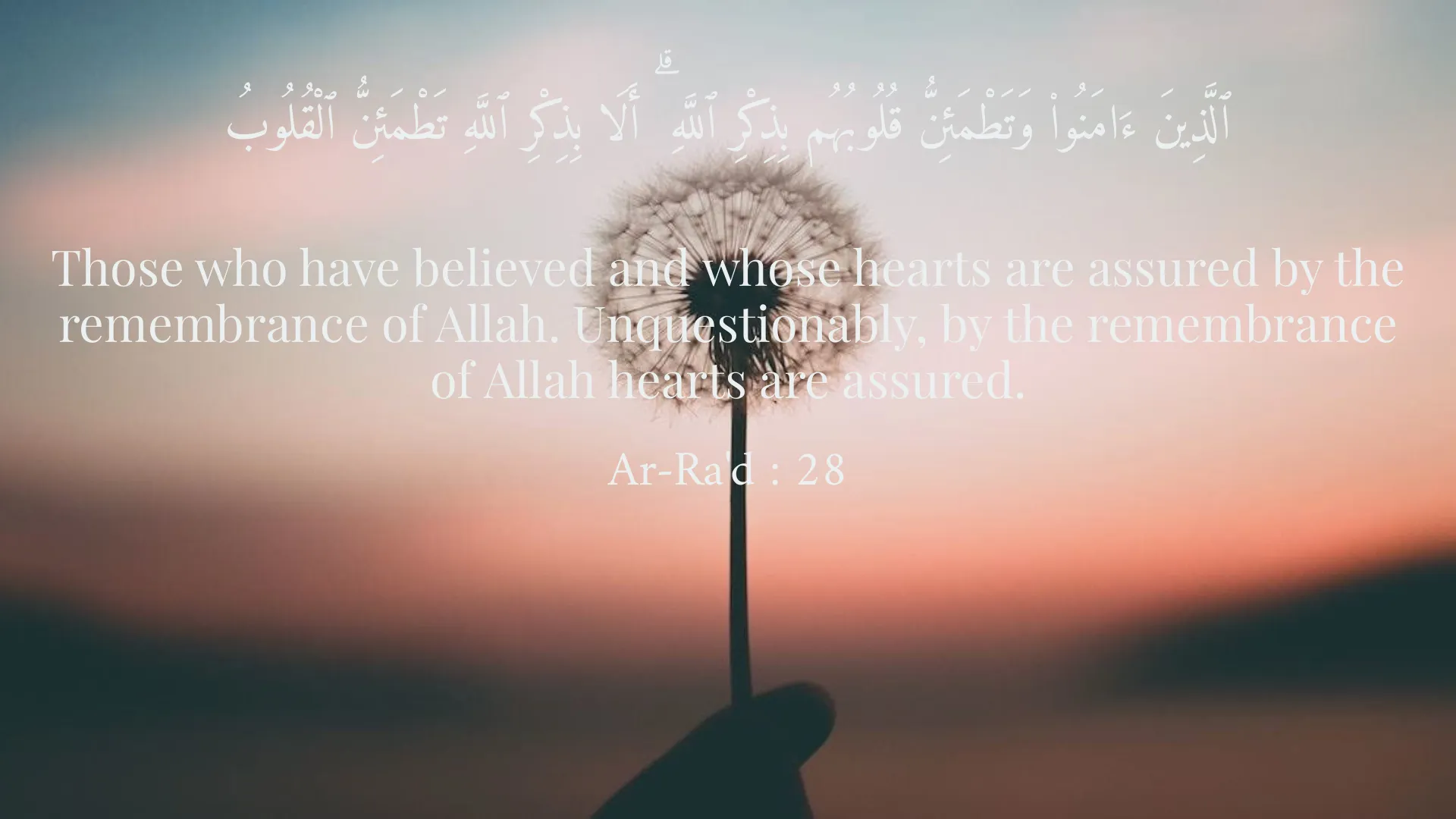
ٱلَّذِينَ ءَامَنُوا۟ وَتَطْمَئِنُّ قُلُوبُهُم بِذِكْرِ ٱللَّهِ ۗ أَلَا بِذِكْرِ ٱللَّهِ تَطْمَئِنُّ ٱلْقُلُوبُ
Those who have believed and whose hearts are assured by the remembrance of Allah. Unquestionably, by the remembrance of Allah hearts are assured.
Ar-Ra'd : 28
إِنَّمَا ٱلْمُؤْمِنُونَ ٱلَّذِينَ إِذَا ذُكِرَ ٱللَّهُ وَجِلَتْ قُلُوبُهُمْ وَإِذَا تُلِيَتْ عَلَيْهِمْ ءَايَٰتُهُۥ زَادَتْهُمْ إِيمَٰنًا وَعَلَىٰ رَبِّهِمْ يَتَوَكَّلُونَ
The believers are only those who, when Allah is mentioned, their hearts become fearful, and when His verses are recited to them, it increases them in faith; and upon their Lord they rely.
Al-Anfal : 2
مَآ أَصَابَ مِن مُّصِيبَةٍ إِلَّا بِإِذْنِ ٱللَّهِ ۗ وَمَن يُؤْمِنۢ بِٱللَّهِ يَهْدِ قَلْبَهُۥ ۗ وَٱللَّهُ بِكُلِّ شَىْءٍ عَلِيمٌ
No disaster strikes except by permission of Allah. And whoever believes in Allah - He will guide his heart. And Allah is Knowing of all things.
At-Taghabun : 11
Short Story
A pure-hearted dervish, whose heart was ever illuminated by the light of truth, was once asked: 'How is it that in this tumultuous world, you never appear sad or despairing?' The dervish replied: 'The river's water is constantly flowing, sometimes calm and sometimes turbulent, but the river never ceases to flow. So too is the heart of a believer. Sometimes the storms and whirlpools of the world trouble it, and temptations and difficulties shake its faith. But if the heart's root is firmly connected to the clear spring of God's remembrance and reliance, it will never dry up or deviate from its path. These fluctuations are merely a reminder to refresh the waters of faith and not let them stagnate. The important thing is not to lose the way and never to neglect the wellspring of remembrance of the Beloved.' Let us take heed from this tale: faith is like a river; it flows and purifies, and one should never neglect the remembrance of the Divine.