Quranic Answer
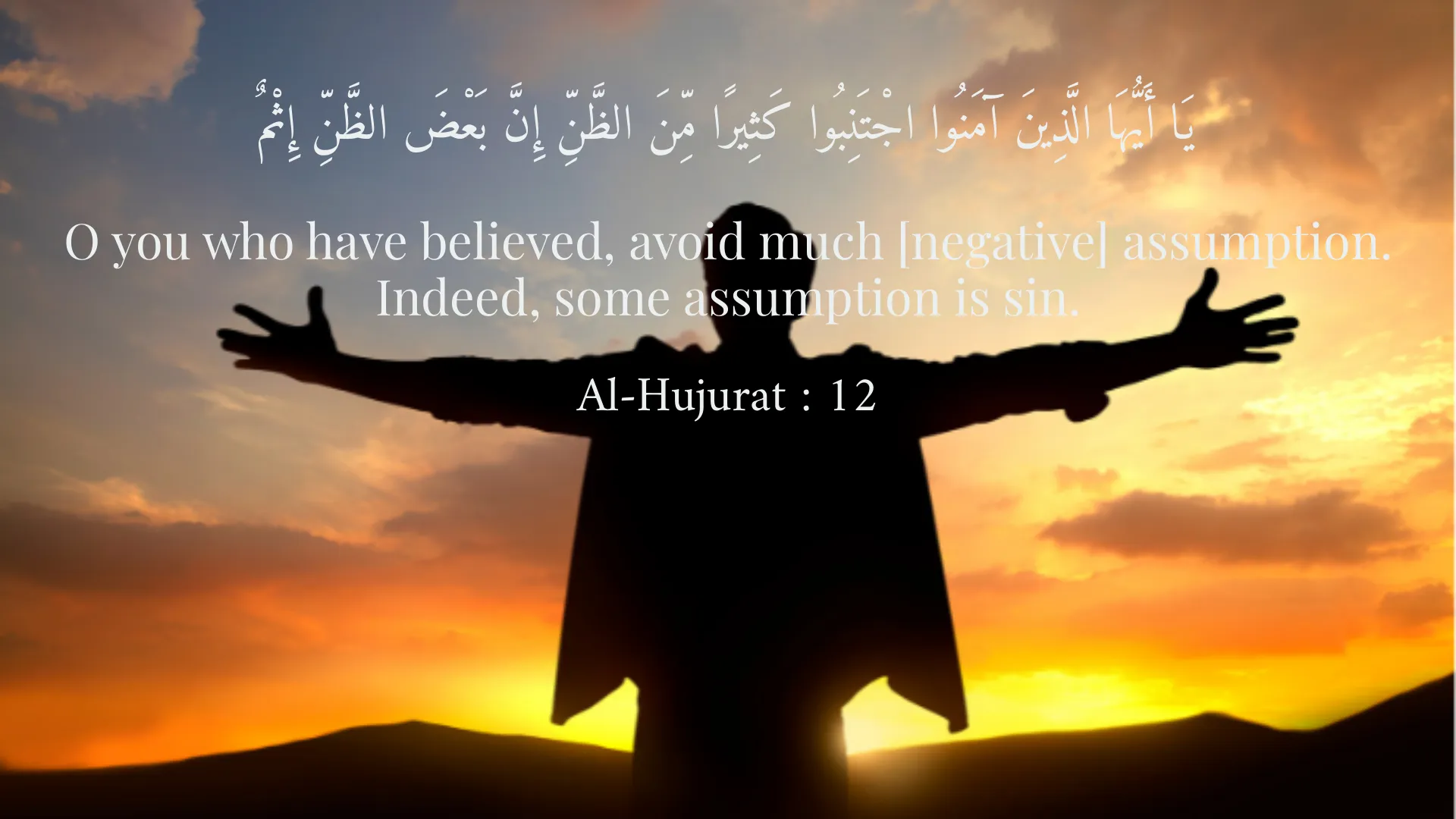
Feeling hurt by others is a common human experience, and the Holy Quran provides profound insights into relationships and emotions among individuals. The dynamics of human relationships are intricate, often filled with misinterpretations and unexpressed feelings. In many instances, misunderstandings catalyze pain in our interactions with others, leading us to feel hurt or disrespected. The root of these feelings can often be traced back to a failure to accurately comprehend each other's perspectives. In Surah Al-Hujurat, verse 12, Allah reminds us of the importance of maintaining a positive outlook in our interactions, stating, 'O you who have believed, avoid much [negative] assumption. Indeed, some assumption is sin.' This powerful verse highlights the necessity of withholding judgment and the harmful nature of baseless assumptions. It reflects the reality that many times, the hurt we feel emanates from incorrect assumptions about the intentions, feelings, or actions of others. These negative assumptions pave the way for unnecessary conflicts and emotional pain. Furthermore, it is crucial to understand that the dynamics of human relationships are influenced not only by assumptions but also by our emotional awareness and capacity for empathy. Disrespecting one another's feelings, neglecting emotional needs, and failing to pay attention can cultivate a hostile environment where feelings of hurt thrive. The essence of any relationship lies in mutual respect and understanding, as emphasized in Surah Al-Imran, verse 103. This verse underscores the importance of solidarity among believers and promotes the idea that conflicts should be avoided, urging us to uphold an atmosphere of honor and respect within our relationships. The teachings in the Quran illustrate that empathy is vital in mitigating feelings of hurt. In any relationship, whether familial, friendly, or romantic, recognizing and validating another person’s feelings is essential. Emotional neglect can lead to misunderstandings and feelings of alienation, which further exacerbate the hurt. Surah Al-Ma'idah, verse 8, encourages justice and fairness in our dealings with one another. It is a reminder that just as we seek justice for ourselves, we must also extend the same fairness and understanding towards others. Analyzing these verses leads us to a significant conclusion: feelings of hurt often arise from a lack of understanding of others' emotions, misguided assumptions, and a disregard for the foundation of relationships. Navigating this landscape necessitates self-awareness and a commitment to fostering healthy relationships through open communication. Engaging in healthy dialogue is crucial, allowing individuals to express their thoughts and feelings candidly. The act of sharing enables others to understand our perspective, thus minimizing potential misunderstandings. In confronting feelings of hurt, it is vital to approach the situation with a mindset aimed at resolution. When someone feels wronged, it is equally important to extend compassion toward them, trying to fathom their experience. This approach not only facilitates healing but also fortifies relationships. A frank discussion may reveal that the issue stemmed from a simple misunderstanding rather than an intentional breach of respect or care. Moreover, cultivating healthy communication habits is an ongoing process. It involves actively listening to each other, expressing oneself without placing blame, and taking responsibility for personal feelings. When engaged in a conversation, it can be beneficial to utilize 'I' statements instead of 'you' accusations. For instance, instead of saying, "You never listen to me," one might express, "I feel unheard when I share my thoughts." This transformation not only presents the feelings in a non-confrontational way but also invites the other person to engage responsibly and empathetically. In addition to healthy dialogue, the Quran also emphasizes the importance of forgiveness in resolving feelings of hurt. Surah Ash-Shura, verse 40, indicates that the recompense for an injury is an injury equal thereto (in degree); but if a person forgives and makes reconciliation, then his reward is with Allah. This verse underscores the power of forgiveness, highlighting that while it is natural to feel hurt, harboring resentment stunts personal growth and perpetuates a cycle of negativity. The fruits of forgiving not only benefit the one who is offended but also foster peace and understanding in relationships. Ultimately, navigating through the feelings of hurt requires intention and grace. It encourages us to nurture our relationships and seek the good in others, allowing us to build stronger bonds. The teachings of the Quran offer a foundation upon which we can enhance our emotional intelligence, equipping us with the skills to address misunderstandings before they escalate. In summary, feeling hurt by others is a shared human experience deeply rooted in our interactions and relationships. The Quran provides a rich reservoir of wisdom, guiding us to avoid negative assumptions, foster empathy, and promote justice and fairness. By embracing open communication, seeking mutual understanding, and practicing forgiveness, we can transform our relationships, creating an environment filled with love and respect. Healing from hurt is not just about addressing personal pain; it is about cultivating healthy, respectful, and compassionate interactions that uplift everyone involved.
Related Verses
يَا أَيُّهَا الَّذِينَ آمَنُوا اجْتَنِبُوا كَثِيرًا مِّنَ الظَّنِّ إِنَّ بَعْضَ الظَّنِّ إِثْمٌ
O you who have believed, avoid much [negative] assumption. Indeed, some assumption is sin.
Al-Hujurat : 12
وَأَطِيعُوا اللَّـهَ وَرَسُولَهُ وَلَا تَنَازَعُوا فَتَفْشَلُوا وَتَذْهَبَ رِيحُكُمْ ۖ وَاصْبِرُوا ۚ إِنَّ اللَّـهَ مَعَ الصَّابِرِينَ
And obey Allah and His Messenger and do not dispute and thus lose heart and waste your effort, and be patient. Indeed, Allah is with the patient.
Al-Imran : 103
يَا أَيُّهَا الَّذِينَ آمَنُوا كُونُوا قَوَّامِينَ لِلَّهِ شُهَدَاءَ بِالْقِسْطِ ۖ وَلَا يَجْرِمَنَّكُمْ شَنَآنُ قَوْمٍ عَلَى أَلَّا تَعْدِلُوا ۚ اعدلوا هو أقرب للتقوى ۚ واتقوا الله إن الله خبير بما تعملون
O you who have believed, be persistently standing firm in justice, witnesses for Allah, even if it be against yourselves or parents and relatives. Whether one is rich or poor, Allah is more worthy of both. So follow not [personal] inclination, lest you not be just. And if you distort [your testimony] or refuse [to give it], then indeed Allah is Aware of what you do.
Al-Ma'idah : 8
Short Story
One day, a man named Farhad was chatting with his friend when he suddenly felt hurt by his words. Farhad returned home, reflecting on his friend's statements, and recalled a verse from the Quran about evaluating feelings and behaviors of others. With this thought, he decided to talk to his friend. The next day, Farhad addressed the misunderstanding with his friend, resolving the issues between them. This conversation not only helped their friendship but also made Farhad feel lighter.