Quranic Answer
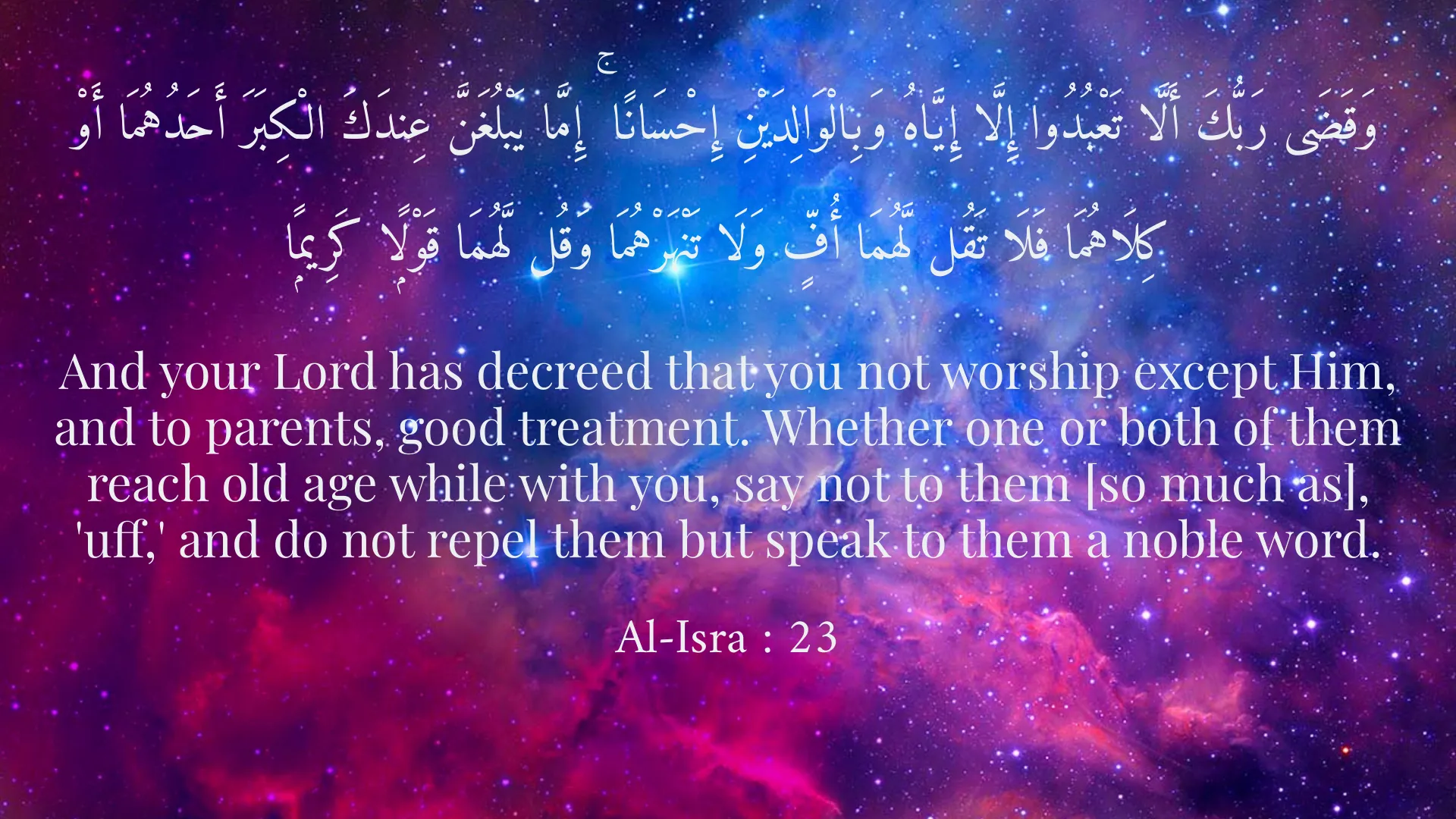
The Holy Quran emphasizes the significance of familial relationships, placing immense importance on kindness towards family members. From a religious perspective, these relations are not only personal but deeply spiritual and social, shaping the foundation of a virtuous society. In the realm of Islam, family serves as a critical institution, reflecting our duties and responsibilities towards one another as guided by the divine teachings. This article delves into various Quranic verses that elucidate the importance of treating family members with kindness and respect, especially focusing on parents and relatives. Surah Al-Isra, verse 23, is one of the pivotal verses concerning family ethics. It states, "And your Lord has decreed that you not worship except Him, and to parents, good treatment." This command highlights a fundamental principle in Islam: the worship of Allah precedes all, but immediately after, the treatment towards parents is emphasized. The verse showcases that rendering kindness to one’s parents is not merely a good deed, but a significant religious obligation that holds tremendous value in the eyes of Allah. Being kind to parents is further reinforced by the teachings of the Prophet Muhammad (peace be upon him), who said, "He who wishes to enter Paradise through its best door must please his parents." The Quran and Hadith together elucidate that kindness to our parents brings us closer to divine contentment and righteousness. In addition to parents, familial bonds extend to relatives, for whom one must also cultivate kindness and respect. Surah Al-Ankabut, verse 8 states, "And We have enjoined upon man, [care] for his parents and his relatives…" This directive underscores that caring for relatives is not just an act of goodwill but an expectation embedded within the principles of faith. It subtly indicates that one who maintains these relationships is displaying their belief in the fundamental tenets of Islam. Moreover, the Quran portrays the family unit as a social institution essential for personal development and community stability. Good conduct towards family members translates to stronger societal cohesion, whereas neglect and hostility can lead to fragmentation and discord. By treating our families well, we nurture an environment that supports mutual respect and love, acting as a trove of moral values that can be passed on to future generations. Surah Luqman, verse 14 serves as a poignant reminder of our ongoing duty toward our parents, particularly as they grow older. The verse articulates, "And We have enjoined upon man, [care] for his parents. But if they endeavor to make you associate with Me that of which you have no knowledge, do not obey them. To Me is your return, and I will inform you about what you used to do." This showcases an intricate balance in familial duties. While kindness to parents is paramount, the Quran also advises believers to maintain a strong moral stance against actions that contradict faith. Thus, we learn that respect toward one’s parents must be coupled with adherence to one’s religious principles. An essential aspect of familial relationships is the emotional support they provide. Family serves as the primary source of comfort, love, and stability throughout a person's life. When individuals experience hardships, their families often become the first refuge, offering encouragement and assistance. Conversely, the Quran advises that treating family members rightly and with compassion is a pathway to achieving happiness in life. This intrinsic value becomes even more pronounced when we consider that a harmonious family can significantly contribute to an individual’s spiritual and emotional fulfillment. Furthermore, fostering strong family ties has long-term benefits, positively affecting the upbringing of children. Children, as they grow, learn from their parents and relatives about love, respect, and cooperation within the family. Quranic teachings instill these values early in their lives, which ultimately translate into their behavior within broader society. A child raised in a nurturing environment, where kindness and respect are prominent, is more likely to exhibit these traits outside of the home and contribute positively to the community. In today's ever-changing world, where individualism often overshadows family values, the teachings from the Quran serve as a timeless guide to preserving the sanctity of familial relationships. Whether one’s relationship with their parents, siblings, or extended family, the emphasis on kindness and respect remains relevant and necessary. It calls for an active acknowledgment of our duty towards those who share our blood and experiences, reaffirming that these bonds should be cherished and maintained with care. The Quran's teachings encompass not just the familial relationship itself but its broader implications on societal harmony and spiritual fulfillment. Kindness towards family members fosters an environment conducive to peace and happiness, illustrating that our devotion to family is intertwined with our devotion to Allah. Additionally, as family serves as the first social institution we encounter, it is here that we learn the fundamental principles of relationships that guide our interactions with the outside world. In conclusion, the Holy Quran’s portrayal of family relationships goes beyond mere obligations; it is a profound reminder of our responsibilities to love, respect, and care for our families. Kindness to parents and relatives is but a reflection of our faith in Allah and a means to achieve personal and communal peace. The teachings of the Quran promote the idea that a well-bonded family not only yields individual contentment but strengthens the community at large. By adhering to these timeless principles, believers can cultivate a life of virtue while securing a promising legacy for future generations, ensuring that the values of kindness and respect continue to flourish in an ever-changing world.
Related Verses
وَقَضَى رَبُّكَ أَلَّا تَعْبُدُوا إِلَّا إِيَّاهُ وَبِالْوَالِدَيْنِ إِحْسَانًا ۚ إِمَّا يَبْلُغَنَّ عِندَكَ الْكِبَرَ أَحَدُهُمَا أَوْ كِلَاهُمَا فَلَا تَقُل لَّهُمَا أُفٍّ وَلَا تَنْهَرْهُمَا وَقُل لَّهُمَا قَوْلًۭا كَرِيمًۭا
And your Lord has decreed that you not worship except Him, and to parents, good treatment. Whether one or both of them reach old age while with you, say not to them [so much as], 'uff,' and do not repel them but speak to them a noble word.
Al-Isra : 23
وَوَصَّيْنَا الْإِنْسَانَ بِوَالِدَيْهِ ۚ وَإِن جَاهَدَاكَ عَلَى أَنْ تُشْرِكَ بِي مَا لَيْسَ لَكَ بِهِ عِلْمٌۭ فَلَا تُطِعْهُمَا ۚ إِلَيَّ مَرْجِعُكُمْ فَأُنَبِّئُكُم بِمَا كُنتُمْ تَعْمَلُونَ
And We have enjoined upon man, [care] for his parents. But if they endeavor to make you associate with Me that of which you have no knowledge, do not obey them. To Me is your return, and I will inform you about what you used to do.
Al-Ankabut : 8
Short Story
One day, a young man named Ali was walking out of his house when he saw an old man sitting by the roadside. Ali approached him respectfully and asked how he was doing. The old man said that his son had forgotten about him. Ali felt sad and said, "Why should it be this way? We should raise our children with kindness and teach them to love their parents." Ali decided to get closer to his family and show them kindness so that loneliness and neglect would no longer exist.