Quranic Answer
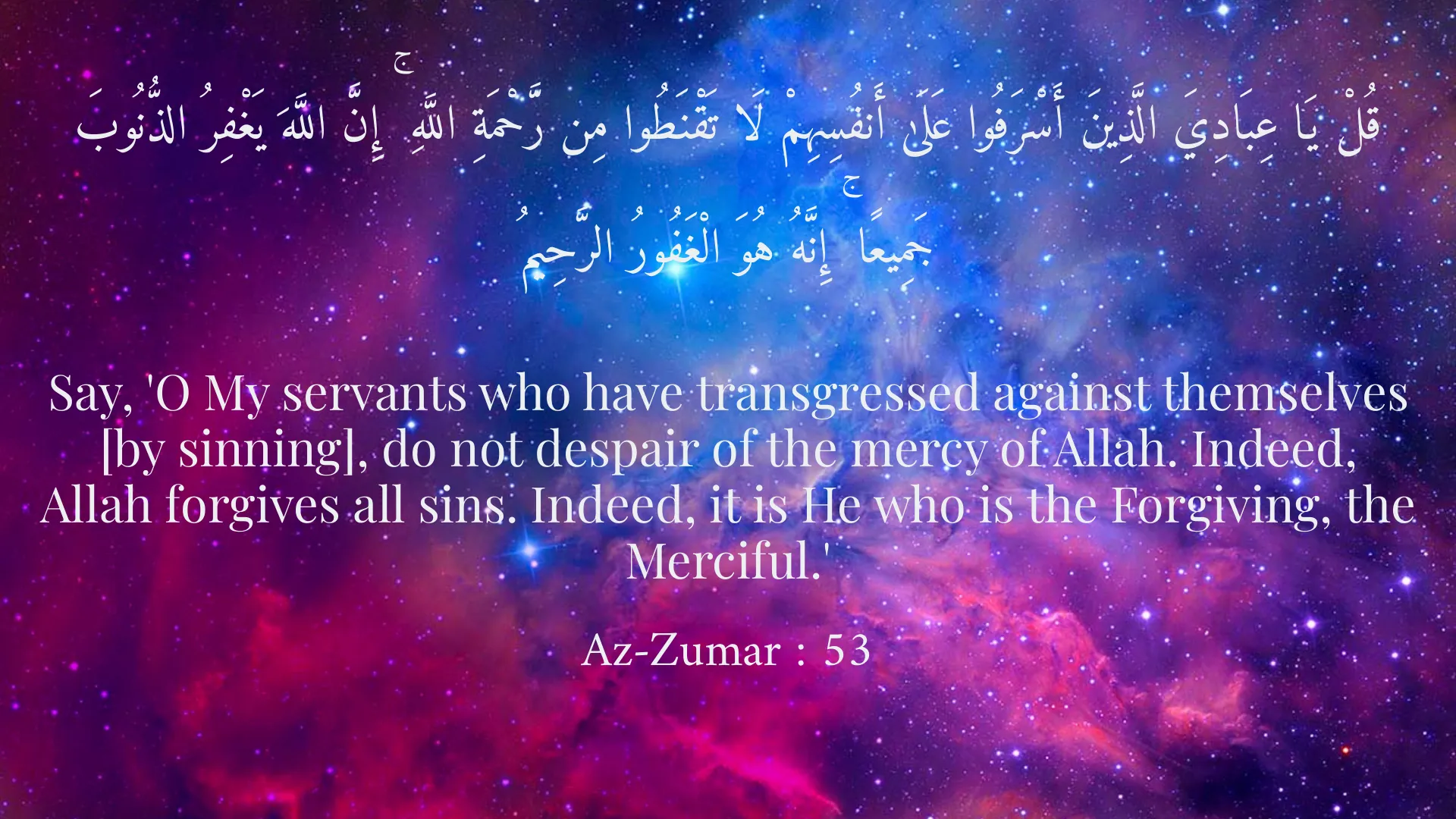
“Why don't I give myself a chance to reform?” This deeply introspective question echoes a struggle common to many human beings, a silent battle between the desire for self-improvement and the myriad forces that hold us back. From an Islamic perspective, this reluctance to embrace change or seek rectification often stems from a complex interplay of factors: despair in Allah's boundless mercy, the insidious whispers of Shaytan (Satan), attachment to familiar habits—even if they are harmful—and sometimes, a profound fear of failure or the perceived monumental effort required for transformation. The Quran, as a comprehensive guide for humanity, addresses these very human predicaments with profound wisdom, offering not only diagnosis but also a clear pathway to liberation and spiritual growth. At the heart of the matter lies the pivotal concept of Allah's infinite mercy and His unwavering willingness to forgive. Many who hesitate to reform do so because they feel their sins are too great, their past too tainted, or their capacity for change too limited. This feeling of hopelessness, however, is directly contradicted by numerous Quranic verses. Allah explicitly admonishes against despair in His mercy, declaring in Surah Az-Zumar (39:53): “Say, 'O My servants who have transgressed against themselves [by sinning], do not despair of the mercy of Allah. Indeed, Allah forgives all sins. Indeed, it is He who is the Forgiving, the Merciful.'” This verse is a beacon of hope, assuring every individual, regardless of their past transgressions, that the door to repentance and reform is perpetually open. It emphasizes that Allah's forgiveness encompasses all sins when a sincere turning (tawbah) occurs. The very act of asking this question—“Why don't I give myself a chance?”—is, in itself, a glimmer of light, a nascent desire for change that Allah encourages and facilitates. Another significant barrier to reform is the cunning deception of Shaytan. Allah warns us about his enmity and his relentless efforts to mislead humanity. Shaytan's primary strategy is to discourage believers from doing good, from repenting, and from striving for betterment. He might whisper thoughts like, “It's too late,” “You're not strong enough,” “You'll just fail again,” or “Enjoy your life, reform later.” In Surah Al-Baqarah (2:268), Allah says, “Satan threatens you with poverty and enjoins you to immorality, while Allah promises you forgiveness from Him and bounty. And Allah is all-Encompassing and Knowing.” Shaytan often makes the path to reform seem arduous, fraught with sacrifice, and devoid of immediate pleasure, while making sinful habits appear comfortable, easy, or even rewarding in the short term. Recognizing these whispers as external temptations, rather than inherent personal failures, is the first step towards disarming them. Furthermore, human beings are creatures of habit. Breaking away from established patterns, even detrimental ones, requires significant conscious effort and willpower. The “comfort zone” of our current state, despite its imperfections, can be deceptively appealing because it is known and predictable. The thought of stepping into the unknown territory of genuine change can evoke fear—fear of societal judgment, fear of losing certain aspects of one's identity, or fear of the struggle itself. Islam, however, teaches us that true comfort and peace lie in aligning oneself with the divine will and purifying the soul. The Quran reminds us that this life is temporary and a test, and true success is measured by one's commitment to righteousness and self-correction. The path to reform is not merely about abandoning sins; it is about actively striving towards good. This concept is beautifully articulated in Surah Al-Ankabut (29:69): “But as for those who strive for Us - We will surely guide them to Our ways. And indeed, Allah is with the doers of good.” This verse underscores the principle that Allah rewards sincere effort and provides guidance to those who actively seek to draw closer to Him. It's a divine promise that when a person takes even a single step towards rectification, Allah will meet them with greater support and open doors they never imagined. The struggle (jihad al-nafs), or the inner battle against one's lower self, is a continuous process of self-refinement. It involves conscious choices, patience, perseverance, and reliance on Allah. To truly give oneself a chance at reform, one must first cultivate a sincere intention (niyyah) to change for Allah's sake. This intention transforms a mere wish into a powerful force. Following this, sincere repentance (tawbatun nasuha) is crucial. This is not just saying “I'm sorry,” but involves several elements: expressing genuine regret for past actions, immediately stopping the sinful behavior, resolving firmly never to return to it, and, if applicable, making amends to those who have been wronged. Allah explicitly encourages this, as in Surah An-Nur (24:31): “And repent to Allah all of you, O believers, that you may succeed.” Success, in the Quranic sense, is intrinsically linked to this turning back to Allah. Finally, remember that reform is a journey, not a destination. There might be setbacks, moments of weakness, or old habits resurfacing. The key is not to succumb to despair but to rise again, renew the intention, and seek Allah's forgiveness once more. Allah loves those who turn back to Him repeatedly. Giving oneself a chance means embracing self-compassion while maintaining self-accountability, understanding that Allah's mercy is always greater than any sin, and that every sincere effort, no matter how small, is recognized and rewarded. It is an invitation to rebuild one's relationship with the Divine, secure in the knowledge that true peace and success lie in this perpetual striving for inner purity and alignment with God's perfect guidance.
Related Verses
قُلْ يَا عِبَادِيَ الَّذِينَ أَسْرَفُوا عَلَىٰ أَنفُسِهِمْ لَا تَقْنَطُوا مِن رَّحْمَةِ اللَّهِ ۚ إِنَّ اللَّهَ يَغْفِرُ الذُّنُوبَ جَمِيعًا ۚ إِنَّهُ هُوَ الْغَفُورُ الرَّحِيمُ
Say, 'O My servants who have transgressed against themselves [by sinning], do not despair of the mercy of Allah. Indeed, Allah forgives all sins. Indeed, it is He who is the Forgiving, the Merciful.'
Az-Zumar : 53
وَالَّذِينَ جَاهَدُوا فِينَا لَنَهْدِيَنَّهُمْ سُبُلَنَا ۚ وَإِنَّ اللَّهَ لَمَعَ الْمُحْسِنِينَ
But as for those who strive for Us - We will surely guide them to Our ways. And indeed, Allah is with the doers of good.
Al-Ankabut : 69
وَتُوبُوا إِلَى اللَّهِ جَمِيعًا أَيُّهَ الْمُؤْمِنُونَ لَعَلَّكُمْ تُفْلِحُونَ
And repent to Allah all of you, O believers, that you may succeed.
An-Nur : 31
Short Story
There once was a man, burdened by his past mistakes, who often said to himself, “I wish to turn a new leaf, but how can I, after all that has passed? My faults are too many, and my spirit too weak.” A wise dervish, observing his perpetual sorrow, approached him and said, “My friend, the river flows ever onward, purifying itself with each new current. Do you think the sun refuses to rise anew because yesterday it set? Allah's mercy is vaster than all your sins, and His door of repentance is always open. The true weakness is not in having erred, but in refusing to rise again. Give yourself the chance that your Creator so generously offers.” Inspired by these words, the man shed his despair, and though the path was not without its struggles, he found strength in seeking a better self, knowing that every step towards goodness is counted and welcomed by the Most Merciful.