Quranic Answer
In the Holy Quran, the concept of certain nations and peoples being cursed is a profound and instructive one, by no means implying an arbitrary or vengeful act on the part of God. Rather, it signifies the inevitable and unavoidable consequences of those nations' own actions and choices. "Curse" (لعنت) in the Quranic lexicon means to be "expelled from the mercy of God." This expulsion from divine mercy is the natural and logical outcome of the disbelief, rebellion, oppression, and corruption that those societies brought upon themselves, persistently clinging to falsehood with obstinacy and defiance. Almighty God, the boundless source of mercy and justice, never subjects anyone to punishment or distance from His mercy without first providing clear proofs, sending prophets, and manifesting evident signs. The stories of past nations recounted in the Quran are all replete with great lessons for humanity, urging them to learn from their fate and avoid similar errors. One of the primary reasons for nations being cursed is "disbelief" (Kufr) and "polytheism" (Shirk). This means denying the existence of the One God, associating partners with Him, and worshipping idols or fabricated powers. The people of Noah, 'Ad, and Thamud are prominent examples of nations that, due to their polytheism and stubborn defiance against the call of their prophets (Noah, Hud, and Salih), were deprived of divine mercy and consequently faced severe punishments. Despite witnessing miracles and clear evidence, they continued to deny the divine messengers and insisted on their misguidance. This disbelief and denial were not merely intellectual beliefs but led to actions such as oppression, corruption, and transgression in society. Another significant reason is the "rejection of prophets" and "rebellion against divine commands." Many past nations, when divine prophets were sent to guide them, not only disregarded their words but also mocked them, persecuted them, and even plotted to kill them. The Children of Israel are one such people frequently mentioned in the Quran as having been cursed for repeatedly breaking covenants, killing prophets, and engaging in persistent disobedience. Despite abundant divine blessings and witnessing great miracles, this nation continued in its transgression. The curse upon them in the Quran is attributed to practices such as usury, fornication, breaking oaths, and distorting the word of God. "Oppression and corruption" (Zulm and Fasad) are also major factors leading to expulsion from divine mercy. The people of Lut, due to their vile and detestable acts (homosexuality) as well as widespread societal corruption that led to their destruction, were distanced from God's mercy. Pharaoh and his people incurred divine curse due to their immense oppression of the Children of Israel, their arrogance, and their claim to divinity. The curse in these instances signifies moral and social decay and sins that are condemned by human nature and divine teachings. This corruption broadly encompasses any inhumane acts, transgression against the rights of others, and injustice. It is crucial to understand that the curse in the Quran is not merely a judicial decree without basis but rather reflects a cosmic reality and a divine tradition. God has granted humanity the power of choice, and the destiny of every nation rests upon their choices. When a society collectively and consciously chooses the path of disbelief, oppression, and corruption, and stubbornly resists the call of truth, divine mercy is withdrawn from them, and ultimately, they face the consequences of their actions. This punishment can manifest in this world (e.g., floods, earthquakes, droughts, destruction) or in the hereafter (Hellfire and eternal separation from divine mercy). These narratives are recounted not only as cautionary tales but also as warnings for future generations so that humanity may avoid repeating past mistakes and adhere to the straight path of righteousness. Consequently, the curse in the Quran is an expression of absolute divine justice, which is neither discriminatory nor unwarranted, but rather the natural fruit of human actions and rebellion.
Related Verses
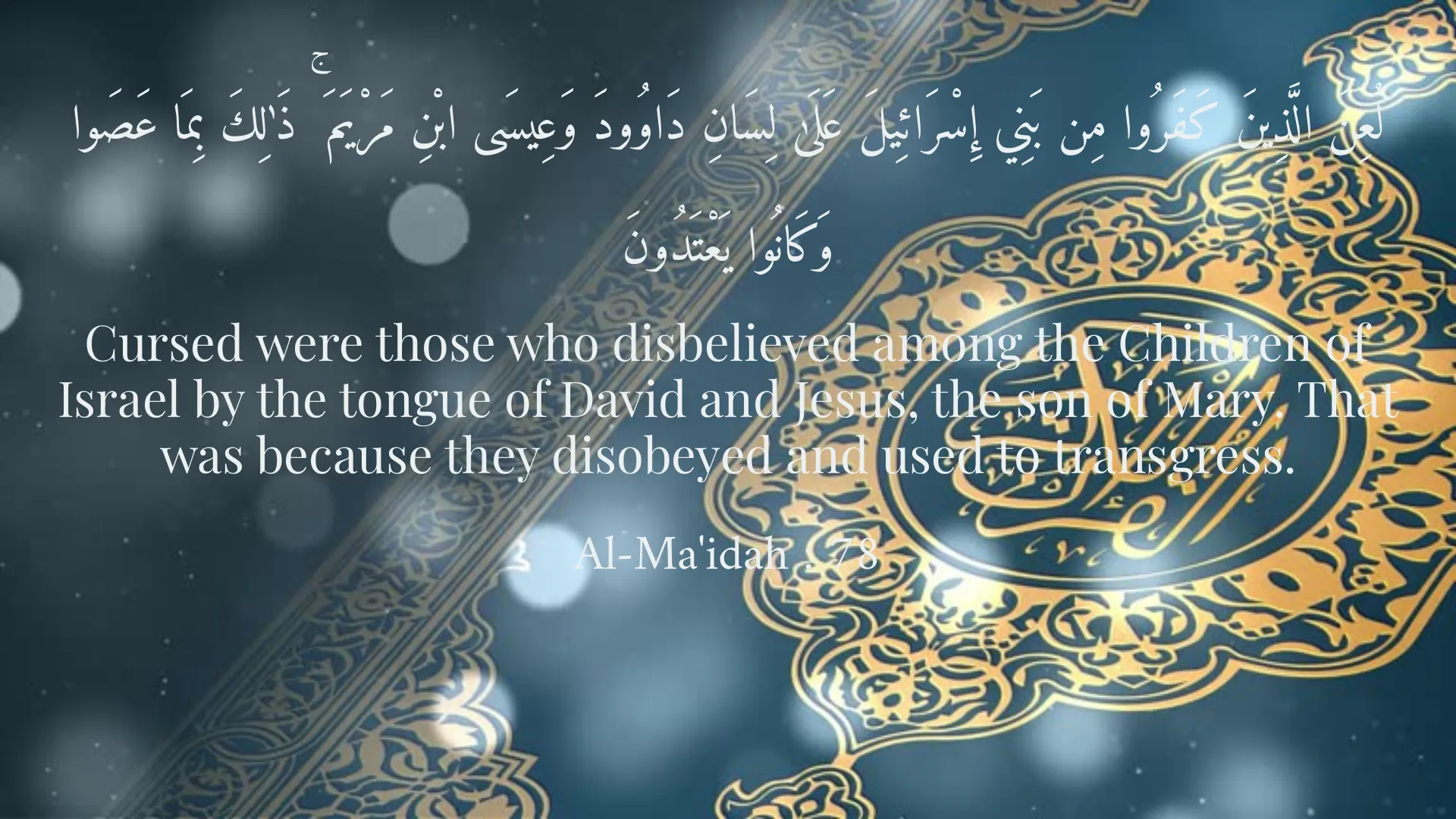
لُعِنَ الَّذِينَ كَفَرُوا مِن بَنِي إِسْرَائِيلَ عَلَىٰ لِسَانِ دَاوُودَ وَعِيسَى ابْنِ مَرْيَمَ ۚ ذَٰلِكَ بِمَا عَصَوا وَكَانُوا يَعْتَدُونَ
Cursed were those who disbelieved among the Children of Israel by the tongue of David and Jesus, the son of Mary. That was because they disobeyed and used to transgress.
Al-Ma'idah : 78
وَأُتْبِعُوا فِي هَٰذِهِ الدُّنْيَا لَعْنَةً وَيَوْمَ الْقِيَامَةِ ۗ أَلَا إِنَّ عَادًا كَفَرُوا رَبَّهُمْ ۗ أَلَا بُعْدًا لِّعَادٍ قَوْمِ هُودٍ
And a curse was made to follow them in this world and on the Day of Resurrection. Unquestionably, 'Aad disbelieved in their Lord; then away with 'Aad, the people of Hud.
Hud : 60
وَأُتْبِعُوا فِي هَٰذِهِ الدُّنْيَا لَعْنَةً وَيَوْمَ الْقِيَامَةِ ۚ بِئْسَ الرِّفْدُ الْمَرْفُودُ
And a curse was made to follow them in this world and on the Day of Resurrection. And wretched is the gift which is given.
Hud : 99
Short Story
It is said there was a tyrannical and harsh king who constantly oppressed his subjects and disregarded their rights. A wise elder advised him, saying: "O King! How long will your power endure when its foundation is built upon injustice? The sighs of the oppressed and the tears of orphans are an innumerable army that will crumble the walls of your kingdom, and a flood that will destroy the palaces of tyranny." The king paid no heed to the wise man's words and increased his oppression. But it was not long before a rebellion arose from the very oppressed subjects, shaking his throne. Ultimately, that tyrannical king was deposed from power, and nothing remained for him but infamy and regret. Thus, whoever sows the seeds of injustice reaps nothing but humiliation and curse, and history bears witness that the fate of oppressors is a lesson for others.