Quranic Answer
From the perspective of the Holy Quran, the phenomenon of sins becoming normalized in society, although not explicitly mentioned with the precise term “normalization,” has its roots and contributing factors deeply elaborated. The Quran serves as a mirror reflecting both human nature and societal dynamics, explaining how deviations, over time, transform from individual transgressions into social anomalies, and subsequently into “common” and even “accepted” practices. This process is not a sudden occurrence but rather the result of a chain of psychological, spiritual, and social factors that the Quran highlights. One of the most significant reasons emphasized by the Quran is “following desires and lusts” (اتباع الهوى). When humans, instead of adhering to divine guidance and sound reason, surrender to their carnal inclinations and whims, moral boundaries become blurred. The Quran repeatedly warns that pursuing desires and lusts deviates individuals from the path of truth and leads to degradation. For instance, in Surah An-Nisa, verse 27, Allah states: “وَاللَّهُ یُرِیدُ أَن یَتُوبَ عَلَیْكُمْ وَیُرِیدُ الَّذِینَ یَتَّبِعُونَ الشَّهَوَاتِ أَن تَمِیلُوا مَیْلًا عَظِیمًا” (And Allah wishes to accept your repentance, but those who follow [their] desires wish that you [should] deviate [with] a great deviation). When this pursuit of desires becomes a collective phenomenon, sins stemming from these inclinations are no longer considered ugly or reprehensible; instead, they gradually become part of daily life and even perceived as an individual’s “right.” This leads to a vicious cycle: the more a sin is committed, the less offensive it becomes, thus normalizing it, and the more normalized it becomes, the more individuals dare to commit it. The second crucial factor is “heedlessness and forgetting God” (الغفلة عن الله). The Holy Quran considers heedlessness to be the root of many deviations. When humanity loses its awareness of God’s presence, accountability, and the Day of Judgment, the fear of divine punishment diminishes. This spiritual amnesia weakens internal motives for avoiding sin and performing good deeds. In Surah Al-A'raf, verse 179, Allah likens those who are heedless of divine verses and go astray due to not properly using their faculties (hearts, eyes, ears) to cattle: “وَلَقَدْ ذَرَأْنَا لِجَهَنَّمَ کَثِیرًا مِّنَ الْجِنِّ وَالْإِنسِ ۖ لَهُمْ قُلُوبٌ لَّا یَفْقَهُونَ بِهَا وَلَهُمْ أَعْیُنٌ لَّا یُبْصِرُونَ بِهَا وَلَهُمْ آذَانٌ لَّا یَسْمَعُونَ بِهَا ۚ أُولَٰئِكَ کَالْأَنْعَامِ بَلْ هُمْ أَضَلُّ ۚ أُولَٰئِكَ هُمُ الْغَافِلُونَ” (And We have certainly created for Hell many of the jinn and mankind. They have hearts with which they do not understand, and they have eyes with which they do not see, and they have ears with which they do not hear. Those are like livestock; rather, they are more astray. It is they who are the heedless). This collective heedlessness paves the way for the spread of sin, as there is no longer a strong internal conscience or fear of otherworldly consequences to deter it. A society that becomes heedless of God loses its moral compass, and sins gradually intertwine with its very fabric. The third, and perhaps most significant, factor at the societal level is the “abandonment of enjoining good and forbidding evil” (ترك الأمر بالمعروف والنهی عن المنکر). The Quran considers this duty a fundamental characteristic of the Muslim community and a factor for societal prosperity. In Surah Al-Imran, verse 104, Allah says: “وَلْتَکُن مِّنکُمْ أُمَّةٌ یَدْعُونَ إِلَى الْخَیْرِ وَیَأْمُرُونَ بِالْمَعْرُوفِ وَیَنْهَوْنَ عَنِ الْمُنکَرِ ۚ وَأُولَٰئِكَ هُمُ الْمُفْلِحُونَ” (And let there be [arising] from among you a nation inviting to [all that is] good, enjoining what is right and forbidding what is wrong, and those will be the successful). When this moral backbone of society weakens, meaning individuals become indifferent to deviations and remain silent, sin grows unchecked. Surah Al-Ma'idah, verse 79, explicitly mentions the Children of Israel being cursed by God because “کَانُوا لَا یَتَنَاهَوْنَ عَن مُّنکَرٍ فَعَلُوهُ ۚ لَبِئْسَ مَا کَانُوا یَفْعَلُونَ” (They did not forbid one another from Munkar (wrongdoing) that they committed. How wretched was that which they used to do). This collective indifference to sin is the greatest factor in its normalization. If no one admonishes wrongdoing, and others show no reaction, the wrongdoer might believe their act is not wrong, and may even become a role model for others. Fourth, the “beautification by Satan and the influence of bad company.” Satan is a clear enemy to humanity and constantly tries to make evil deeds appear appealing to humans, tempting them towards sin. In Surah An-Nahl, verse 63, Allah states: “تَاللَّهِ لَقَدْ أَرْسَلْنَا إِلَىٰ أُمَمٍ مِّن قَبْلِكَ فَزَیَّنَ لَهُمُ الشَّیْطَانُ أَعْمَالَهُمْ فَهُوَ وَلِیُّهُمُ الْیَوْمَ وَلَهُمْ عَذَابٌ أَلِیمٌ” (By Allah, We did certainly send [messengers] to nations before you, but Satan made their deeds attractive to them. So he is their ally today, and for them will be a painful punishment). These satanic temptations gain more destructive power when combined with corrupt environments and unhealthy companions. A society that promotes satanic values such as egocentrism, materialism, and hedonism becomes a fertile ground for the growth and normalization of sins. Fifth, the “love of worldly life and neglect of the Hereafter.” When the love for this world and its transient manifestations outweighs the love for God and eternal values, individuals become willing to trample on moral principles and divine commands to achieve their worldly goals. In Surah At-Tawbah, verse 38, Allah reproaches those who are sluggish in jihad and cling to worldly life: “یَا أَیُّهَا الَّذِینَ آمَنُوا مَا لَکُمْ إِذَا قِیلَ لَکُمُ انفِرُوا فِی سَبِیلِ اللَّهِ اثَّاقَلْتُمْ إِلَى الْأَرْضِ ۚ أَرَضِیتُم بِالْحَیَاةِ الدُّنْیَا مِنَ الْآخِرَةِ ۚ فَمَا مَتَاعُ الْحَیَاةِ الدُّنْیَا فِی الْآخِرَةِ إِلَّا قَلِیلٌ” (O you who have believed, what is [the matter] with you that, when you are told to go forth in the cause of Allah, you adhere heavily to the earth? Are you content with the life of this world rather than the Hereafter? But what is the enjoyment of worldly life compared to the Hereafter except a [very] little?). This materialistic outlook allows many sins, such as usury, bribery, lying, and deception, which may seem to offer worldly benefits, to not only become normalized but also accepted as tools for success and advancement in society. In summary, the normalization of sins in society, from the Quranic perspective, is the result of the convergence of several factors: weak faith and heedlessness of God, following desires, indifference towards enjoining good and forbidding evil, and the allure of Satan and worldly life. The Quran warns believers to always be vigilant against these factors and, through piety, awareness, and collective responsibility, resist the spread of sins and build a society based on divine values. The fight against the normalization of sin requires a return to the authentic teachings of the Quran and adherence to its commands in all aspects of individual and social life.
Related Verses
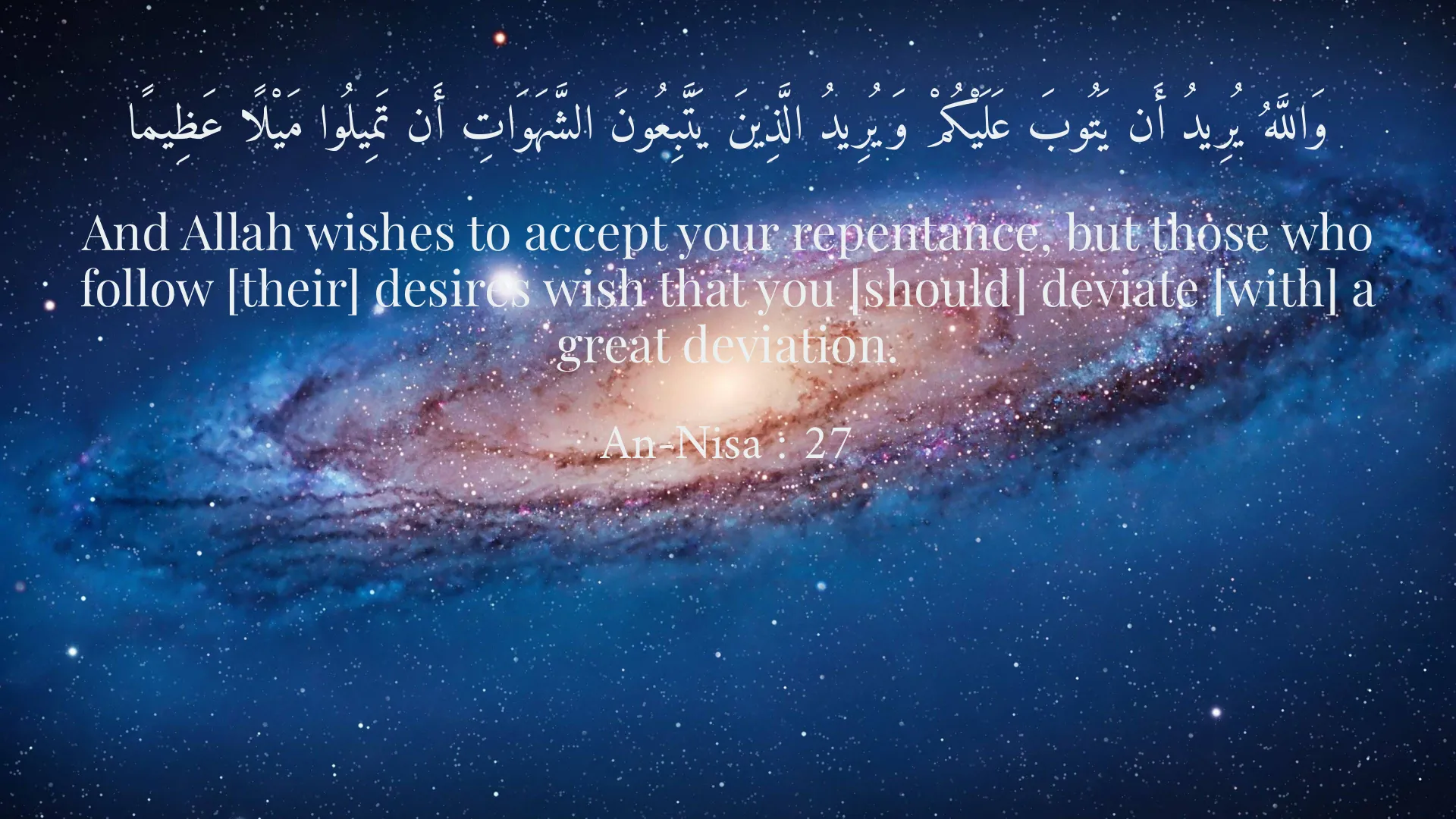
وَاللَّهُ یُرِیدُ أَن یَتُوبَ عَلَیْكُمْ وَیُرِیدُ الَّذِینَ یَتَّبِعُونَ الشَّهَوَاتِ أَن تَمِیلُوا مَیْلًا عَظِیمًا
And Allah wishes to accept your repentance, but those who follow [their] desires wish that you [should] deviate [with] a great deviation.
An-Nisa : 27
وَلَقَدْ ذَرَأْنَا لِجَهَنَّمَ کَثِیرًا مِّنَ الْجِنِّ وَالْإِنسِ ۖ لَهُمْ قُلُوبٌ لَّا یَفْقَهُونَ بِهَا وَلَهُمْ أَعْیُنٌ لَّا یُبْصِرُونَ بِهَا وَلَهُمْ آذَانٌ لَّا یَسْمَعُونَ بِهَا ۚ أُولَٰئِكَ کَالْأَنْعَامِ بَلْ هُمْ أَضَلُّ ۚ أُولَٰئِكَ هُمُ الْغَافِلُونَ
And We have certainly created for Hell many of the jinn and mankind. They have hearts with which they do not understand, and they have eyes with which they do not see, and they have ears with which they do not hear. Those are like livestock; rather, they are more astray. It is they who are the heedless.
Al-A'raf : 179
کَانُوا لَا یَتَنَاهَوْنَ عَن مُّنکَرٍ فَعَلُوهُ ۚ لَبِئْسَ مَا کَانُوا یَفْعَلُونَ
They did not forbid one another from Munkar (wrongdoing) that they committed. How wretched was that which they used to do.
Al-Ma'idah : 79
Short Story
It is narrated that a king in India, after a period of neglecting his subjects' affairs, consulted his viziers and said: 'The people have become corrupt and are living in luxury and heedlessness. How can I rectify this situation?' One vizier suggested: 'Through harsh measures.' Another said: 'By instilling fear.' A third said: 'By making examples of some individuals.' But the wise vizier replied: 'O King! The people are a reflection of their ruler. If the spring is clear, the river will also be clear. If you desire justice and righteousness from your people, first be just and righteous yourself.' This story reminds us that if rulers or influential individuals in society become heedless of sins and deviations, or even become entangled in them themselves, those sins gradually become normalized among the people, losing their reprehensibility. This is because people often look to the ways and manners of their leaders, and if a wrong path appears normal, they will accept it. Therefore, to reform society, one must begin with oneself and, by awakening consciences, prevent ugliness from becoming normalized.