Quranic Answer
Feeling inner turmoil, even when outward life appears calm and untroubled, is a profound and meaningful experience that many people encounter. This state indicates that true peace transcends material affairs and worldly appearances. The Holy Quran, a book of guidance and light, beautifully explains the roots of this inner turmoil and offers solutions for achieving lasting tranquility. In reality, genuine peace originates from the depths of the soul and through connection with the Creator of the universe, not merely from accumulating wealth, gaining status, or enjoying material comforts. A heart that seems outwardly calm but is inwardly troubled is searching for something beyond what is readily available; something that can only be found by connecting with the infinite source of peace, Almighty God. The primary root of this turmoil often lies in heedlessness of God's remembrance and insufficient attention to the purpose of human creation. Humans are inherently inclined towards absolute perfection and their Creator. When this innate need is ignored or filled with trivial worldly pursuits, the heart feels an emptiness and restlessness, even if it is at the peak of material comfort. The Quran states in Surah Ar-Ra'd, verse 28: "Allatheena amanoo watatma'innu quloobuhum bidhikri Allahi 'ala bidhikri Allahi tatma'innu alquloobu" which means, "Those who have believed and whose hearts are assured by the remembrance of Allah. Unquestionably, by the remembrance of Allah hearts find tranquility." This verse explicitly states that the main source of peace is the remembrance of God. When the heart neglects God's remembrance, it becomes anxious and troubled, because instead of relying on the eternal power of God, it becomes attached to the transient affairs of the world. This attachment to the world itself is the source of many worries and fears, because everything in the world is perishable, and humans fear its demise. Another factor contributing to inner turmoil is excessive focus on materialism and forgetting the afterlife. In Surah Al-Hadid, verse 20, Allah describes the reality of worldly life: "'I'lamoo annama alhayatu addunya la'ibun walahwun wazeenatun watafakharun baynakum watakathurun fee al'amwali wal'awladi kamathali ghaythin a'jaba alkuffara nabatuhu thumma yaheeju fatarahu musfarran thumma yakoonu hutaman wafee al'akhirati 'athabun shadeedun wamaghfiratun mina Allahi waridwanun wama alhayatu addunya illa mata'u alghuroori" meaning, "Know that the life of this world is only play and amusement, a show and boasting among yourselves, and a rivalry in increase of wealth and children - like the example of a rain whose [resulting] plant growth pleases the tillers; then it dries and you see it turned yellow; then it becomes [scattered] debris. And in the Hereafter is severe punishment and forgiveness from Allah and approval. And what is the worldly life except the enjoyment of delusion." This verse shows that if all of a person's concern is the world and they forget the Hereafter, their heart will constantly seek something that will never give them true peace, and it will always keep them in a cycle of competition, fear of loss, and regret. Sins and disobedience also play a significant role in disturbing the heart. Every sin leaves a black stain on the heart and diminishes its light. Repeated sins harden and darken the heart, cutting off its connection to the source of peace. Repentance and returning to God are essential steps for purifying the heart and restoring tranquility. Furthermore, dissatisfaction with divine decree and lack of trust in God are other reasons for inner turmoil. When a person tries to control everything themselves and loses their temper with every difficulty and problem, instead of entrusting affairs to God and trusting His wisdom, it is natural for them to become anxious and worried. The Quran says in Surah Al-Baqarah, verse 153: "Ya ayyuha allatheena amanoo ista'eeno bissabri waalsalati inna Allaha ma'a assabireen" which means, "O you who have believed, seek help through patience and prayer. Indeed, Allah is with the patient." Patience and prayer are two powerful tools for dealing with problems and finding inner peace. Patience means steadfastness in the face of difficulties and not being hasty in solving them, and prayer means direct connection with God and seeking refuge in Him. The solution to this inner turmoil is to return to one's divine nature, strengthen faith, and increase the remembrance of God in daily life. This includes reading the Quran, engaging in remembrance (dhikr), performing regular prayers, supplication, contemplation of divine verses, and serving others. The deeper a person's connection with God, the greater peace their heart will experience, because the source of peace is infinite and never diminishes. Ultimately, it must be understood that worldly life is a test, and inner turmoils can be a means of awakening and returning to God. By recognizing the roots of this turmoil and acting upon divine commands, one can achieve true and lasting peace, which settles within the heart not by changing external circumstances, but by the light of faith and divine remembrance. This peace is a precious treasure that no wealth or power can buy, and it is only attainable through reliance on and connection with God. Recitation of the Quran and contemplation of its meanings also play a significant role in calming the heart, for the word of God is light and purifies hearts. Engaging in sincere acts of worship and being present in devotion also stabilizes this peace. Self-purification, detachment from worldly concerns, and training the soul towards perfection are all paths that lead to eternal tranquility. In this journey, even when facing challenges and adversities, a heart that is assured by the remembrance of God will not waver.
Related Verses
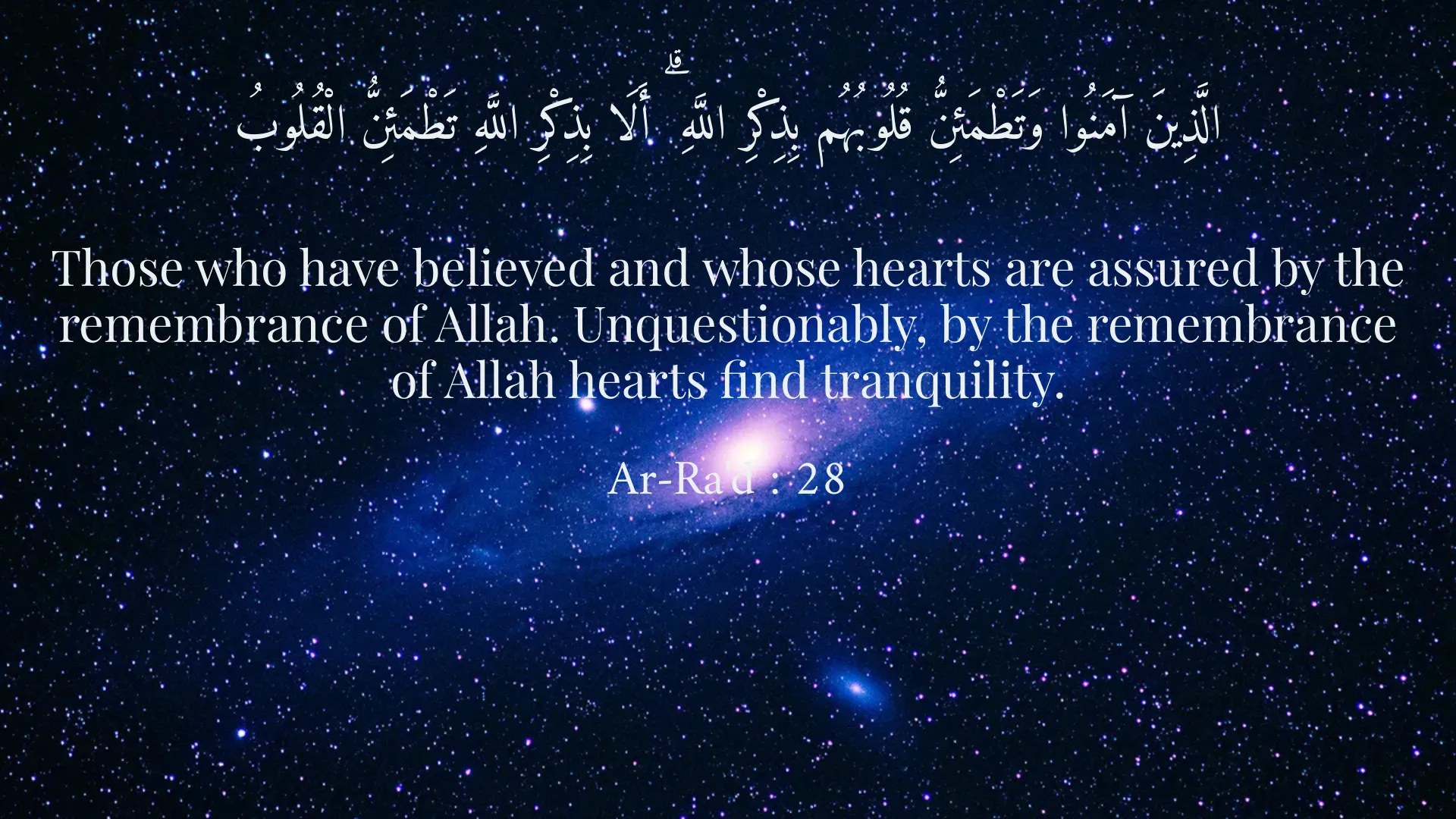
الَّذِينَ آمَنُوا وَتَطْمَئِنُّ قُلُوبُهُم بِذِكْرِ اللَّهِ ۗ أَلَا بِذِكْرِ اللَّهِ تَطْمَئِنُّ الْقُلُوبُ
Those who have believed and whose hearts are assured by the remembrance of Allah. Unquestionably, by the remembrance of Allah hearts find tranquility.
Ar-Ra'd : 28
يَا أَيُّهَا الَّذِينَ آمَنُوا اسْتَعِينُوا بِالصَّبْرِ وَالصَّلَاةِ ۚ إِنَّ اللَّهَ مَعَ الصَّابِرِينَ
O you who have believed, seek help through patience and prayer. Indeed, Allah is with the patient.
Al-Baqarah : 153
اعْلَمُوا أَنَّمَا الْحَيَاةُ الدُّنْيَا لَعِبٌ وَلَهْوٌ وَزِينَةٌ وَتَفَاخُرٌ بَيْنَكُمْ وَتَكَاثُرٌ فِي الْأَمْوَالِ وَالْأَوْلَادِ ۖ كَمَثَلِ غَيْثٍ أَعْجَبَ الْكُفَّارَ نَبَاتُهُ ثُمَّ يَهِيجُ فَتَرَاهُ مُصْفَرًّا ثُمَّ يَكُونُ حُطَامًا ۖ وَفِي الْآخِرَةِ عَذَابٌ شَدِيدٌ وَمَغْفِرَةٌ مِّنَ اللَّهِ وَرِضْوَانٌ ۚ وَمَا الْحَيَاةُ الدُّنْيَا إِلَّا مَتَاعُ الْغُرُورِ
Know that the life of this world is only play and amusement, a show and boasting among yourselves, and a rivalry in increase of wealth and children - like the example of a rain whose [resulting] plant growth pleases the tillers; then it dries and you see it turned yellow; then it becomes [scattered] debris. And in the Hereafter is severe punishment and forgiveness from Allah and approval. And what is the worldly life except the enjoyment of delusion.
Al-Hadid : 20
Short Story
In Saadi's Gulistan, it is narrated that there was a king of great splendor and majesty, yet his heart was restless. Every night, despite his retinue and full treasuries, sleep would not come to his eyes, and he was troubled by affairs of the kingdom and hidden enemies. In the same city lived a dervish who possessed only a single cloak and resided in a corner of a mosque. He stayed awake until dawn, not out of anxiety, but from the joy of supplicating to his Lord. One day, the king saw the dervish and inquired about his state. The dervish replied, "O King, my comfort lies in my detachment, and your restlessness in the abundance of your possessions. A heart that remembers God needs no outward peace, for it is itself the source of tranquility." The king took heed of his words and understood that true peace is found in detachment from the world and a present heart with God.