Quranic Answer
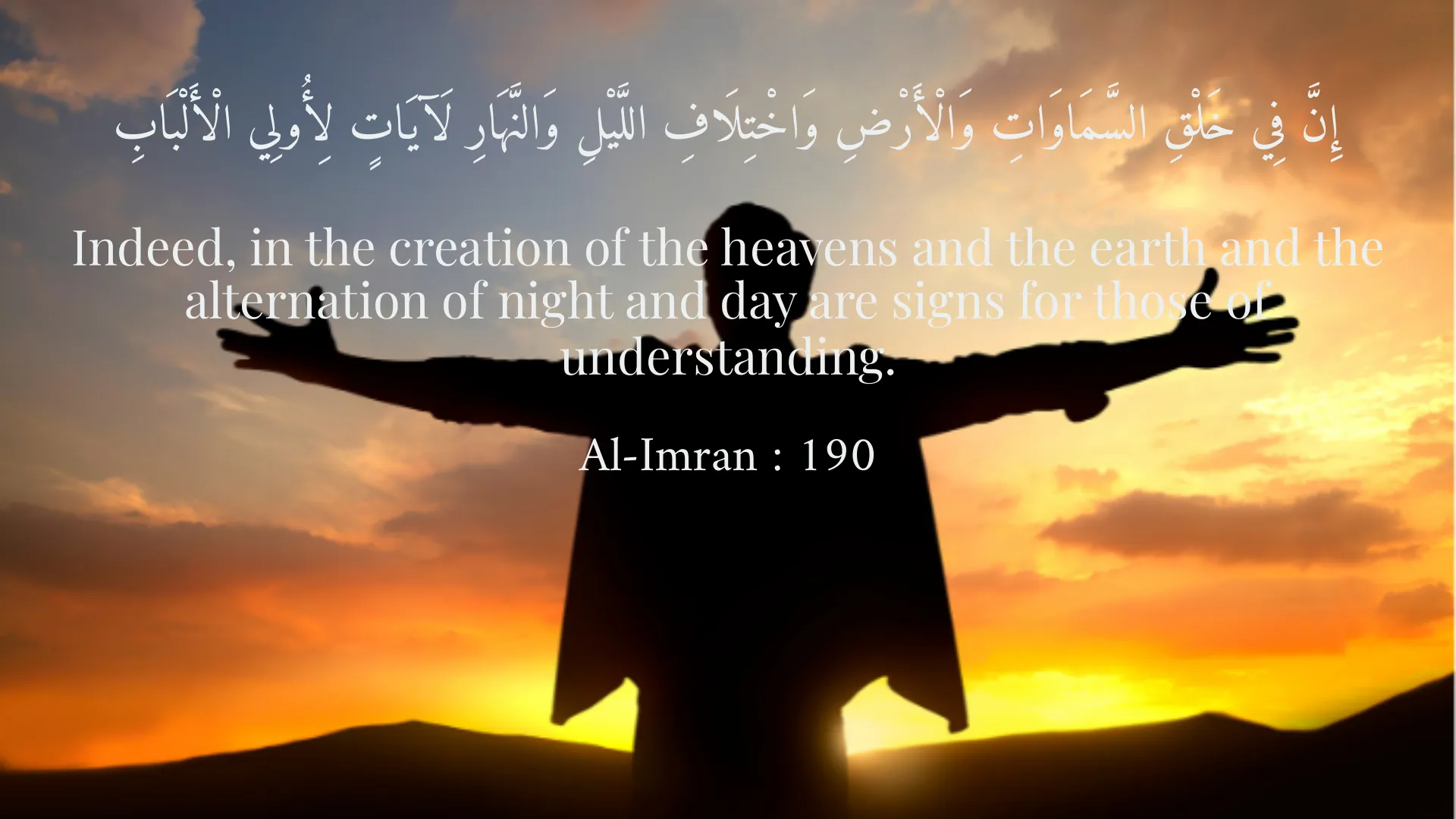
Thinking and reflection are central themes emphasized throughout the Holy Quran, serving as essential characteristics of believers. The Quran not only advocates for the act of thinking but also frames it as a path towards spiritual enlightenment and a deeper understanding of existence. In Surah Al-Imran, verses 190 and 191, Allah states, "Indeed, in the creation of the heavens and the earth and the alternation of night and day are signs for those of understanding." These profound verses underscore that contemplation of the universe's incredible structure and the natural phenomena we observe daily are not mere coincidences; rather, they are signposts guiding humanity toward recognizing Allah's omnipotence and unparalleled wisdom. This emphasis on reflection serves a dual purpose: it enhances faith and encourages individuals to engage in introspection regarding their lives and aspirations. The significance of contemplation is further reiterated in Surah Muhammad, verse 24, where Allah calls upon people to reflect. The call to reflection is a clear indication that ignorance should be avoided and that individuals should strive to approach all matters with greater knowledge and insight. This divine guidance nudges believers away from passive existence and encourages them to engage in active thought processes. In a world overflowing with information, the ability to reflect critically and thoughtfully has never been more paramount. Thinking and reflection compel us to assess our priorities, aspirations, and ethical compass. The Quranic doctrine pushes us to consider the consequences of our actions, the goals we set for ourselves, and the principles by which we lead our lives. In this context, the act of reflection can lead to profound personal growth. By seriously considering our choices and their potential outcomes, we can make better, more informed decisions. The Quran teaches that true wisdom accompanies reflection; thus, it leads to a clearer understanding of ourselves and our relationship with the divine. Furthermore, engaging in thoughtful reflection can protect us from the dangers lurking in ignorance. The Quran constantly encourages believers to seek knowledge. In various verses, Allah advises His followers to ponder the world around them and delve into understanding the intricacies of creation. This advocacy for vigilance is paramount in a time when misinformation is rampant. Believers are reminded that through critical thinking, they can discern truth from falsehood, which is essential in navigating the complexities of modern life. The process of thinking profoundly and reflecting allows believers to cultivate spiritual growth. The Quran posits that reflection is a way to nurture the soul, understanding that the essence of belief is not merely blind faith but enriched through knowledge and understanding. By reflecting on the revelations within the Quran and the signs within creation, believers can deepen their connection with Allah. Moreover, contemplation encourages one to confront life’s existential questions effectively: What is my purpose? How do my actions impact those around me? What legacy am I building for future generations? These inquiries highlight the necessity for introspection and can lead to meaningful insights that help forge a better path in life. The Quran serves as a guide, providing answers and prompting believers to consistently reflect on their unique situations, helping them either reaffirm their faith or guiding them on the path to rediscover their purpose. On a community level, collective reflection can lead to societal growth as well. When individuals prioritize thoughtfulness and reflection, they contribute to a community that values dialogue, understanding, and empathy. Such communities are better equipped to tackle challenges, fostering cooperation and collaboration among members and creating environments that promote positive change. It begins with individuals but influences the collective, highlighting the interconnectedness of thought and action. In a world characterized by distractions and immediate gratifications, the encouragement of consistent reflection found in the Quran invites us to slow down. It asks us to be mindful of how we approach our daily activities and encourages an attitude of examination rather than mere reaction. Engaging in regular reflection allows time to assess our surroundings, our relationships, and our priorities; it acts as a grounding practice that can lead to enhanced well-being. Faith, according to the Quran, is not solely based on adherence to rituals alone, but on a profound commitment to understanding and personal growth. Therefore, initiating thoughtful practices—whether through prayer, meditation, or communal discussions—can forge deeper connections with oneself and the divine. Ultimately, thinking and reflection are not just recommended in a religious sense but are vital components of a fulfilling and directed life. They promote mindfulness and awareness, enabling believers to navigate their lives consciously and purposefully. The Quran's emphasis on reflection can serve as a lifetime guide, encouraging us to engage thoughtfully with our experiences, to question our understanding continually, and to broaden our horizons. The directive to ponder not only serves our spiritual journeys but also serves to enrich our understanding of the world, reminding us of the delicate balance between our existence and the divine will. For these reasons, reflecting on Allah's signs, the world around us, and our lives is not merely an act of piety but an essential practice of wisdom and insight. It is an invitation to scrutinize our lives deeply, elevate our faith, and align ourselves with a purpose-driven path toward righteousness. Thus, engaging in thoughtful reflection, as underscored in the Quran, becomes an integral part of our spiritual and personal development, inviting us to lead lives of intention, purpose, and faith.
Related Verses
إِنَّ فِي خَلْقِ السَّمَاوَاتِ وَالْأَرْضِ وَاخْتِلَافِ اللَّيْلِ وَالنَّهَارِ لَآيَاتٍ لِأُولِي الْأَلْبَابِ
Indeed, in the creation of the heavens and the earth and the alternation of night and day are signs for those of understanding.
Al-Imran : 190
أَوَلَمْ يَتَفَكَّرُوا فِي أَنفُسِهِمْ ۖ مَا خَلَقَ اللَّهُ السَّمَاوَاتِ وَالْأَرْضَ وَمَا بَيْنَهُمَا إِلَّا بِالْحَقِّ وَأَجَلٍّ مُسَمًّى ۚ وَإِنَّ كَثِيرًا مِّنَ النَّاسِ بَلَقَدْ أَعَزُّوا
Do they not reflect upon themselves? Allah created the heavens and the earth and whatever is between them in truth and for an appointed term.
Muhammad : 24
Short Story
Once upon a time, there was a young man named Sajjad who was always in pursuit of truth and meaning in his life. He would gaze at the night sky, contemplating the secrets hidden within creation. One day, he decided to turn to the verses of the Quran and read them. Through his study, he realized that Allah was urging him to think about the signs of creation to draw closer to His wisdom and greatness. From that day onward, Sajjad progressed in his life with reflection and found greater inner peace.