Quranic Answer
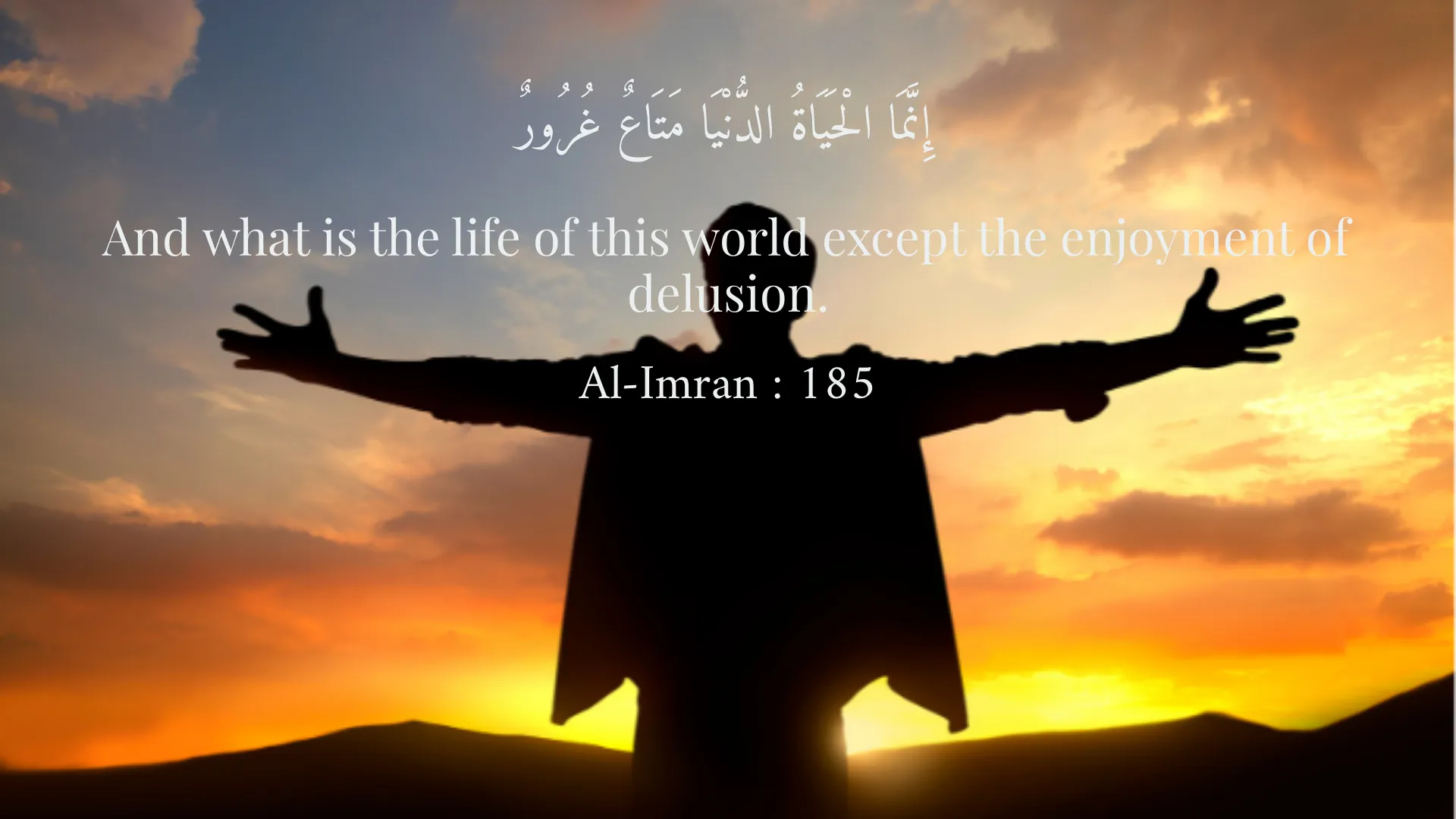
In the Holy Quran, the sacred text of Islam, believers are poignantly reminded of the transient nature of worldly affairs and are guided to prioritize their spiritual obligations over fleeting material desires. The Quran encourages its followers to engage in self-reflection and to distance themselves from distractions that divert attention from the remembrance of Allah and the performance of religious duties. This concept of prioritizing the hereafter, or the afterlife, is repeatedly emphasized throughout the text, encouraging individuals to recognize the impermanent nature of existence in this world. One of the most striking reminders of the ephemeral qualities of worldly life can be found in Surah Al-Imran, verse 185, which states, 'And what is the life of this world except the enjoyment of delusion.' This verse succinctly captures the essence of human existence as being nothing more than a transient phase filled with superficial joys and material pursuits that ultimately fade away. Such reflections serve as warnings against becoming overly attached to worldly pleasures and possessions, urging individuals to keep their focus on their spiritual responsibilities and the eternal nature of the hereafter. Additionally, the Quran addresses the concept of love and devotion in Surah At-Tawbah, verse 24, which proclaims that love for Allah and His Messenger must take precedence over all else in one's life. This powerful declaration indicates that anything which diverts a person from cultivating this love must be relinquished in order to maintain a clear focus on one’s spiritual objectives. The verse compels believers to evaluate their loyalties and to consider whether their attachments are fostering a closer relationship with God or leading them astray. In this sense, letting go of certain worldly attachments can facilitate a greater connection with the divine, empowering individuals to concentrate on meaningful pursuits that contribute to their spiritual growth. One of the lessons gleaned from the teachings of the Quran is the notion that relinquishing worldly materialism can lead to a profound enhancement of one’s spiritual well-being. By intentionally discarding distractions and prioritizing righteous actions, individuals can experience a sense of peace and fulfillment that material possessions alone cannot provide. The process of detaching from superficial concerns allows a person to redirect their focus towards uplifting their spirit and nurturing their relationship with God. Islamic teachings advocate for a balanced approach to life, where material pursuits are not entirely dismissed, but rather contextualized within the framework of one's spiritual objectives. It is permissible to seek material success, provided that it does not overshadow one's commitment to their faith and spiritual duties. In this regard, the Quran encourages believers to engage in self-assessment and to consciously decide which aspects of their lives align with their values and genuine aspirations. This reflective practice empowers individuals to discern what matters most and to prioritize their efforts towards those pursuits that deepen their connection with the Creator. Moreover, the Quran prompts believers to ponder life's inherent uncertainties. The inevitability of death underscores the need to prioritize the hereafter over transient worldly gains. Surah Al-Anfal, verse 28 elucidates, 'And know that your properties and your children are but a trial and that Allah has with Him a great reward.' This verse serves as a poignant reminder that worldly wealth and progeny are merely tests, urging believers to be mindful of their priorities and the potential distractions that may arise from their attachments to these facets of life. In order to cultivate a more profound awareness of these spiritual priorities, believers are encouraged to engage in practices that foster mindfulness and remembrance of Allah. Daily prayers, reflections on the Quran, and acts of charity can serve as practical means of fostering a deeper connection with the divine, helping individuals maintain their focus amidst the distractions of daily life. Such practices can assist in cultivating a mindset that values the eternal over the temporal, enhancing spiritual growth while promoting a sense of satisfaction and purpose in life. Furthermore, the community aspect of Islamic practice plays a vital role in reminding individuals of their spiritual commitments. By engaging with fellow believers, individuals can benefit from shared experiences, moral support, and collective encouragement to prioritize their faith. The act of coming together in prayer, discussions, and charitable activities fosters an environment where spiritual values are celebrated and reinforced, allowing individuals to keep their focus on righteous deeds and deepening their love for Allah and His Messenger. In conclusion, the Quran serves as a guiding light for believers seeking to navigate the complexities of worldly life. It emphasizes the importance of detaching from distractions that divert attention from spiritual responsibilities. By recognizing the fleeting nature of worldly pleasures and affirming the primacy of love for God and righteousness, individuals can cultivate a more meaningful existence. The teachings of the Quran encourage believers to actively choose what matters most and invest their energies into pursuits that nourish their souls and draw them closer to the divine. Ultimately, by prioritizing righteousness and fostering spiritual connections, individuals can discover a fulfilling life that transcends the limitations of temporal existence.
Related Verses
إِنَّمَا الْحَيَاةُ الدُّنْيَا مَتَاعٌ غُرُورٌ
And what is the life of this world except the enjoyment of delusion.
Al-Imran : 185
قُلْ إِن كَانَ آبَاؤُكُمْ وَأَبْنَاؤُكُمْ وَإِخْوَانُكُمْ وَأَزْوَاجُكُمْ وَعَشِيرَتُكُمْ وَأَمْوَالٌ اقْتَرَفْتُمُوهَا وَتِجَارَةٌ تَخْشَوْنَ كَسَادَهَا وَمَسَاكِنُ تَرْضَوْنَهَا أَحَبَّ إِلَيْكُمْ مِّنَ اللَّهِ وَرَسُولِهِ وَجِهَادٍ فِي سَبِيلِهِ فَتَرَبَّصُوا حَتَّى يَأْتِيَ اللَّهُ بِأَمْرِهِ ۚ وَاللَّهُ لَا يَهْدِي الْقَوْمَ الْفَاسِقِينَ
Say, 'If your fathers, your sons, your brothers, your wives, your relatives, the wealth which you have obtained, and the commerce in which you fear decline, and the dwellings in which you delight are more beloved to you than Allah and His Messenger and jihad in His cause, then wait until Allah executes His command.'
At-Tawbah : 24
Short Story
Once upon a time, there was a man named Hassan who was immersed in worldly pursuits and always seeking his desires. One day, as he walked past a mosque, he heard the sound of worshippers praying. This sound prompted him to reflect. He realized that life is not just about wealth and possessions; he needed to think about his afterlife as well. From that day onward, he decided to dedicate part of his time to worship and helping others. He discovered that this brought meaning to his life and he felt a greater sense of peace and happiness.