Quranic Answer
The Desire for Fame: A Spiritual and Ethical Challenge Introduction In the contemporary world, the desire for fame and recognition has become increasingly pronounced. While seeking acknowledgment and success is a natural aspect of human behavior, it often leads individuals to an ethical and spiritual crossroads. The quest for fame can manifest in various forms, from striving for social media influence to vying for traditional forms of recognition in professional and personal circles. However, in a deeper sense, the pursuit of fame reveals grave challenges that may hinder spiritual growth and ethical integrity. The Holy Quran provides thoughtful reflections on this matter, reminding us that fame and worldly possessions are transient and ultimately do not equate to moral and spiritual success. The emphasis in Islamic teachings encourages individuals to prioritize their relationship with Allah and the virtues of life that bring genuine satisfaction. The Nature of Human Desire Surah Al-Imran, verse 14, illustrates the allure of worldly desires, stating, "Beautified for people is the love of that which they desire..." This quote encapsulates the essence of what many experience in the pursuit of fame. The term "beautified" denotes that these desires are often adorned and presented in a manner that makes them appealing, blinding individuals to the more profound truths of their spiritual existence. When people become enamored with societal accolades and recognition, they may inadvertently neglect their spiritual responsibilities and the pursuit of righteousness. This verse serves as a cautionary reminder that the intense affection for worldly gains can divert attention away from one's obligations to God. As believers, one must recognize that all worldly pursuits can lead to distraction and ultimately distance one from the remembrance of God. Spiritual awareness is key to attaining not just the external expressions of success but nurturing an inner connection with the divine. The Misleading Allure of Wealth The Quran highlights another significant aspect regarding the pursuit of fame. Surah At-Tawbah, verse 53, states, "So do not be impressed by their wealth and their children..." This verse is pivotal in understanding the transient nature of worldly achievements. The verse warns individuals against being awed by the superficial attributes of success—namely wealth and progeny—suggesting that these external markers of prestige do not signify true success or divine favor. The Islamic perspective emphasizes that societal standards of achievement often fall short of what is required for spiritual success. Ensuring one's salvation cannot come from accumulating material possessions or garnering praise from others. Instead, it involves a continuous effort to align oneself with Allah's will, prioritize moral integrity, and foster a sense of responsibility toward fellow human beings. The Ethical Path to Spiritual Fulfillment In pursuing a life grounded in ethical principles, one must strive not for the trappings of fame but for a deeper connection to Allah. Surah Al-Insan, verses 5 and 6 touch upon the concept of tests in wealth and poverty, reminding us of our dependency on God in all affairs. These verses serve as a stark reminder that it is easy to lose oneself in the pursuit of worldly gain, leading to an insatiable thirst for recognition and status. The ethical path is not paved with a desire for fame but rather with an intention to seek Allah's pleasure through actions that embody sincerity, dedication to duty, and humility. Ethical living requires stepping away from the fixation on pride and acknowledgment and cultivating an ethos of service to others. By focusing on the development of inner virtues, individuals can nurture a sense of purpose that transcends the fleeting nature of fame. Fame vs. True Recognition One of the critical distinctions that must be made is the difference between fame and true recognition by God. The former may be superficial and often brings with it a multitude of challenges, while the latter connects one to eternal value and blessings. The struggle between these two paths often presents itself in various ethical dilemmas, where individuals must choose between personal ambition and collective well-being. The Holy Quran urges individuals to pursue a life reflective of divine truths and the teachings of Prophet Muhammad, who exemplified humility and service without seeking recognition. This ethical framework allows individuals to prioritize charity, compassion, and selflessness, fostering a sense of community and responsibility that transcends individualistic pursuits. Conclusion In conclusion, the desire for fame encapsulates a complex interplay between spiritual and ethical challenges that many individuals grapple with in their lives. The Holy Quran serves as an essential guide, reminding us that worldly desires and recognition cannot assure our ultimate success in the hereafter. Instead of becoming ensnared in the pursuit of fleeting accolades, we ought to aspire to strengthen our relationship with Allah and strive for virtues that promote ethical significance and spiritual fulfillment. In a world where fame can easily overshadow the divine, cultivating a genuine desire to please Allah through upright actions can lead to true contentment, fulfillment, and peace of mind. By prioritizing our spiritual responsibilities over worldly aspirations, we can transcend the distractions of fame and instead focus on nurturing our inner selves, ultimately drawing closer to our Creator. This shift in perspective can transform our lives, granting us not just recognition in the eyes of others, but more importantly, recognition and solace in the eyes of Allah.
Related Verses
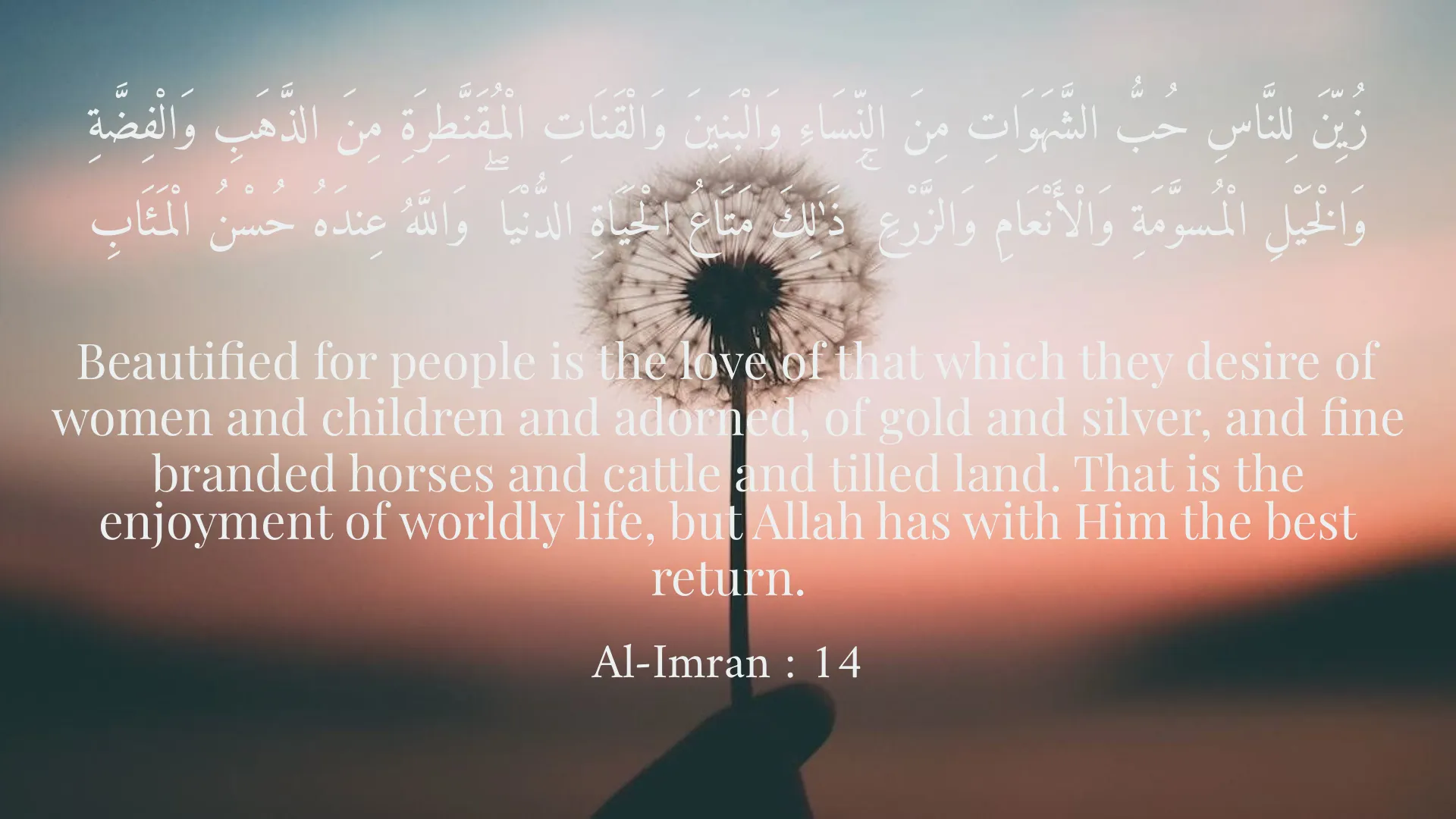
زُيِّنَ لِلنَّاسِ حُبُّ الشَّهَوَاتِ مِنَ النِّسَاءِ وَالْبَنِينَ وَالْقَنَاتِ الْمُقَنَّطِرَةِ مِنَ الذَّهَبِ وَالْفِضَّةِ وَالْخَيْلِ الْمُسوَّمَةِ وَالْأَنْعَامِ وَالزَّرْعِ ۚ ذَٰلِكَ مَتَاعُ الْحَيَاةِ الدُّنْيَا ۖ وَاللَّهُ عِندَهُ حُسْنُ الْمَئَابِ
Beautified for people is the love of that which they desire of women and children and adorned, of gold and silver, and fine branded horses and cattle and tilled land. That is the enjoyment of worldly life, but Allah has with Him the best return.
Al-Imran : 14
قُلْ إِن كَانَ آبَاؤُكُمْ وَأَبْنَاؤُكُمْ وَإِخْوَانُكُمْ وَأَزْوَاجُكُمْ وَعَشِيرَتُكُمْ وَأَمْوَالٌ اقْتَرَفْتُمُوهَا وَتِجَارَةٌ تَخْشَوْنَ كَسَادَهَا وَمَسَاكِنُ تَرْضَوْنَهَا أَحَبَّ إِلَيْكُمْ مِّنَ اللَّهِ وَرَسُولِهِ وَجِهَادٍ فِي سَبِيلِهِ فَتَرَبَّصُوا حَتَّى يَأْتِيَ اللَّهُ بِأَمْرِهِ ۚ وَاللَّهُ لَا يَهْدِي الْقَوْمَ الْفَاسِقِينَ
Say, 'If your fathers, your sons, your brothers, your wives, your relatives, the wealth which you have obtained, and the commerce in which you fear decline, and the dwellings in which you delight are more beloved to you than Allah and His Messenger and jihad in His cause, then wait until Allah executes His command. And Allah does not guide the defiantly disobedient people.'
At-Tawbah : 53
إِنَّ الْأَبْرَارَ يَشْرَبُونَ مِن كَأْسٍ كَانَ مِزَاجُهَا كَافُورًۭا
Indeed, the righteous will drink from a cup [of wine] whose mixture is of Kathir.
Al-Insan : 5
Short Story
One day a man was sitting in the marketplace when he found himself preoccupied with gaining others' attention. He kept glancing at those around him, hoping to draw them in. During this moment, he recalled the Quran and realized that such attention was fleeting and trivial. Consequently, he decided to refocus his life on true values and no longer chase after fame. This change in his perspective brought deeper meaning to his life and allowed him to experience greater peace.