Quranic Answer
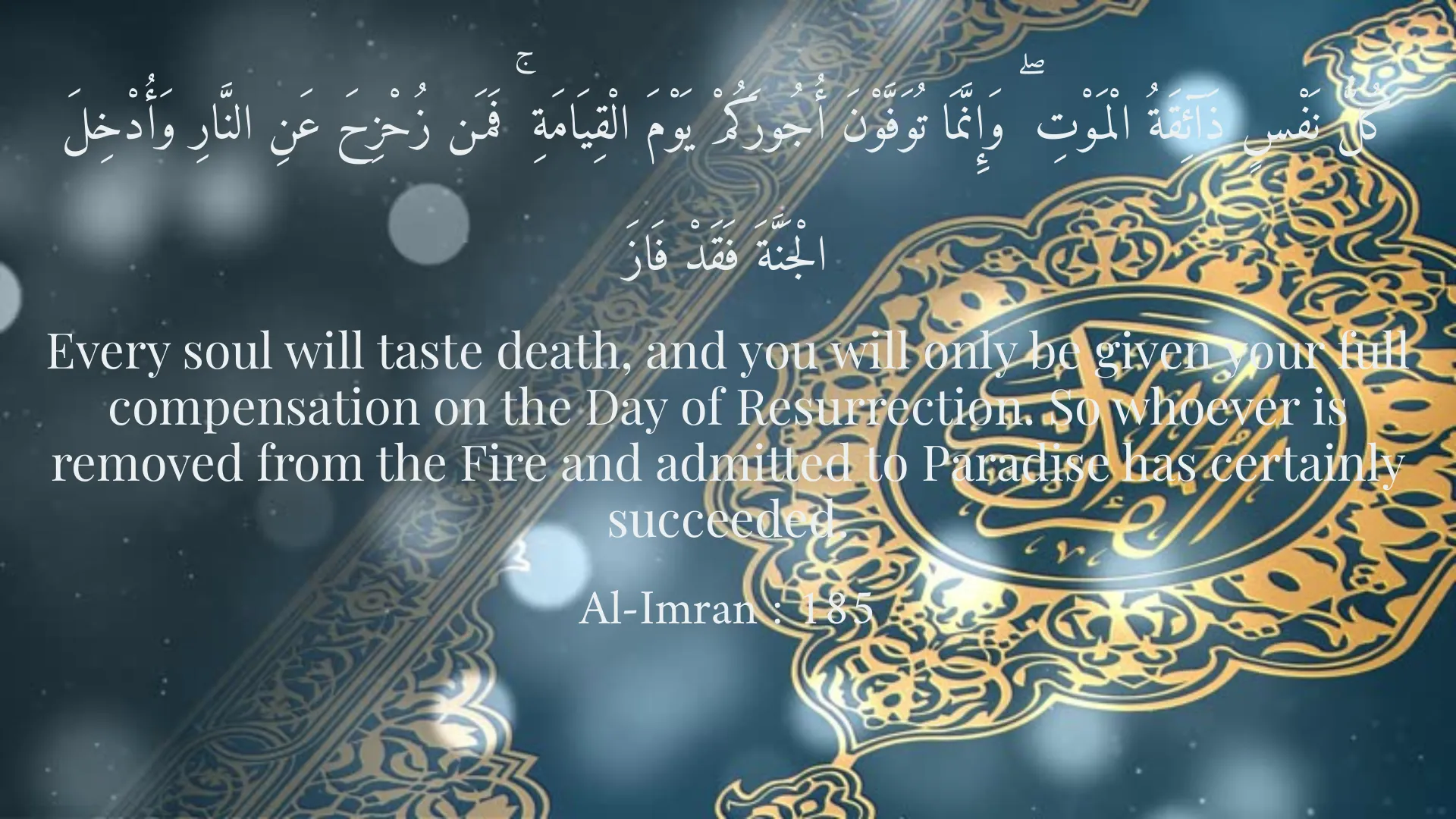
In the Holy Quran, the concept of life is intricately linked to the idea of the afterlife. The world we inhabit is often described as a transitory phase, a fleeting commodity that distracts us from our true purpose. Believers are encouraged to reflect on this life in the context of eternity, focusing on what matters most beyond our mortal existence. This theme resonates deeply through various verses in the Quran, urging us to consider the consequences of our actions and prioritize our spiritual evolution over material pursuits. One of the most poignant reminders of our mortality can be found in Surah Al-Imran, verse 185, where Allah states, 'Every soul will taste death, and you will only be given your full compensation on the Day of Resurrection.' This profound statement serves as a compelling reminder that death is a universal reality, one that we all must face regardless of our status or wealth in this world. The reality of death brings forth an essential understanding: the fleeting nature of our earthly life. As we go about our daily routines, often consumed by the hustle and bustle of our lives, it is crucial to remember that in the grand scheme of eternity, our time here is limited. The reminder in this verse is clear: our ultimate reckoning lies in the afterlife, where we will receive the consequences of our actions. This anticipation of accountability shapes a believer's life, guiding them towards ethical behavior and a deep sense of purpose. The reality of death encourages us to ask ourselves: what legacy are we building? Are our endeavors aligned with the values that will benefit us in the hereafter? Being aware of the transient aspect of this world should motivate us to act with intention, striving for goodness in every aspect of our lives. However, the danger of getting lost in worldly attachments cannot be understated. The distractions that arise from the pleasures of life can lead individuals to neglect their spiritual goals. When we focus too heavily on temporary gains—be it wealth, power, or superficial relationships—we often lose sight of the eternal truth that awaits us after death. The Quran cautions against this superficial engagement with life. In Surah Al-Baqarah, verse 204, Allah addresses the superficial tendencies of humankind, reminding us that excessive attachment to worldly pleasures can lead us away from our divine purpose. "And do not forget your share of the world," states Allah in Surah Al-Muddathir, verse 38. This verse balances the message of earthly existence with the reminder of spiritual priorities. It emphasizes that while life on earth holds value and presents opportunities for growth and enjoyment, it should not take precedence over our remembrance of God. Life is a test, and each moment offers us a chance to choose actions that align with our faith. Taking our share of the world means experiencing its pleasures, but in a way that does not overshadow our commitment to spiritual development. This balance is crucial for a fulfilling life. A believer is encouraged to enjoy the blessings of this world, such as the beauty of nature, the joy of relationships, and the satisfaction of achieving personal goals, but they must do so with mindfulness. Enjoyment should not lead to complacency or an abandonment of spiritual responsibilities; rather, it should enhance one's connection to God and inspire a grateful heart. Furthermore, the transient nature of our possessions and achievements reminds us of our vulnerability and the impermanence of life. Wealth, status, and material possessions can slip away in an instant, leaving us with nothing but our deeds. Therefore, we must approach life with a sense of gratitude and awareness, recognizing that each day is a gift and an opportunity to strive for righteousness. Incorporating gratitude into our lives serves as a powerful reminder of the divine. When we cultivate an attitude of thankfulness, we tap into a deeper understanding of our existence that aligns with the teachings of the Quran. Recognizing that everything we possess is a blessing from Allah fosters humility and encourages us to share our blessings with others. It incentivizes us to engage in charity and acts of kindness, contributing positively to our communities and creating a more equitable world. Ultimately, the balance between enjoying this world and focusing on the afterlife is a practice that requires conscious effort. It is essential to engage in regular self-reflection and renewal of intention to maintain alignment with one’s faith. Daily acts of worship, such as prayer, reflection on the Quran, and community service, serve as reminders of our purpose while allowing us to partake in the worldly experience as responsible and mindful individuals. In conclusion, the Quran provides invaluable guidance on navigating the challenges of life amidst the distractions of this world. By recognizing the fleeting nature of life and prioritizing our spiritual obligations, we can lead lives that are fulfilling and directed towards the eternal truth of the afterlife. Our journey is not merely about material gain; rather, it is about cultivating a heart that remembers God, engages in righteous actions, and ultimately seeks the mercy and pleasure of our Creator. Every action, thought, and prayer echoes through the corridors of eternity, shaping the legacy we leave for those who follow us. In this light, we can enjoy our earthly existence while staying anchored to the promise of eternal life in the hereafter.
Related Verses
كُلُّ نَفْسٍ ذَآئِقَةُ الْمَوْتِ ۖ وَإِنَّمَا تُوَفَّوْنَ أُجُورَكُمْ يَوْمَ الْقِيَامَةِ ۚ فَمَن زُحْزِحَ عَنِ النَّارِ وَأُدْخِلَ الْجَنَّةَ فَقَدْ فَازَ
Every soul will taste death, and you will only be given your full compensation on the Day of Resurrection. So whoever is removed from the Fire and admitted to Paradise has certainly succeeded.
Al-Imran : 185
وَلَا تَنسَ نَصِيبَكَ مِنَ الدُّنْيَا
And do not forget your share of the world.
Al-Muddathir : 38
وَإِذَا قَالَ لَهُمْ وَإِنَّمَا تُوَفَّوْنَ أُجُورَكُمْ يَوْمَ الْقِيَامَةِ ۚ فَمَن زُحْزِحَ عَنِ النَّارِ وَأُدْخِلَ الْجَنَّةَ فَقَدْ فَازَ
And when it is said to them: 'Do not be distracted by the adornments of this world!' they do not become attached to the worldly delights.
Al-Baqarah : 204
Short Story
One day, a monk decided to turn his back on the world and focus entirely on worship and the remembrance of God. He said to one of his friends, 'I no longer want to entangle myself in the complexities of this world.' His friend looked at him in surprise and replied, 'But you cannot completely distance yourself from the world; you must fulfill your duties while also living your life.' The monk reflected and realized that instead of fleeing from the world, he must live within it, never forgetting the remembrance of God.