Quranic Answer
In the Holy Quran, the significance of caring for the needy and feeling responsible towards them is explicitly emphasized in several verses. The Quran not only addresses the physical needs of individuals but also touches on the ethical and spiritual implications of caring for those less fortunate. This multifaceted emphasis highlights the importance of charity, compassion, and community interconnectedness, which are fundamental principles in Islam and provide a framework for building a better society. For instance, Surah Al-Baqarah, verse 177, serves as a foundational verse that indicates the characteristics of true believers. It states, "It is not righteousness that you turn your faces toward the east or the west, but righteousness is in one who believes in Allah, the Last Day, the Angels, the Book, and the Prophets, and gives his wealth, in spite of love for it, to relatives, orphans, the needy, the traveler, those who ask [for help], and for freeing slaves." This verse underscores that part of believing in Allah involves assisting the needy and being kind to them. The Quran reshapes the conventional understanding of righteousness; it is not merely about rituals or acts of worship but also about social responsibility. Moreover, in Surah Aal-E-Imran, verse 92, it states, "You will not attain righteousness until you spend from that which you love." This powerful verse serves as a reminder that helping others is not only a virtuous act but an essential part of our faith. It indicates that true righteousness is achieved through selflessness and generosity, often requiring personal sacrifice. Such teachings encourage individuals to transcend their own desires and prioritize the needs of the community, fostering a sense of shared responsibility. The importance of these Quranic verses goes beyond mere religious obligation; they provide a guiding principle for social ethics. Feeling responsible towards the needy teaches us to engage meaningfully with society and encourages us to contribute positively to the community. A society is comprised of individuals, and when these individuals assist one another, it nurtures an atmosphere of solidarity and friendship. This support can manifest in various ways, including financial assistance, emotional support, or simply spending time with those who may feel isolated or marginalized. Furthermore, the act of caring for the needy cultivates an environment of peace and love among people. Empathy, in its full expression, is a way of acknowledging our interconnectedness as human beings. By taking action to aid the less fortunate, we not only uplift their conditions but also enrich our own lives, promoting emotional intelligence and deepening our understanding of humanity. This connection forms the essence of a compassionate community, where individuals regard each other as important parts of a larger social fabric. Beyond the spiritual rewards mentioned in the Quran, acts of kindness towards the needy can have profound socio-economic impacts. When community members actively engage in charity and support those facing financial hardships, they contribute to alleviating poverty and economic inequality. This holistic approach helps create a more equitable society where everyone has the opportunity to thrive. Not only does charity improve the lives of individuals in need, but it also reduces burdens on social systems and fosters economic growth by empowering those who receive aid. The social teachings embedded within the Quran encourage collective responsibility in alleviating poverty and supporting vulnerable populations. Governments, organizations, and individuals play crucial roles in implementing these teachings. Programs aimed at providing education, healthcare, and job training can significantly improve the conditions for those in need. Many Islamic charities focus on sustainable development initiatives that empower communities, providing them with the tools they need to lift themselves out of poverty. Moreover, fostering an awareness of social justice aligns seamlessly with the Quranic teachings on caring for the needy. The Quran repeatedly reminds us that wealth is a trust from Allah, and we are accountable for how we use it. Surah Al-Baqarah also mentions the concept of Zakat, or obligatory charity, which further emphasizes the importance of giving back to society. It is a mechanism of social welfare that redistributes wealth and bridges the economic divide, reinforcing that our financial resources should not solely serve personal gain but rather the collective good. The spiritual dimension of helping the needy also brings forth a sense of fulfillment and purpose in life. Engaging in acts of kindness can lead to a deeper understanding of ourselves and our place in the universe. By considering the challenges that others face, we cultivate gratitude for our own circumstances and develop a broader perspective on life. Ultimately, this understanding can instill a sense of community and belonging, where individuals feel connected and supported. In conclusion, the significance of caring for the needy, as emphasized in the Holy Quran, resonates deeply with the principles of humanity, compassion, and social responsibility. The Quranic verses serve as reminders that helping others is more than an obligation; it is enriched with spiritual, social, and emotional dimensions. By embodying the values of charity and empathy, we are not only uplifting those in need but are also paving the way for a better, more humane society. Communities that prioritize caring for their vulnerable members foster peace, prosperity, and love, thus contributing to the collective well-being of society as a whole.
Related Verses
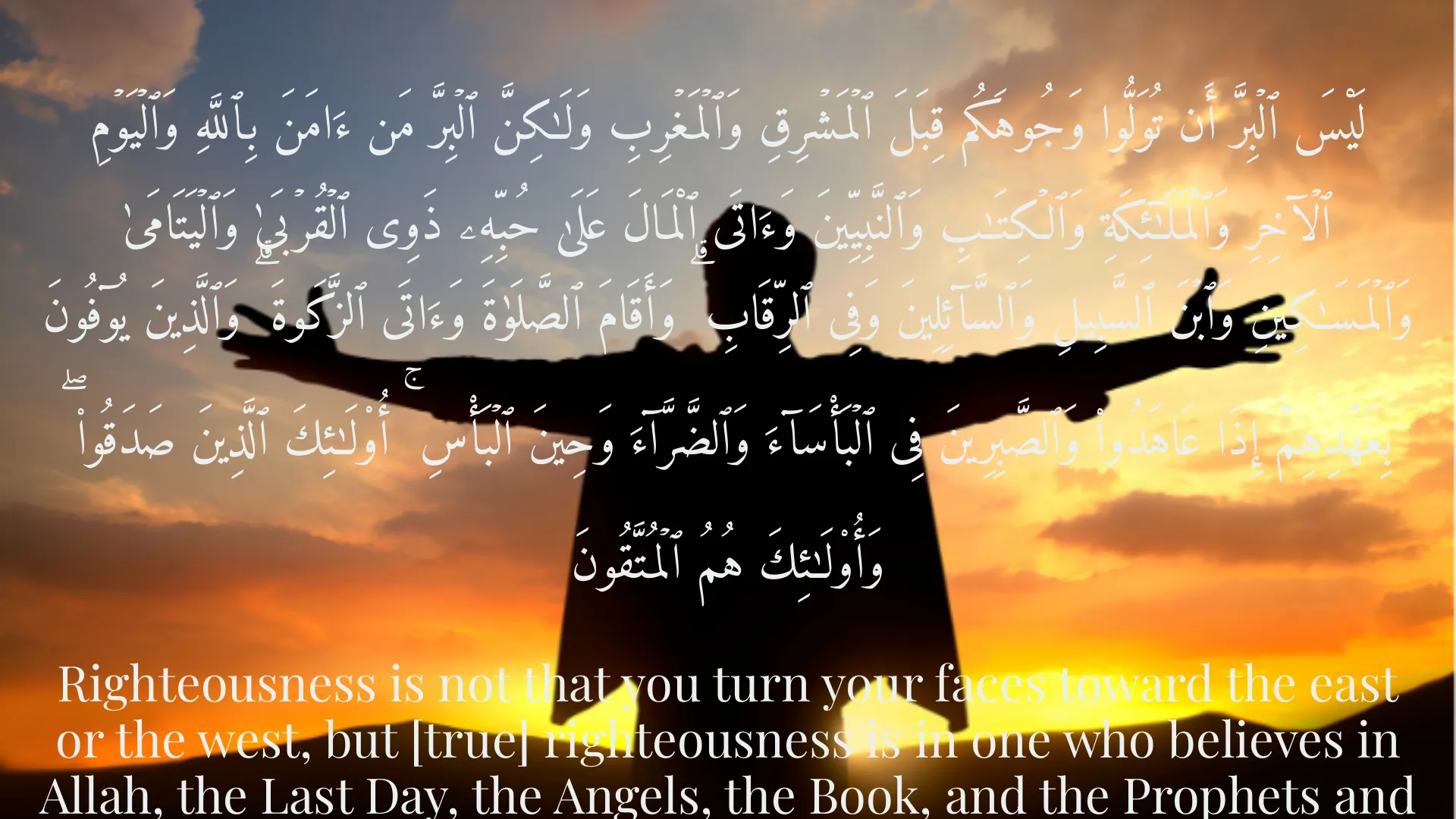
لَيْسَ ٱلۡبِرَّ أَن تُوَلُّوا وَجُوهَكُم قِبَلَ ٱلۡمَشۡرِقِ وَٱلۡمَغۡرِبِ وَلَـٰكِنَّ ٱلۡبِرَّ مَن ءَامَنَ بِٱللَّهِ وَٱلۡيَوۡمِ ٱلۡآخِرِ وَٱلْمَلَـٰٓئِكَةِ وَٱلۡكِتَـٰبِ وَٱلنَّبِيِّينَ وَءَاتَى ٱلْمَالَ عَلَىٰ حُبِّهِۦ ذَوِى ٱلۡقُرۡبَىٰ وَٱلۡيَتَامَىٰ وَٱلۡمَسَـٰكِينِ وَٱبۡنَ ٱلسَّبِيلِ وَٱلسَّآئِلِينَ وَفِى ٱلرِّقَابِ ۗ وَأَقَامَ ٱلصَّلَوٰةَ وَءَاتَى ٱلزَّكَوةَ ۗ وَٱلَّذِينَ يُوٓفُونَ بِعَهۡدِهِمْ إِذَا عَاهَدُوا۟ وَٱلصَّبِرِينَ فِى ٱلۡبَأْسَآءَ وَٱلضَّرَّآءَ وَحِينَ ٱلۡبَأْسِ ۚ أُو۟لَـٰئِكَ ٱلَّذِينَ صَدَقُوا۟ ۖ وَأُو۟لَـٰئِكَ هُمُ ٱلۡمُتَّقُونَ
Righteousness is not that you turn your faces toward the east or the west, but [true] righteousness is in one who believes in Allah, the Last Day, the Angels, the Book, and the Prophets and gives his wealth, in spite of his love for it, to relatives, orphans, the needy, the traveler, those who ask [for help], and for freeing slaves; and [those who] establish prayer and give zakah; [those who fulfill their promise when they promise] and [those who are patient in poverty and hardship and during battle. Those are the ones who have been true, and it is those who are righteous.
Al-Baqarah : 177
لَن تَنَالُوا ٱلۡبِرَّ حَتَّىٰ تُنفِقُوا مِمَّا تُحِبُّونَ ۗ وَمَا تُنفِقُوا مِن شَىْءٍ فَإِنَّ ٱللَّهَ بِهِۦ عَلِيمٌ
Never will you attain the good until you spend from that which you love. And whatever you spend - indeed, Allah is Knowing of it.
Aal-E-Imran : 92
Short Story
One day, a man in the market encountered a needy child who asked him for help. The man decided to assist him and thought to himself, 'I must feel responsible for this needy person.' His action not only changed that child's life but also brought him peace and inner satisfaction. From that day forward, he continued to help others and increasingly felt his responsibility towards them.