Quranic Answer
The Holy Quran, a cornerstone of Islamic faith, is not merely a book of laws and rituals; it is also a profound guide for personal conduct and interpersonal relationships. Within its rich verses, the themes of forgiveness and mercy are recurrent, illuminating the path towards a compassionate and harmonious life. This article delves into the significance of forgiveness as emphasized in the Quran, exploring its multifaceted dimensions, personal benefits, communal impact, and spiritual implications. Forgiveness, as articulated in the Holy Quran, is more than a mere suggestion; it is portrayed as a moral imperative that shapes the character of a believer. Surah An-Nur, verse 22, stands out as a powerful reminder that true believers are encouraged to transcend their grievances and cleanse their hearts from grudges. The verse implores followers to cultivate a spirit of forgiveness, thereby fostering a sense of community and concord. A significant aspect of this verse is its acknowledgment of human imperfection and the inevitable grievances that arise in relationships. The call to forgive is, therefore, not only a spiritual guideline but also a reflection of operational wisdom in maintaining social harmony. The act of forgiveness allows individuals to achieve a state of inner peace. It liberates one from the shackles of resentment and anger, which can often lead to emotional turmoil and psychological distress. Holding onto past grievances can adversely affect one’s mental health, leading to anxiety, depression, and a pervasive sense of unhappiness. Conversely, forgiveness acts as a balm for the soul, promoting healing and emotional well-being. The Holy Quran encourages individuals to reflect on the benefits of letting go; when one forgives, they release themselves from the burdens of resentment and open the door to personal growth. Moreover, the social implications of forgiveness are profound. Family dynamics, friendships, and community relationships often face strain due to unresolved conflicts. The Quranic emphasis on forgiveness serves as a guiding principle for mending these relationships. An extension of this teaching can be seen in the family context, where forgiveness plays a crucial role in fostering a nurturing environment. Children raised in an atmosphere of forgiveness are more likely to develop positive interpersonal skills that will serve them throughout their lives. They learn the importance of resolving conflicts amicably, promoting understanding and tolerance. Additionally, the concept of forgiveness in Islam is intrinsically connected to mercy. The Quran portrays Allah as the Most Merciful, and believers are urged to embody this attribute in their interactions with others. Surah Fatir, verse 30, touches upon the divine promise: a great reward awaits those who act in the path of forgiveness and goodness. This reinforces the understanding that acts of kindness and compassion, including forgiveness, are not only noble but are rewarded by the Divine. The realization that one’s willingness to forgive can lead to divine favor can serve as a powerful motivator for individuals to embrace forgiveness in their lives. Another vital dimension of forgiveness is self-forgiveness. Oftentimes, people struggle to forgive themselves for past mistakes, which can stifle personal growth and development. The Quran emphasizes the importance of self-reflection and redemption. When individuals are unable to grant themselves forgiveness, they inadvertently hinder their progress, encapsulating themselves in cycles of guilt and shame. Forgiving oneself is not only a matter of spiritual significance, but it is also essential for mental health. It enables individuals to learn from their past, view their experiences as lessons rather than failures, and move forward with renewed purpose and determination. To illustrate, consider the story of a believer who has made poor choices in their life, resulting in significant challenges and heartbreak. If this individual refuses to forgive themselves, they might remain stuck in self-reproach, unable to pursue new opportunities or build meaningful relationships. However, upon realizing the importance of self-forgiveness, they embark on a journey of reflection and growth, ultimately emerging stronger and wiser. Such narratives emphasize that the journey to forgiveness is not limited to others; it begins from within. Furthermore, forgiveness has also been shown to have a ripple effect, positively impacting broader communities. When individuals practice forgiveness, they contribute to building a culture of empathy and understanding. A society that embraces forgiveness fosters resilience, combats divisiveness, and inspires individuals to engage in constructive dialogue, rather than falling into the traps of bitterness and hostility. In this light, the Quranic teachings on forgiveness extend beyond personal spirituality and delve into the realm of societal harmony. The collective practice of forgiveness can lead to a transformative shift within communities, aiding in conflict resolution, building bridges over divides, and promoting peace. In conclusion, the Quran unmistakably highlights the importance of forgiveness and mercy as fundamental principles for personal and communal harmony. As believers are called to embody these traits, it becomes clear that forgiveness transcends mere duty; it is an essential component of a fulfilling and spiritually enriched life. By forgiving others and themselves, individuals cultivate inner peace, foster healthy relationships, and contribute to a compassionate society. As one reflects upon these teachings, it becomes apparent that the practice of forgiveness is not just an act of kindness; it is a powerful means of spiritual and emotional liberation that allows both the self and the community to flourish.
Related Verses
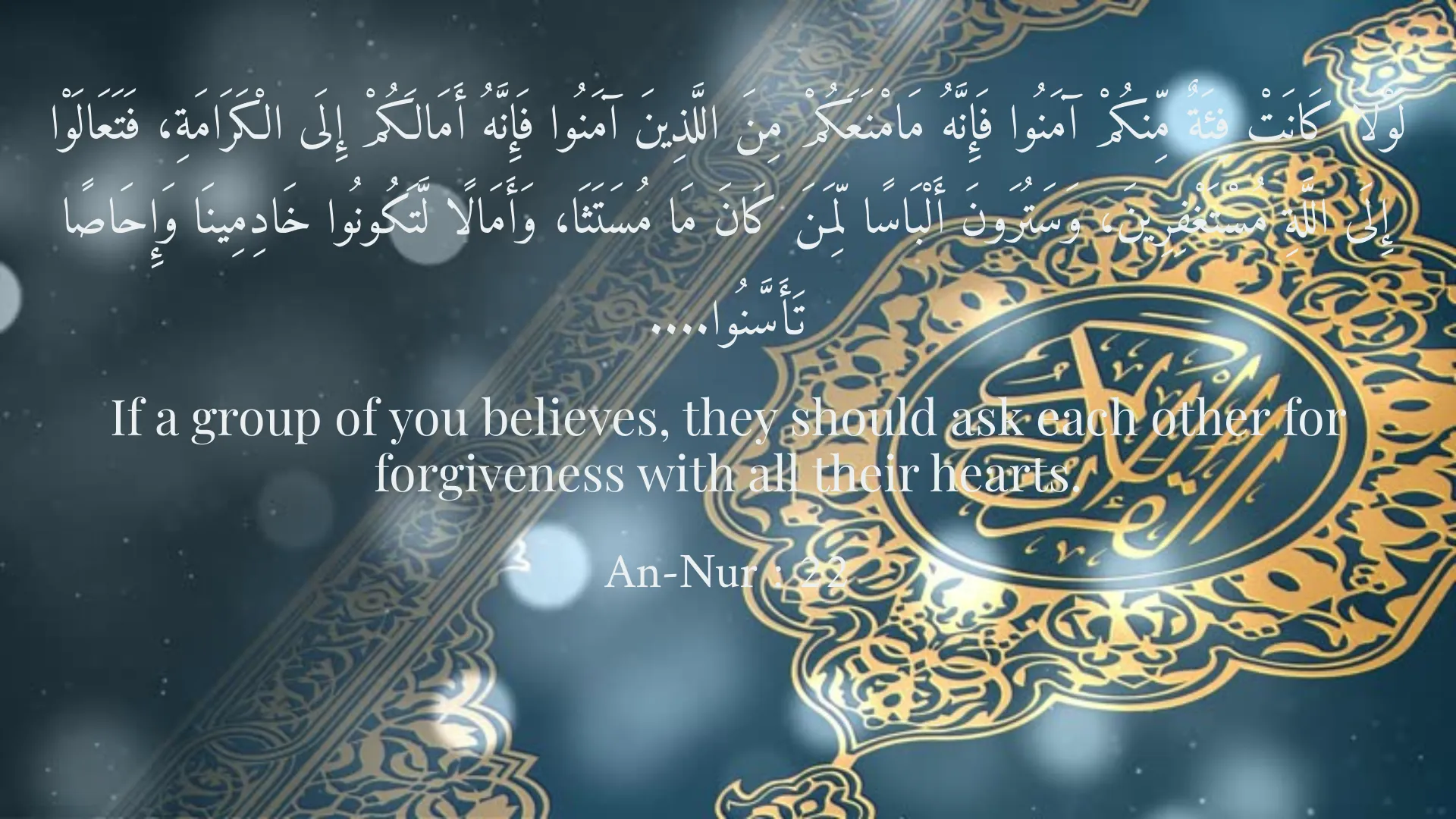
لَوْلَا كَانَتْ فِئَةٌ مِّنكُمْ آمَنُوا فَإِنَّهُ مَامْنَعَكُمْ مِنَ اللَّذِينَ آمَنُوا فَإِنَّهُ أَمَالَكُمْ إِلَى الْكَرَامَةِ، فَتَعَالَوْا إِلَى اللَّةِ مُسْتَغْفِرِينَ، وَسَتُرَونَ أَلْبَاسًا لِّمَنَ كَانَ مَا مُسَتَثَا، وَأَمَالًا لَّتَكُونُوا خَادِمِينَا وَإِحَاصًا تَأَسَّنُوا....
If a group of you believes, they should ask each other for forgiveness with all their hearts.
An-Nur : 22
إِنَّ الَّذِينَ آمَنُوا وَعَمِلُوا الصَّالِحَاتِ سَيَجْعَلُ لَهُمْ الرَّحْمَةَ وَالفَضْلَ.
Indeed, those who have believed and done righteous deeds will receive mercy and grace.
Fatir : 30
Short Story
Once, there were two friends named Nader and Sohrab. Nader made a mistake in Sohrab's work and felt guilty. After some time, Sohrab told Nader, "You don't need to blame yourself so much; everyone makes mistakes. Learn to forgive, even yourself." With these words, Nader realized that forgiveness is the key to his spiritual peace.