Quranic Answer
The Importance of Maintaining Family Ties in Islam: A Reflection on Silat al-Rahm Family is often referred to as the cornerstone of society, and this notion is deeply rooted in various cultures and religions across the world. In Islam, the significance of maintaining family ties is not only emphasized in cultural practices but is also enshrined in the Holy Quran. The concept known as 'Silat al-Rahm' addresses the necessity of keeping familial bonds strong, underscoring the importance of nurturing relationships with relatives, particularly parents, and often highlighting the consequences of neglecting such bonds. The Quran articulates this principle clearly in verse 23 of Surah Al-Isra, where Allah commands kindness to parents. This directive highlights not just the need for respect and care towards parental figures but extends to all family members. In essence, Allah establishes a template for familial relationships that should be marked by love, commitment, and mutual support. This teaching is not merely a suggestion; it is a profound obligation rooted in the Islamic faith. Thus, engaging in Silat al-Rahm is regarded as a paramount virtue in Islam, whereby believers are reminded of their duties towards their family and the broader community. In verse 22 of Surah Muhammad, the Quran further cautions against the repercussions of neglecting family ties. It convincingly states that those who abandon their relatives and fail to offer kindness will find themselves distanced from Allah's mercy on the Day of Judgment. This admonition illustrates the seriousness with which Islam views familial relationships. It prompts individuals to consider the implications of their actions on a spiritual level, urging them to remain connected to family members to foster not only personal growth but also charity and altruism in their communities. The act of maintaining family ties comes with numerous benefits that extend beyond the individual. It plays an instrumental role in societal stability and cohesion. The blessings associated with maintaining family ties are numerous; research shows that individuals who sustain close relationships with family members tend to enjoy enhanced emotional well-being. Love and closeness cultivated within family units serve as a protective barrier against life's stresses, fostering resilience among family members and preventing the escalation of potential disputes. Instead of allowing misunderstandings to fester, those who actively engage in Silat al-Rahm can address conflicts more amicably and with a cooperative spirit. When one keeps their familial bonds robust, they cultivate an environment where support is readily available during challenging times. This communal safety net is not merely about physical support, such as financial help in times of crises, but extends to emotional and psychological assistance as well. Families serve as a sanctuary where individuals can share their burdens, gain advice, and find solace. Thus, familial ties create a framework within which individuals can navigate life's uncertainties with confidence, knowing they have a reliable support system behind them. Conversely, during moments of happiness, having close family connections becomes extensively rewarding. As individuals navigate milestones such as weddings, the birth of children, or graduations, witnessing these significant events with family amplifies the joy experienced. Shared happiness serves to strengthen the emotional bonds between relatives, creating lasting memories that contribute to the overall fabric of one's life. The shared triumphs of a family bolster unity, reinforcing the idea that joys are best enjoyed in the company of loved ones. The emphasis on Silat al-Rahm in Islamic teachings is beneficial not only for individual families but for society at large. When families thrive, communities flourish. Societies that prioritize family values tend to exhibit lower crime rates, increased social responsibility, and cooperative citizenship. The connection of family ties creates networks of support that weave into the fabric of broader social interactions, while also cultivating values of empathy, kindness, and solidarity. Moreover, Silat al-Rahm extends its significance to the relationships we nurture beyond immediate family. It encompasses ties with cousins, aunts, uncles, and even friends who become as close as family. This sense of community mirrors the relational dynamics observed amongst family members, where values of love and support are reflected. The Quran encourages believers to cast a wide net when it comes to upholding familial and social ties, reinforcing the belief that every connection illustrates a shared humanity. Islamic teachings reiterate the notion that the rewards of maintaining strong family relationships are manifold. Acts of kindness towards family are not only religious obligations; they are also catalysts for personal development and societal growth. As Muslims, nurturing family ties can amplify the blessings in one's life, fostering an environment where love, respect, and mutual support characterize everyday interactions. As we contemplate the commitment to maintaining family relations, it is crucial to recognize that the journey of Silat al-Rahm begins with the individual. It requires a conscious decision to prioritize family, tending to relationships with care and empathy. Engaging in open communication, resolving disputes amicably, and showing appreciation for one another can ignite the spirit of togetherness. These actions are reminders of the nature of love as a practice and not merely an emotion. In conclusion, the importance of maintaining family ties in Islam transcends mere cultural practice; it is a deeply entrenched religious obligation critical for the health of individuals and society as a whole. The principles of Silat al-Rahm champion the values of love and mutual support, offering profound benefits that create bonds that last a lifetime. As Muslims, it is essential to pay heed to these teachings, engaging with our families wholeheartedly, thus paving the way for a society rooted in compassion, understanding, and collective well-being.
Related Verses
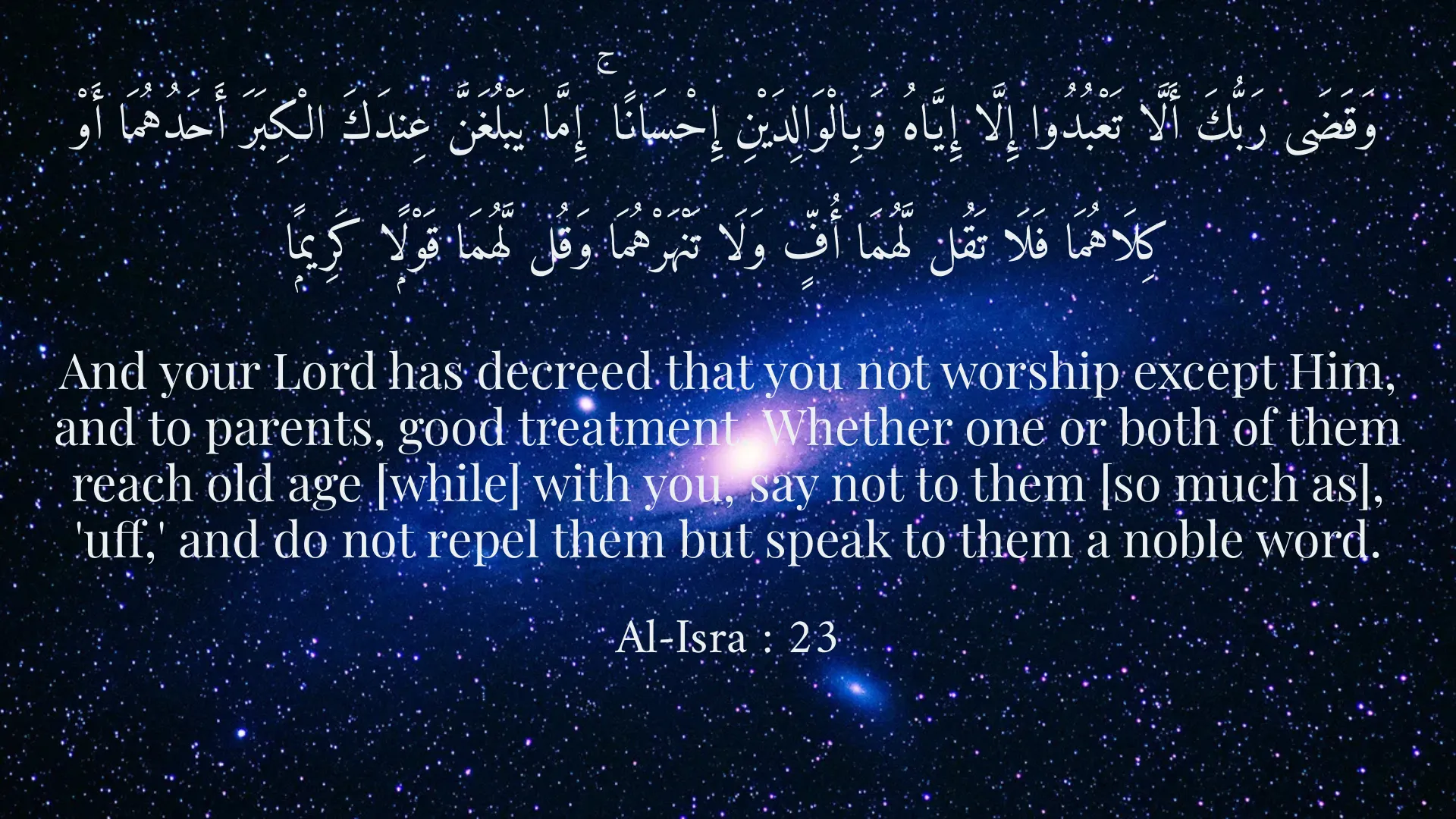
وَقَضَى رَبُّكَ أَلَّا تَعْبُدُوا إِلَّا إِيَّاهُ وَبِالْوَالِدَيْنِ إِحْسَانًا ۚ إِمَّا يَبْلُغَنَّ عِندَكَ الْكِبَرَ أَحَدُهُمَا أَوْ كِلَاهُمَا فَلَا تَقُل لَّهُمَا أُفٍّ وَلَا تَنْهَرْهُمَا وَقُل لَّهُمَا قَوْلًۭا كَرِيمًۭا
And your Lord has decreed that you not worship except Him, and to parents, good treatment. Whether one or both of them reach old age [while] with you, say not to them [so much as], 'uff,' and do not repel them but speak to them a noble word.
Al-Isra : 23
أَفَمَنْ قَتَلَ نَفْسًا جَزَاؤُهُ جَهَنَّمُ خَـالِدًا فِيهَا ۖ وَأُولَـئِكَ هُمْ شَرُّ الْبَرِيَّةِ
Is one who kills a soul, his recompense is Hell, wherein he will abide eternally. And those are the worst of creatures.
Muhammad : 22
Short Story
On a beautiful day, Aunt Mansoureh decided to invite her family over to her house. She knew that maintaining family ties was crucial for strengthening familial connections. During this gathering, all family members were happy together, sharing sweet and funny stories. This day not only increased love among family members but also strengthened familial bonds. Mansoureh had a smile on her face, knowing that being together made life sweeter.