Quranic Answer
In the Holy Quran, there is a profound emphasis on the concept of self-awareness and the relentless pursuit of personal improvement. This is of paramount importance in shaping one's character and in fostering personal growth. Analyzing oneself in contrast to others can often lead individuals down a path of envy, feelings of failure, and a deep sense of worthlessness, which are fundamentally incompatible with the core teachings of the Quran. These teachings encourage believers to embark on a journey of self-discovery and to cultivate their potential in a way that honors their unique efforts and achievements, rather than undermining them through destructive comparisons. The Quran consistently promotes the idea that each individual is unique, with their own strengths, weaknesses, and paths in life. Surah Al-Hujurat, verse 13, underscores this concept when Allah states, 'O mankind, indeed We have created you from male and female and made you peoples and tribes that you may know one another. Indeed, the most noble of you in the sight of Allah is the most righteous of you.' This powerful verse conveys a remarkable message: the only criterion for true superiority in the eyes of Allah is piety and righteousness, rather than social or financial status. In a world dominated by materialism and social status, it is easy to fall into the trap of comparing ourselves to those around us. Social media further exacerbates this issue, presenting an edited and filtered version of everyone's lives, often leading to unrealistic expectations of success and happiness. However, the Quran offers a refreshing perspective that encourages believers to focus on their own moral compass and to cultivate a sense of self that is free from the shackles of envy and resentment. Moreover, the act of comparison can have detrimental effects on our relationships. Surah Al-An’am, verse 153, states that 'you should achieve part of your endeavors in your life.' This verse highlights the importance of individual pursuits and emphasizes that everyone has a distinct path they must follow. It suggests that instead of measuring our worth against others, we should invest our energies into our own ambitions, aspirations, and endeavors. The Quran offers guidance on the importance of acknowledging our unique attributes and capabilities. This reflection not only fosters personal growth but also cultivates a sense of gratitude for the gifts and circumstances one has been bestowed with in life. When we cease to compare ourselves to others, we can more readily appreciate our individual struggles and triumphs, leading to a balanced and holistic approach to our lives. The teachings of the Quran urge us to cultivate self-awareness through introspection and self-improvement. This internal journey can enhance our understanding of our own motivations, behaviors, and potential for growth. By focusing on our personal development, we are better equipped to make a positive impact in our own lives and in the lives of those around us. Moreover, constantly measuring oneself against others can lead to a variety of psychological issues including low self-esteem, anxiety, and depression. These mental health challenges can create barriers to our personal and spiritual growth. The Quran recognizes this danger and offers timeless wisdom that can aid individuals in overcoming these pitfalls. By focusing on our own journey, the Quran teaches us to let go of negativity towards others and instead foster a spirit of compassion, understanding, and support. Self-awareness and personal improvement are pivotal in achieving a balanced life that aligns one's intentions with their actions. When we concentrate on our development rather than on others, we unlock the potential to grow and progress in ways that are meaningful and fulfilling. Personal accountability becomes the cornerstone of our character, allowing us to assess our actions and make amends where necessary. In this quest for self-betterment, we are also encouraged to surround ourselves with positive influences and individuals who inspire growth rather than competition. Building relationships founded on support and encouragement can further reinforce the notion that we are all on our unique journeys and that success can come in various forms. The Quranic guidance advocates for a community of believers who uplift one another, fostering an environment enriched by mutual respect and encouragement rather than envy and resentment. In conclusion, the teachings of the Holy Quran profoundly advocate for self-awareness and personal improvement. The verses emphasize that individuals should focus on their own journeys, recognize their unique paths, and strive for righteousness, which is the true measure of worth in the eyes of Allah. As we strive for personal growth, let us remember to embrace our uniqueness and reject the negative tendencies buoyed by comparison. In doing so, we create space for our own success and happiness, leading to a fulfilling, enriched life aligned with our values and principles.
Related Verses
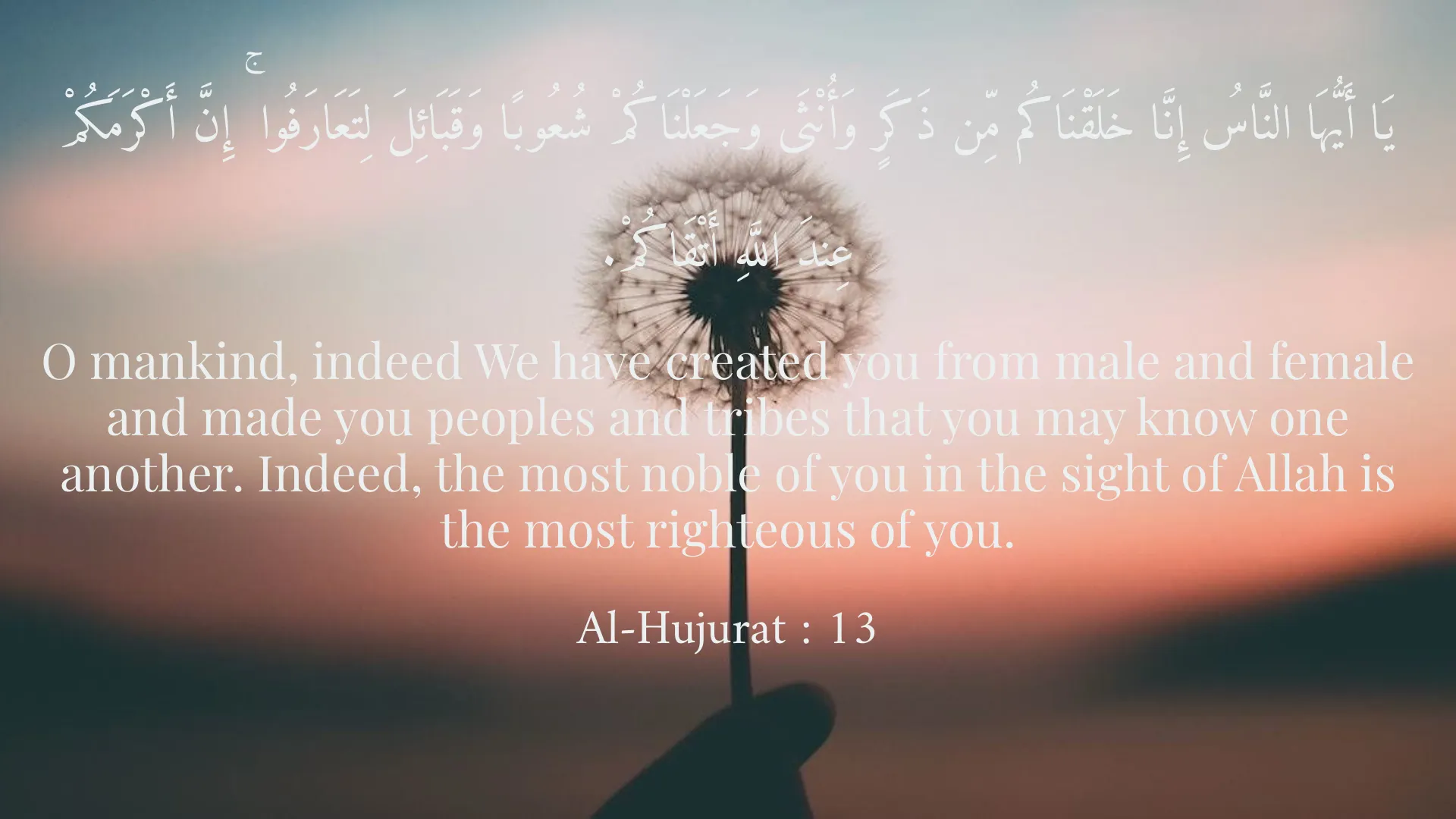
يَا أَيُّهَا النَّاسُ إِنَّا خَلَقْنَاكُم مِّن ذَكَرٍ وَأُنْثَى وَجَعَلْنَاكُمْ شُعُوبًا وَقَبَائِلَ لِتَعَارَفُوا ۚ إِنَّ أَكْرَمَكُمْ عِندَ اللَّهِ أَتْقَاكُمْ.
O mankind, indeed We have created you from male and female and made you peoples and tribes that you may know one another. Indeed, the most noble of you in the sight of Allah is the most righteous of you.
Al-Hujurat : 13
وَأَنَّ هَـٰذَا صِرَاطِي مُسْتَقِيمًا فَاتَّبِعُوهُ ۖ وَلَا تَتَّبِعُوا السُّبُلَ فَتَفَرَّقَ بِكُمْ عَنْ سَبِيلِهِ ۚ ذَٰلِكُمْ وَصَّاكُم بِهِ لَعَلَّكُمْ تَتَّقُونَ.
And indeed, this is My straight path, so follow it; and do not follow other paths, for they will separate you from His way. This has He instructed you that you may become righteous.
Al-An’am : 153
Short Story
One day, Mr. Ibrahim was thinking about comparing his life with his neighbor's. But when he pondered over the verses of the Quran and realized that everyone has their unique path and journey, he decided to focus only on his own progress. Thus, he found greater happiness and satisfaction in his life.