Quranic Answer
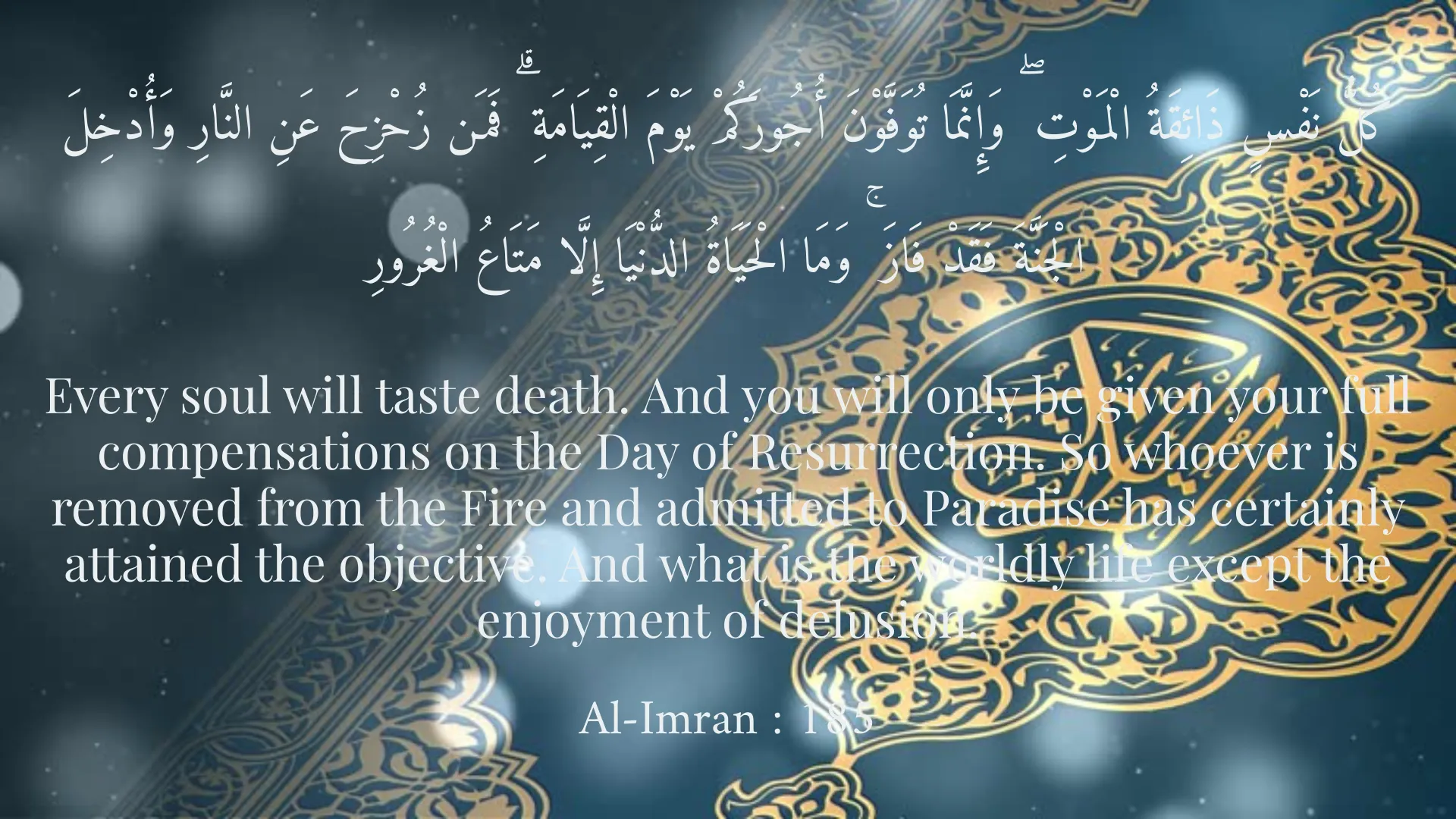
In the Holy Quran, the depiction of the world as deceptive and transient holds significant importance and serves as a profound reminder for humanity. This notion is encapsulated in the verses that highlight the impermanence of worldly life and the eternal nature of the Hereafter. The Quran provides believers with guidance to navigate through life's complexities, emphasizing a focus beyond immediate pleasures and material possessions. One of the verses that powerfully conveys this message is from Surah Al-Imran, verse 185, which states: 'Every soul will taste death. And you will only be given your full compensations on the Day of Resurrection. So whoever is removed from the Fire and admitted to Paradise has certainly attained the objective. And what is the worldly life except the enjoyment of delusion.' This verse is not just a proclamation; it is a profound reflection on the nature of existence. Here, death is illustrated as an inevitable reality, an equalizer that signifies the end of worldly pursuits. The concept of tasting death indicates that every individual, regardless of their status or wealth, will face this ultimate truth. It serves as an admonition for us to recognize that worldly achievements, possessions, and relationships are temporary and will not accompany us beyond the grave. The term 'delusion' here is particularly significant, as it suggests that the pleasures of life can easily mislead people into a false sense of security and fulfillment. Many may seek joy in material wealth, social status, or fleeting pleasures, but the Quran teaches that true fulfillment lies in recognizing the ephemeral nature of these pursuits. Following this notion of transience, the Quran prompts us toward a different perspective. In Surah An-Nahl, verse 96, Allah mentions: 'What is with you is gone, and what is with Allah is enduring. And We will surely give those who were patient their reward according to the best of what they used to do.' This verse emphasizes the contrast between the impermanence of worldly possessions and the eternal nature of what is with Allah. It reinforces the idea that while our material world is subject to decay, what we earn through good deeds and faith is everlasting. This notion encourages a paradigm shift: instead of investing our energy and time in temporary gains, we should focus on actions that will yield lasting rewards in the Hereafter. The divine assurance that those who remain patient and steadfast in their worship will receive their rewards serves as an essential motivator for believers. Patience here does not merely refer to endurance in trials but includes waiting for the rewards of good deeds with full faith that Allah's promises will come to fruition. Moreover, attachment to the worldly life can become a significant distraction from one's spiritual goals. The transient nature of life and its pleasures can lead individuals to prioritize material gain over spiritual growth, resulting in a disconnection from their true purpose. This diversion from divine worship, service to others, and cultivating character can derail one's spiritual journey, ultimately leading to a sense of emptiness. In a society that often glorifies material achievements and the fast-paced nature of contemporary life, it can be challenging to remain grounded in one's faith and avoid being swept away by the allure of worldly distractions. However, the Quran provides continuous reminders of the ultimate reality. It highlights the fleeting moments we live in—a life that often provides momentary pleasures that accumulate into regrets rather than a sense of accomplishment. To counteract this societal pressure, believers are encouraged to engage in constant self-reflection and evaluation of their priorities. Acts of worship, community service, and sharing one's wealth with those in need are practical ways to anchor oneself in the pursuit of spiritual fulfillment. Those who strive to maintain this balance between worldly responsibilities and spiritual development remain aligned with the divine message of the Quran. Furthermore, the Quran advises the believer to cultivate a mindset that prioritizes good deeds and the pleasure of Allah above all else. This includes developing an understanding that true peace and happiness are rooted not in material wealth but in the contentment derived from fulfilling one's obligations to Allah and to humanity. The teachings of the Quran provide a clearer vision of what constitutes a successful life—rooted in righteousness, generosity, and a connection to God that transcends the temporary nature of this world. In conclusion, the Quran profoundly presents the world as a deceptive and transient place, serving to remind mankind of the greater reality that lies beyond it. The verses emphasize the inevitability of death, the enduring nature of divine rewards, and the impact of worldly attachments that distract us from our spiritual goals. As believers navigate the complexities of life, adhering to the principles laid out in the Quran offers them a solid foundation for achieving genuine fulfillment. A focus on good deeds, worshiping Allah, and seeking the Hereafter paves the path toward true peace and ultimate happiness. It truly reflects the ultimate wisdom of prioritizing the eternal over the temporal, shaping lives destined for transcendence, rather than entrapment in the illusions of this world.
Related Verses
كُلُّ نَفْسٍ ذَائِقَةُ الْمَوْتِ ۖ وَإِنَّمَا تُوَفَّوْنَ أُجُورَكُمْ يَوْمَ الْقِيَامَةِ ۗ فَمَن زُحْزِحَ عَنِ النَّارِ وَأُدْخِلَ الْجَنَّةَ فَقَدْ فَازَ ۚ وَمَا الْحَيَاةُ الدُّنْيَا إِلَّا مَتَاعُ الْغُرُورِ
Every soul will taste death. And you will only be given your full compensations on the Day of Resurrection. So whoever is removed from the Fire and admitted to Paradise has certainly attained the objective. And what is the worldly life except the enjoyment of delusion.
Al-Imran : 185
مَا عِندَکُمْ يَنفَدُ ۖ وَمَا عِندَ اللَّهِ بَاقٍ ۗ وَلَنَجْزِيَنَّ الَّذِينَ صَبَرُوا أَجْرَهُمْ بِأَحْسَنِ مَا کَانُوا يَعْمَلُونَ
What is with you is gone, and what is with Allah is enduring. And We will surely give those who were patient their reward according to the best of what they used to do.
An-Nahl : 96
Short Story
One day, a man went to the market and was faced with the attractions of the world. Yet, in his heart, a voice urged him not to get attached to anything since all these beauties would eventually fade away. He recalled the verses of the Quran and decided to devote himself to worship and drawing closer to Allah. From that day on, he focused more on the Hereafter and the pleasure of Allah than anything else.