Quranic Answer
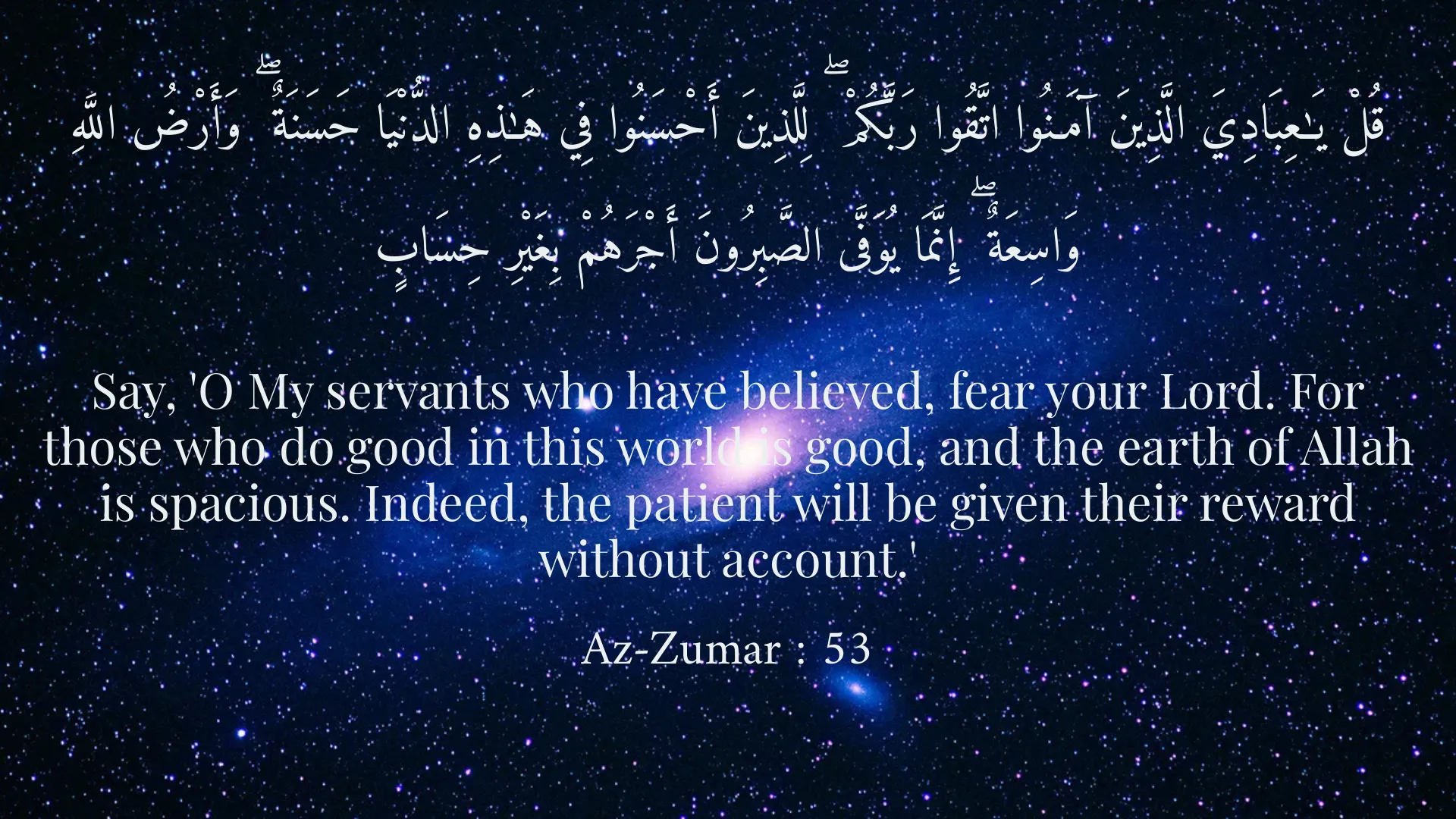
Despair is a powerful and often overwhelming emotion, one that can lead individuals into a dark abyss of confusion and hopelessness. It is a feeling that can cloud judgment, stifle motivation, and ultimately drive people away from the very sources of hope and strength they need to navigate life's challenges. The detrimental effects of despair cannot be overstated, as it can lead to a sense of paralyzing inaction and, in extreme cases, even thoughts of self-harm or suicide. In these moments of deep emotional turmoil, it is essential to remember that there is always a path back to hope and light, especially for believers. The Holy Quran serves as a guiding light for believers, encouraging them to place their trust in God's mercy and forgiveness rather than succumbing to despair. In Surah Az-Zumar, verse 53, Allah articulates a profound message of hope: 'Say, O My servants who have believed, fear your Lord. For those who do good in this world is good, and the earth of Allah is spacious. Indeed, the patient will be given their reward without account.' This verse is significant for several reasons. First, it acknowledges the existence of hardship. The phrase, 'the patient will be given their reward without account,' implies that challenges and suffering are a part of life, yet it reassures believers that patience and faith will ultimately lead to divine reward. This verse serves as a reminder that hope in God's mercy is a source of strength during difficult times. It encourages believers not to lose heart when faced with adversity but rather to remain steadfast in their faith. By focusing on doing good, individuals can find solace and foster a sense of purpose that transcends their immediate struggles. The message is clear: even in the harshest of circumstances, there is a promise of goodness both in this world and in the hereafter. Additionally, in Surah Ash-Shura, verse 36, the Quran highlights the ephemeral nature of worldly life, emphasizing that the suffering and trials we face are not permanent. This verse reminds us that life is transient and that our ultimate focus should be on the hereafter and on engaging in righteous deeds. The distractions and despair that arise in this life can pull us away from nurturing our relationship with God, yet this is precisely when we need to draw nearer to Him the most. The importance of keeping our focus on the bigger picture cannot be stressed enough. The reality is that despair often distorts our perception of our circumstances, leading us to believe that there is no way out and that our struggles define us. However, the Quran reminds us that our true identity lies in our faith, our deeds, and our connection with the Divine. By choosing to remain hopeful and committed to our faith, we can cultivate a mindset that counters despair and allows us to see the possibilities that lay ahead. In another poignant verse, Surah Al-Baqarah, verse 286 states: 'Allah does not burden a soul beyond that it can bear.' This statement is incredibly empowering, as it reassures believers that they are equipped with the strength necessary to face their challenges. It encourages individuals to confront their trials with courage and resilience, reinforcing the idea that surrendering to despair is not an option. When faced with challenges, it is easy to feel overwhelmed and to view oneself as a victim of circumstance. But this verse invites us to recognize our innate ability to endure and to grow stronger through adversity. Moreover, the concept of self-overcoming is pivotal in the journey of faith. Believers should cultivate an attitude of perseverance and determination, understanding that challenges are opportunities for spiritual and personal growth. Each trial can serve as a catalyst for refining one’s character, deepening their faith, and strengthening their resolve. Through active engagement with one’s circumstances, rather than succumbing to despair, believers can transform their trials into testimonies of resilience and hope. It's also essential to seek spiritual and community support during times of despair. The Quran emphasizes the importance of communal ties and mutual support among believers. Connecting with fellow believers and sharing challenges can serve as a critical source of encouragement and inspiration. Engaging in acts of kindness and remaining socially active can alleviate feelings of loneliness and hopelessness, helping individuals progress through their struggles while feeling supported. In conclusion, despair is undoubtedly a significant threat to the soul and mind. However, as isi conveyed in the Quran, it is crucial for believers to remember that they are never alone. God's mercy is vast, and His promises are steadfast. Maintaining hope, engaging in righteous deeds, and trusting in God's plan are vital steps in overcoming despair. Instead of allowing despair to dictate one's narrative, individuals are encouraged to reframe their struggles as opportunities for growth and to seek the wisdom and strength that faith offers. By doing so, they reaffirm their purpose in life and foster a connection with God that perpetuates hope, resilience, and ultimately, redemption.
Related Verses
قُلْ يَـٰعِبَادِيَ الَّذِينَ آمَـنُوا اتَّقُوا رَبَّكُمْ ۖ لِلَّذِينَ أَحْسَنُوا فِي هَـٰذِهِ الدُّنْيَا حَسَنَةٌ ۖ وَأَرْضُ اللَّهِ وَاسِعَةٌ ۖ إِنَّمَا يُوَفَّى الصَّبِرُونَ أَجْرَهُمْ بِغَيْرِ حِسَابٍ
Say, 'O My servants who have believed, fear your Lord. For those who do good in this world is good, and the earth of Allah is spacious. Indeed, the patient will be given their reward without account.'
Az-Zumar : 53
فَمَا أُوتِيتُم مِّن شَيء فَمَتَاعُ الحَيَاةِ الدُّنْيَا ۖ وَمَا عِندَ اللَّهِ خَيْرٌ وَأَبْقَىٰ ۖ أَفَلَا تَعْقِلُونَ
So whatever has been given to you is but [the enjoyment of] the worldly life, and what is with Allah is better and more lasting. So will you not reason?
Ash-Shura : 36
لَا يُكَلِّفُ اللَّهُ نَفْسًۭا إِلَّا وُسْعَهَا ۚ لَهَا مَا كَسَبَتْ وَعَلَيْهَا مَا اكْتَسَبَتْ ۗ رَبَّنَا لَا تُؤَاخِذْنَا إِن نَّسِينَا أَوْ أَخْطَأْنَا ۚ رَبَّنَا وَلَا تَحْمِلْ عَلَيْنَا إِصْرًۭا كَمَا حَمَلْتَهُ عَلَى الَّذِينَ مِن قَبْلِنَا ۚ رَبَّنَا وَلَا تُحَمِّلْنَا مَا لَا طَاقَةَ لَنَا بِهِۦ ۖ وَاعْفُ عَنَّا وَاغْفِرْ لَنَا وَارْحَمْنَا ۖ أَنتَ مَوْلَانَا فَانصُرْنَا عَلَى الْقَوْمِ الْكَافِرِينَ
Allah does not burden a soul beyond that it can bear. It will have [the consequence of] what [good] it has gained, and it will bear [the consequence of] what [evil] it has earned. Our Lord, do not impose blame upon us if we have forgotten or made a mistake. Our Lord, and lay not upon us a burden like that which You laid upon those before us. Our Lord, and burden us not with that which we have no ability to bear. And pardon us; and forgive us; and have mercy upon us. You are our protector, so give us victory over the disbelieving people.
Al-Baqarah : 286
Short Story
One day, a person named Aref felt despair and hopelessness in his heart. He recalled the verses of the Quran and decided to hope in God's mercy and forgiveness. He found peace and looked around, realizing that life is full of divine opportunities and blessings. In the end, Aref recognized the power of his faith and hope and overcame his challenges.