Quranic Answer
Hope is an integral aspect of human existence. It is a fundamental part of our psychological experience and has significant implications for our social, spiritual, and personal lives. Within the framework of Islamic teachings, the concept of hope is profoundly emphasized. One of the primary texts that reflect this fundamental concept is the Holy Quran, which serves as a guide for billions of Muslims around the globe. In particular, the teachings surrounding the story of Prophet Yusuf (Joseph) offer profound insights into the endurance of hope even in the most trying circumstances. The narrative of Prophet Yusuf is not just a story of an individual; it is rich with lessons that permeate the essence of hope and resilience. Yusuf’s life was marked by dramatic ups and downs, offering a reflective lens on how one can navigate through life's uncertainties. From being cast into a well by his brothers and later imprisoned for a crime he did not commit, to eventually rising to a position of power in Egypt, Yusuf’s journey is emblematic of unwavering faith and optimism, irrespective of the adversities he faced. In Chapter 12, Verse 87 of Surah Yusuf, the Quran presents Yusuf’s words to his brothers: 'Do not despair of the mercy of Allah; indeed, no one despairs of the mercy of Allah except the disbelieving people.' This verse captures the core message of hope that resonates throughout the Quran. It invites believers to remain steadfast in their faith and never succumb to despair, highlighting that hope is intrinsically linked to trust in God’s mercy. The Quran consistently reassures humanity that trials and tribulations are part and parcel of life. Surah Al-Imran, Verse 139 states, 'And do not grieve or be saddened.' This too reinforces the importance of maintaining a hopeful outlook regardless of one's circumstances. Grief and sorrow, though natural human emotions, should not overpower our intrinsic belief in divine mercy and power. Everything happens by the will of Allah, and the faithful are encouraged to keep a hopeful heart and look for the silver lining amid overwhelming darkness. Life, as we know, is fraught with challenges that can sometimes extinguish our hope if we allow them to. Economic hardships, personal losses, illness, and social injustices often lead individuals to question their beliefs and succumb to feelings of despair. However, the teachings found in the Quran provide a powerful counter-narrative: that hope is possible even in the direst circumstances. We learn through Yusuf’s experiences that such moments are not just obstacles; they are opportunities for growth, character building, and reaffirming our faith in Allah. Moreover, the significance of hope extends beyond mere survival in the face of adversity. It propels us toward action, urging us to strive for positive change in our lives and those of others. The Quran encourages believers to actively seek solutions rather than passively waiting for miracles. Hope empowers individuals to utilize their strengths against adversities, urging them to work diligently while keeping their faith intact. This duality—effort intertwined with faith—creates a balanced approach towards overcoming obstacles. As we delve deeper into the social ramifications of hope, we find that it serves as a binding force within the community. When individuals maintain a hopeful outlook, it cultivates a sense of camaraderie and mutual support. Hope inspires collective resilience, fostering an environment where families, friends, and communities lift one another during hard times. For instance, during communal crises, such as natural disasters or social unrest, it is often the hopeful leaders and visionaries who galvanize communities to come together towards recovery and healing. On a personal level, hope acts as a buffer against mental and emotional distress. The positive outlook that hope instills can diminish feelings of anxiety, depression, and helplessness. When individuals choose to focus on the possibilities that tomorrow might bring rather than the tribulations of today, they craft a more resilient mindset. This is particularly crucial in today's fast-paced world, where pressure and uncertainty are commonplace. By fostering hope, we equip ourselves with the mental fortitude required to face our challenges head-on. In addition, hope is a crucial aspect of spiritual growth. Within Islam, having hope in Allah's mercy and promises fosters a deeper, more meaningful relationship with the divine. It encourages individuals to turn to prayer, seek forgiveness, and engage in acts of worship with sincerity and enthusiasm. By maintaining hope, Muslims align themselves with the teachings of their faith, which advocate for a positive and proactive approach to life's challenges. Ultimately, the story of Prophet Yusuf serves as a timeless reminder that hope is not just an emotion; it is a vital part of our spiritual journey. It invites believers to reflect on their lives, to recognize that despair can often cloud their judgment, and to encourage them to seek solace in Allah's mercy. The Quran offers a multitude of verses that beckon us to remain hopeful and steadfast, reminding us that light eventually breaks through, even if we are presently enveloped in darkness. In conclusion, maintaining hope during life's trials not only enhances personal resilience but also strengthens the bonds of community and enriches spiritual development. As expressed in the Quran, hope is woven deeply into the fabric of a Muslim's life, serving as a source of strength and motivation. Regardless of one’s situation, we are reminded to embrace hope, knowing that Allah’s mercy is absolute and boundless. Let us, therefore, embody hope in our hearts and actions, even when faced with formidable challenges. No darkness is permanent, and with every trial comes the promise of brighter days ahead.
Related Verses
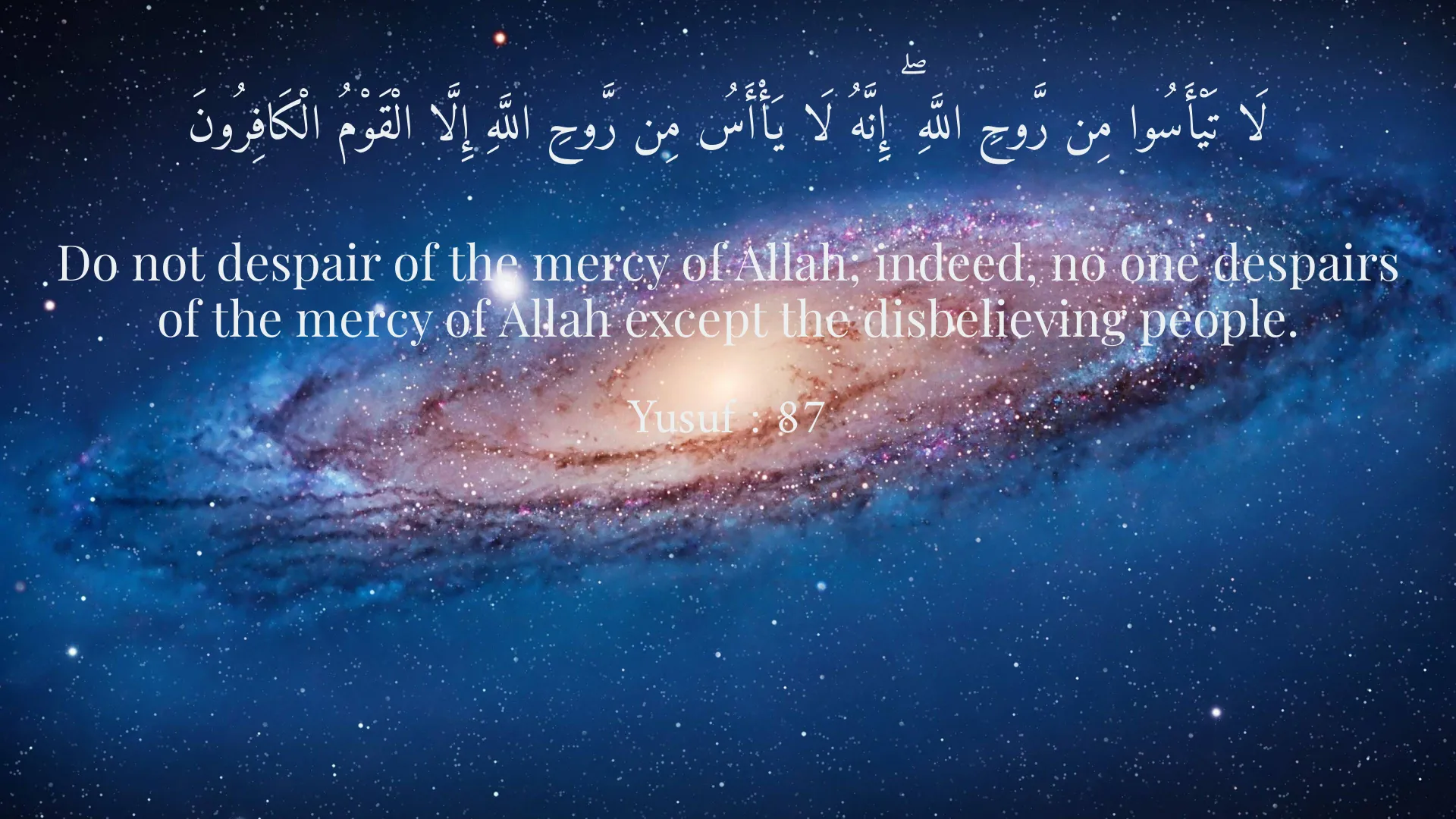
لَا تَيْأَسُوا مِن رَّوحِ اللَّهِ ۖ إِنَّهُ لَا يَأْأَسُ مِن رَّوحِ اللَّهِ إِلَّا الْقَوْمُ الْكَافِرُونَ
Do not despair of the mercy of Allah; indeed, no one despairs of the mercy of Allah except the disbelieving people.
Yusuf : 87
وَلَا تَهِنُوا وَلَا تَحْزَنُوا وَأَنتُمُ الْأَعْلَوْنَ إِن كُنتُم مُّؤْمِنِينَ
And do not be weak, and do not grieve, for you will surely be victorious if you are believers.
Al-Imran : 139
Short Story
Once upon a time, a man sat in the dark night feeling downcast and hopeless. He felt despair due to various reasons in his life, but suddenly he remembered the verses of the Quran. He realized that one must always remain hopeful even in darkness. The man decided to engage in prayer and do good for himself and others. Soon, the light of hope returned to his life, and he embraced challenges with a focus on learning and growth.