Quranic Answer
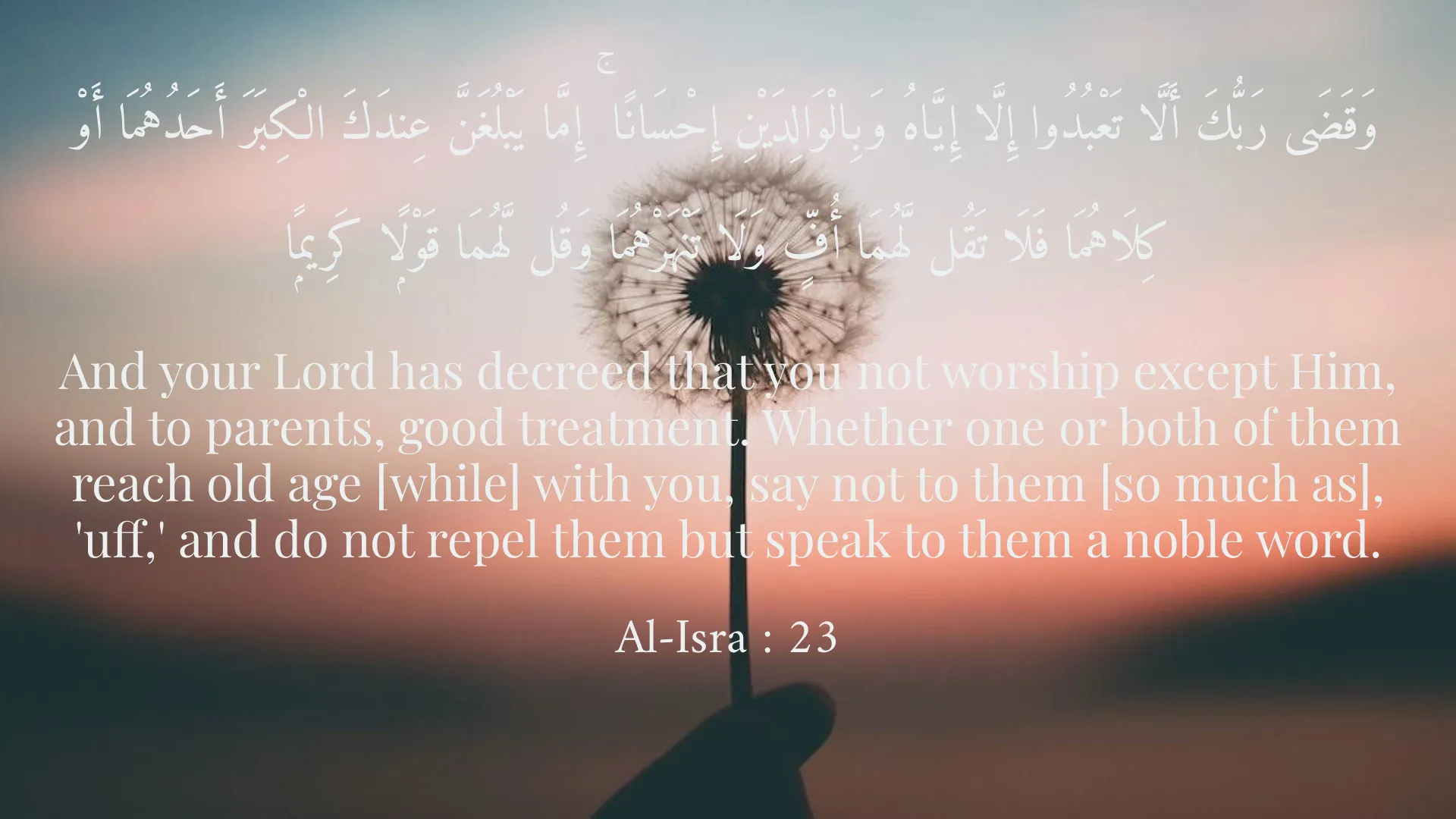
The Holy Quran, revered by Muslims as the literal word of God, delves deeply into the instructions for personal conduct and the significance of family ties. Among these teachings, the emphasis on the respect and kindness toward parents is profoundly illustrated in several verses, establishing a foundational principle for interpersonal relationships within the family unit. The relationship between parents and their children is often cited as one of the most crucial connections in life, affecting emotional wellbeing and social structures. This article seeks to explore the Quranic injunctions regarding the treatment of parents, its implications on familial relationships, and the psychological benefits that come from showing respect and kindness toward one's parents. One key verse that underlines the importance of treating parents with honor and kindness is found in Surah Al-Isra, verse 23. Allah commands, 'And your Lord has decreed that you not worship except Him, and to parents, good treatment.' This directive is pivotal, intertwining the worship of the divine and the proper treatment of one's parents, indicating that the two are not mutually exclusive. The verse continues to emphasize that even in states of frustration or slight annoyance, one should refrain from showing disrespect: 'Whether one or both of them reach old age [while] with you, say not to them [so much as], 'uff,' and do not repel them but speak to them a noble word.' This advanced instruction serves a dual purpose: it stresses the need for a deep-seated respect for our parents, especially as they age and may require more patience and care, while simultaneously highlighting the importance of courteous communication. Furthermore, in Surah Luqman, verse 14, the Quran reiterates this theme, stating, 'And We have enjoined upon man [care] for his parents. But if they endeavor to make you associate with Me that of which you have no knowledge, do not obey them.' This verse introduces another important consideration—while respect and kindness are paramount, maintaining one's own beliefs is equally crucial. In situations where parental beliefs may challenge one's religious understanding or principles, it is articulated that a balance must be found; however, this should not diminish the inherent respect owed to parents. Importantly, the emphasis on respectful dialogue and kindness towards parents is not merely a religious requirement; it has significant implications for family dynamics. Research in psychology supports the notion that respectful communication fosters positive parent-child relationships, which are essential for emotional well-being. Children who engage in open, kind dialogues with their parents are more likely to develop strong bonds, leading to a harmonious family life. This dynamic not only breeds love and closeness but also creates an environment where parents feel valued and cherished. The implications of following these Quranic guidelines are profound, suggesting that fulfilling such obligations can lead to a cycle of love, respect, and kindness within the family. The direct benefits of treating parents kindly resonate through generations. When children observe respectful behavior towards their parents, they internalize these actions and tend to replicate them in their relationships, promoting a culture of respect and love within the family. Such practices contribute to an environment where familial ties strengthen, leading to lasting relationships among siblings and extended family members. The teachings of the Quran advocate a cycle of good treatment and kindness: when children exhibit respect toward their parents, they facilitate an atmosphere in which affection and mutual respect flourish among all family members. In addition, the psychological wellbeing of individuals is often tied to their family relationships. A loving and respectful home, cultivated through the principles laid out in the Quran, engenders happiness and tranquility not only for the parents but also for the children. Studies demonstrate that children who feel reinforced with love and respect from their parents exhibit lower levels of anxiety and depression, leading to a more stable and fulfilling life. Moreover, the divine promise of blessings for those who treat their parents with kindness is significant. In many Islamic teachings, it is conveyed that pleasing one's parents can lead to immense rewards from Allah, both in this world and in the hereafter. The notion that kindness to parents aligns with divine approval and blessings adds another layer of motivation for individuals to engage in respectful and loving behavior. This spiritual dimension serves not only to strengthen family ties but also to cultivate a sense of well-being and satisfaction in one’s life. Ultimately, the teachings found in the Quran concerning the respect and kindness owed to parents encapsulate a vital aspect of human relations. Treating parents with kindness and respect forms the bedrock of family life and serves as a guiding principle for healthy relationships. Through nurturing positive familial ties and fostering an atmosphere of love, respect, and kindness, individuals contribute not only to the wellbeing of their parents but also to their own emotional and spiritual health. The path outlined by the Quran provides a clear guide, emphasizing that such behaviors are not merely obligations but opportunities to enrich one’s life and discourse, ultimately leading to a fulfilling existence characterized by love and tranquility. Therefore, as we reflect on these teachings, the imperative is clear: treating parents with dignity and affection not only pleases Allah but creates a harmonious and loving family environment that benefits all involved, solidifying the very fabric of our social construct.
Related Verses
وَقَضَى رَبُّكَ أَلَّا تَعْبُدُوا إِلَّا إِيَّاهُ وَبِالْوَالِدَيْنِ إِحْسَانًا ۚ إِمَّا يَبْلُغَنَّ عِندَكَ الْكِبَرَ أَحَدُهُمَا أَوْ كِلَاهُمَا فَلَا تَقُل لَّهُمَا أُفٍّ وَلَا تَنْهَرْهُمَا وَقُل لَّهُمَا قَوْلًۭا كَرِيمًۭا
And your Lord has decreed that you not worship except Him, and to parents, good treatment. Whether one or both of them reach old age [while] with you, say not to them [so much as], 'uff,' and do not repel them but speak to them a noble word.
Al-Isra : 23
وَوَصَّيْنَا الْإِنسَانَ بِوَالِدَيْهِ
And We have enjoined upon man [care] for his parents.
Luqman : 14
Short Story
Once, a young man named Sajjad was wandering around the market. He recalled the verses of the Quran and decided that he would always speak kindly to his parents. The next morning, when he returned home, he said to his mother, 'Hello, mother! How happy I am to have you in this world!' His mother smiled, feeling a wave of joy. Sajjad realized that kindness towards parents is not only a religious duty but also brings a unique sweetness to life.