Quranic Answer
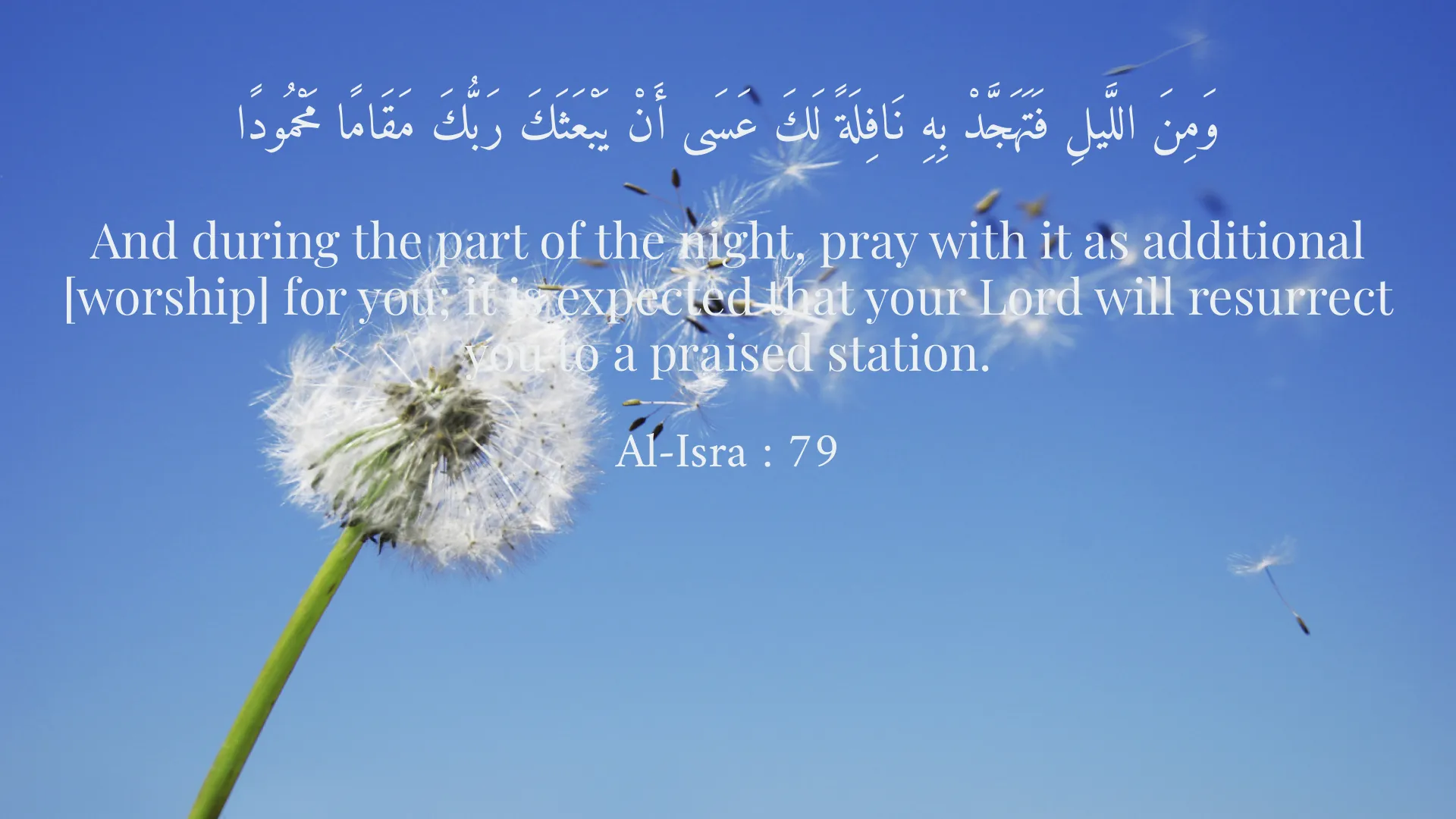
Staying up at night is an ancient practice imbued with deep spiritual significance, especially within the context of Islamic teachings. This act of devotion, often referred to as 'Qiyam al-Lail' or night prayer, is highly regarded in both the Quran and the Sunnah of Prophet Muhammad (peace be upon him). In the busy world of today, where life's responsibilities often take precedence over our relationships with the divine, the importance of dedicating time for nighttime worship cannot be overstated. This article delves into the vital role that staying up at night plays in fostering a life of tranquility, peace, and blessing through prayer and supplication. The Quran serves as a guiding light for Muslims, and one of the passages that highlights the significance of nighttime worship is Surah Al-Isra, verse 79: 'And during the part of the night, pray with it as additional [worship] for you; it is expected that your Lord will resurrect you to a praised station.' This verse offers profound insight into the nature of worship and the special status conferred upon those who engage in it during the hours of the night. The act of staying awake for prayer not only brings one closer to Allah but is also a means of attaining a high spiritual rank. This Quranic injunction was revealed to the Prophet Muhammad (peace be upon him) at a time when his prophetic mission faced significant challenges, illustrating how divine support and guidance often come to those who strive in worship, particularly during the night. When we consider the benefits of staying awake for worship at night, it quickly becomes apparent that it extends far beyond the mere act of praying. One of the most significant advantages of such devotion is the tranquility it brings to the heart and mind. During the stillness of night, the distractions and noise of the day give way to a quietude that allows individuals to focus their thoughts and emotions on their Creator. This solitude fosters a deeper connection with Allah, as the worshiper is free to express their innermost concerns, desires, and gratitude without interruption. It is in these moments of solitude that the soul often finds peace, guided by the gentle whisper of divine presence that encourages reflection and introspection. Moreover, engaging in nightly worship serves to strengthen one's understanding of the Quran and enhances devotion. The act of reciting the Holy Quran during the night is not merely a ritual but also a spiritual exercise that deepens comprehension and appreciation of its meanings. As individuals recite and reflect upon the verses, they gain insights into the wisdom and guidance provided within its pages. Recitation becomes a form of dialogue with Allah, where one seeks both knowledge and understanding, laying the groundwork for a personal relationship built on love and reverence. Additionally, the benefits of staying awake at night manifest through answered prayers. The serenity of such times is often associated with divine mercy and acceptance of supplication. In various hadiths, the Prophet Muhammad (peace be upon him) mentioned the special times when Allah is near His servants, and the last third of the night is among them. This period is particularly precious, as it is when the doors of mercy are wide open, and prayers are granted. As believers express their hopes and needs during these hours, they cultivate an atmosphere abundant with potential and divine intervention. The feeling of being heard and the anticipation of receiving Allah's mercy fosters hope, which is instrumental in a fulfilling life. Furthermore, staying up at night for worship can lead to a transformed lifestyle, blending spirituality with practicality. The time devoted to prayer and supplication cultivates discipline and encourages individuals to organize their days around their worship commitments. This structure can lead to improved time management, as many find that dedicating specific times for worship helps them prioritize their tasks, fostering an environment where both spiritual and worldly responsibilities are met with diligence. The significance of staying awake at night is not limited to individual spiritual development but also extends to community cohesion. When Muslims gather for nighttime prayers, especially during holy months such as Ramadan, they reinforce communal bonds, sharing experiences and worship together. This collective act of devotion unites the community in a palpable display of faith and solidarity, nurturing a spirit of brotherhood and sisterhood. In conclusion, the act of staying up at night for worship is not merely an optional spiritual practice but rather a vital component of a devout life. The Quran emphasizes the importance of this act, reminding believers that through nighttime worship, they can achieve a closer connection with Allah, find solace and peace, gain deeper insights into the Holy Quran, and experience the transformative power of answered prayers. For those seeking a life filled with purpose, tranquility, and blessings, engaging in night worship is an invaluable pursuit. To overlook this opportunity is to miss out on the boundless rewards that lie in wait during the peaceful hours of the night. Therefore, let us take the time to prioritize our relationship with Allah, revitalize our spirits through the sacred act of worship at night, and embrace the tranquility and blessings that come from devoting ourselves to Him.
Related Verses
وَمِنَ اللَّيلِ فَتَهَجَّدْ بِهِ نَافِلَةً لَكَ عَسَى أَنْ يَبْعَثَكَ رَبُّكَ مَقَامًا مَحْمُودًا
And during the part of the night, pray with it as additional [worship] for you; it is expected that your Lord will resurrect you to a praised station.
Al-Isra : 79
Short Story
Once there was a man named Hasan who loved worship and staying up at night. He often spent the nights in remembrance of God and prayer, feeling peace and a closeness to the Divine. One night, while he was in prayer, he heard a sound from afar. Voices echoed through the night, reminding him of the significance of staying up and illuminating his life with the light of faith. From that night on, he decided to dedicate every night to prayer and supplication.