Quranic Answer
Worshiping Allah is one of the most fundamental tenets of Islam, serving as the cornerstone upon which the practice of the faith is built. To understand this concept more deeply, it is essential to recognize that the essence of worship transcends mere rituals or outward acts; it should be imbued with love and affection for the Creator. This dynamic relationship between worship and love is not merely an abstract notion but a profound reality that shapes the spiritual lives of millions of Muslims around the world. The Holy Quran, which Muslims regard as the sacred text revealed to the Prophet Muhammad, emphasizes the importance of love for Allah in multiple verses. For instance, in Surah Al-Baqarah, verse 165, it states: 'And among the people are those who take other than Allah as equals [to Him]. They love them as they should love Allah. But those who believe are stronger in love for Allah.' (Al-Baqarah 2:165). This verse highlights a critical theme in Islamic belief: that the love of believers for Allah must surpass any other form of affection. This raises a compelling question: What does it mean to love Allah? This love encompasses far more than simple admiration or respect; it is an all-encompassing, profound feeling that inspires devotion, loyalty, and the desire for closeness to the Divine. It is characterized by a yearning to fulfill the commands of Allah, followed by the motivation to engage in acts of worship that draw one nearer to Him. Thus, true worship lies not merely in the fulfillment of prescribed duties but in the inner feeling and sincere love for Allah. The importance of love in worship can be further illuminated by examining the practices of prayer (Salah), fasting (Sawm), and other acts of devotion. When a person prays or fasts out of heartfelt love and devotion, their worship nourishes their inner self and reinforces their connection to Allah. The physical acts of worship become channels through which believers express their love, ultimately leading to a deeper understanding of their faith and their place in the universe. Muslims are often encouraged to approach their worship with an attitude steeped in love. The Prophet Muhammad (peace be upon him) often demonstrated this profound bond between the worshiper and Allah, showing that genuine devotion is characterized by the love that a believer feels in their heart. This love transforms the experience of worship from a mundane obligation to a source of immense spiritual fulfillment. Furthermore, in Surah Al-Imran, verse 31, Allah refers to following the Prophet Muhammad as a powerful sign of love, stating: 'Say, [O Muhammad], 'If you should love Allah, then follow me, so Allah will love you.' (Al-Imran 3:31). Here, the connection between following the Messenger of Allah and loving Him plays a critical role in our worship. Following the teachings and example of the Prophet Muhammad is, in itself, an act of love for Allah, as those who practice these teachings do so out of a desire to please their Creator. The intertwining of love and worship is essential for anyone striving for a meaningful spiritual life. This love manifests through the recognition of Allah’s attributes, such as His mercy, compassion, and wisdom. When believers reflect on these divine characteristics, they naturally foster a greater bond of love and worship toward Allah. Moreover, the act of worship carries a sense of community and shared experience among believers. Gatherings for group prayers during Jumu'ah (Friday prayers) or communal iftar during Ramadan serve not only as acts of individual devotion but also as collective expressions of love for Allah. These shared experiences enhance the mutual bonds among the community and create an environment filled with compassion and understanding based on a shared love for the Creator. In addition to conventional forms of worship, love for Allah also inspires believers to engage in acts of kindness, charity (Zakat), and service to others. These acts serve as practical extensions of their worship, showing that love for Allah translates into love for humanity. The emphasis on helping the less fortunate and caring for others reflects the core principle that a true believer’s love for Allah must be demonstrated through their actions. Furthermore, love for Allah is not without its trials. Each believer will encounter challenges that test their faith and love. In the face of obstacles and hardships, it is this love that sustains and motivates individuals to persevere. True worship becomes a source of solace and strength during difficult times, reinforcing a believer’s resolve to remain steadfast in their devotion. In conclusion, worshiping Allah is a multi-faceted endeavor that goes beyond mere rituals or outward appearances; it is an expression of deep, abiding love. The Quran emphasizes that the essence of worship lies within this love, calling believers to not only fulfill their religious duties but to cultivate a genuine affection for their Creator. This love defines the paths taken in life, influencing actions, thoughts, and community interactions. As this understanding of worship continues to inspire Muslims, it reinforces a deep spiritual connection to Allah, fostering a profound sense of purpose and belonging in the embrace of the Divine. Therefore, as believers engage in their acts of worship, they must consistently strive to nurture and deepen their love for Allah, embodying this love in every aspect of their lives.
Related Verses
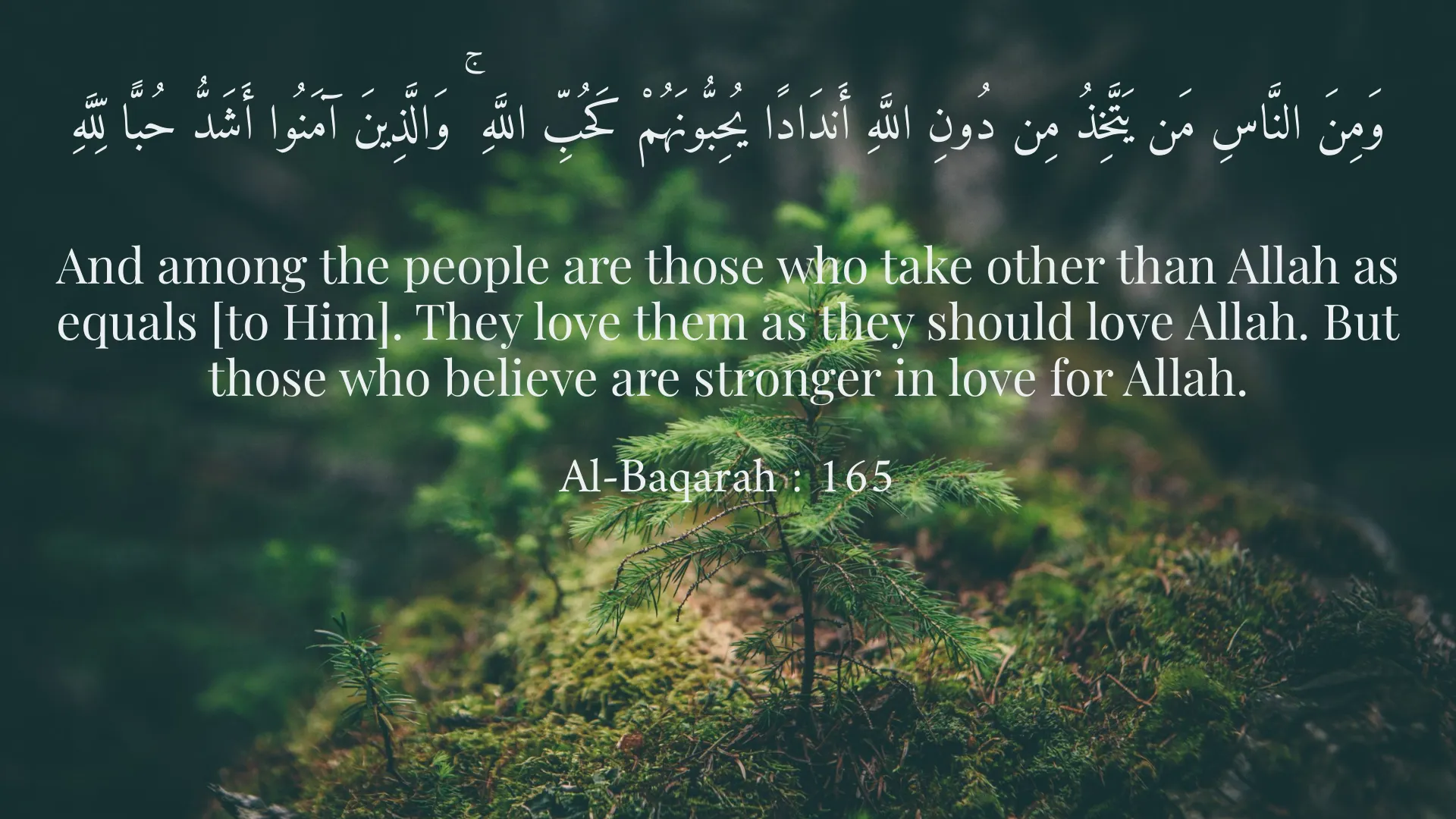
وَمِنَ النَّاسِ مَن يَتَّخِذُ مِن دُونِ اللَّهِ أَندَادًا يُحِبُّونَهُمْ كَحُبِّ اللَّهِ ۚ وَالَّذِينَ آمَنُوا أَشَدُّ حُبًّا لِّلَّهِ
And among the people are those who take other than Allah as equals [to Him]. They love them as they should love Allah. But those who believe are stronger in love for Allah.
Al-Baqarah : 165
قُلْ إِن كُنتُمْ تُحِبُّونَ اللَّهَ فَاتَّبِعُونِي يُحْبِبْكُمُ اللَّهُ
Say, [O Muhammad], 'If you should love Allah, then follow me, so Allah will love you.'
Al-Imran : 31
Short Story
Once upon a time, there was a man named Reza who decided to change his worship routine. He realized that until now, he had merely focused on performing rituals without ever considering love and affection for Allah. Therefore, during his prayers, he began to engage with his heart and soul, speaking with love to God. After some time, he felt that his life had transformed and experienced a greater sense of peace within his heart.