Quranic Answer
The relationship between a human being and their Creator is a dynamic, profound, and multifaceted one, beautifully elaborated upon in the Holy Quran. Your question – "Should I always ask God for things or simply be thankful?" – touches upon one of the most delicate and vital aspects of this relationship. The short and decisive answer is that both actions, "supplication and asking (Du'a)" and "gratitude and thanksgiving (Shukr)," are fundamental pillars of servitude and worship, and they are intrinsically intertwined. Indeed, it's not a matter of one being preferable over the other, nor is one forced to choose between them; rather, true servitude manifests in the harmonious combination of these two spiritual and practical states. Not only are both necessary, but they are also complementary, and the absence of one renders the relationship with God incomplete. Full devotion means a deep understanding of this interdependence and the application of both in daily life. The Importance of Supplication and Asking from God (Du'a): The Holy Quran, in numerous verses, encourages its servants to supplicate and ask from Him. This indicates that Allah not only does not become displeased when His servants ask of Him, but He considers refraining from asking Him a form of arrogance and disregard. Verse 60 of Surah Ghafir explicitly states: "And your Lord says, 'Call upon Me; I will respond to you.' Indeed, those who disdain My worship will enter Hell in humiliation." This verse clearly shows that supplication (Du'a) is itself a form of worship, and Allah has commanded His servants to call upon Him. This divine command is a testament to Allah's expansive mercy, as He has always kept the door of dialogue and request open for His servants. He loves for His servants to share their needs with Him and not to overlook anything, even the smallest of matters. Supplication is not merely for addressing material needs or problems. Du'a can encompass requests for guidance, forgiveness, steadfastness in faith, goodness in this world and the hereafter, and even increased knowledge and insight. The Prophets of Allah, who were the most perfect examples of servitude, were constantly engaged in Du'a and intimate communion with Allah. From Prophet Adam (peace be upon him), who prayed after his transgression: "Our Lord, we have wronged ourselves, and if You do not forgive us and have mercy upon us, we will surely be among the losers" (Al-A'raf: 23), to Prophets Noah (PBUH), Job (PBUH), Jonah (PBUH), and Zechariah (PBUH), all of them raised their hands to their Lord at various moments in their lives and whispered their pleas. This demonstrates that Du'a is not just for those in hardship, but for all servants, in every situation, a natural human need and a vital channel of communication. Humans are inherently needy beings, and Du'a places this inherent need within the framework of monotheism and connection with the sole Creator and Sustainer of existence. When we ask from God, we are essentially acknowledging our inherent poverty before His absolute richness, and our weakness before His infinite power. This admission of inability and need is itself the pinnacle of humility and servitude. This act shows that we rely on no other power than the eternal power of Allah. Even if our supplication does not seem to be answered outwardly or is not fulfilled exactly as we expect, Allah has stated in Hadith Qudsi and various narrations that a servant's Du'a is never in vain; either it is answered as requested, or a calamity or problem is averted from them, or a great reward is stored for them in the hereafter. This is itself a form of divine grace and favor, assuring the servant that no Du'a is without wisdom or result, and it purifies their soul from the impurities of despair and hopelessness. Thus, Du'a is never without a response and is always beneficial for the servant. The Importance of Gratitude and Thanksgiving to God (Shukr): Alongside Du'a, gratitude is also a highly emphasized act in the Quran. Allah has advised humans in many verses to be grateful for His countless blessings and has presented this gratitude as a factor for growth and blessing. Verse 7 of Surah Ibrahim states: "And [remember] when your Lord proclaimed, 'If you are grateful, I will surely increase you [in favor]; but if you deny, indeed, My punishment is severe.'" This verse is a divine promise, establishing that gratitude is a cause for the increase of blessings, while ingratitude leads to severe punishment. This promise compels humans to reflect deeply on the source of all good and teaches them that no blessing, small or large, has reached them without Allah's will and grace. Gratitude is not merely uttering "Alhamdulillah" (All praise is due to Allah), although this utterance itself is highly meritorious and the first step in expressing gratitude. True gratitude has three dimensions that must coexist for complete gratitude to be realized: 1. Gratitude of the Heart: A sincere belief that all blessings originate from Allah and that there is no power or might except with Him. This dimension is the root and foundation of gratitude, keeping a person away from any arrogance or self-conceit. 2. Gratitude of the Tongue: Acknowledging blessings and praising Allah verbally, such as by saying "Alhamdulillah" and enumerating His favors. This dimension is the outward manifestation of heart-felt gratitude, engaging the tongue in praise and glorification of the Lord. 3. Gratitude of Action: Using blessings appropriately in ways that please Allah. For example, gratitude for health means using it in obedience to Allah and in serving His creation; gratitude for wealth means spending it in Allah's cause and helping the needy; gratitude for knowledge means disseminating it and acting upon it. This dimension is the practical proof of gratitude and shows that a person is truly appreciative. Gratitude not only leads to an increase in blessings but also brings spiritual tranquility and contentment to the human heart. A grateful person, even when facing difficulties, sees the bright and positive aspects and does not lose hope. They understand that even trials can be hidden blessings or necessary for their growth. Gratitude saves a person from arrogance and transgression, always directing their attention to the ultimate source of all good, which is Allah. A grateful individual is less likely to covet what others possess and more focused on what they have, which itself is a source of peace and contentment. Synergy of Supplication and Gratitude: Complete servitude is a blend of these two states. When a person asks from Allah, they demonstrate their weakness and need, strengthening their connection with the Creator. This Du'a reminds them that they are always in need of divine grace and generosity. When they receive blessings, they express their appreciation through gratitude, paving the way for receiving even more blessings. This Shukr keeps them away from heedlessness and ingratitude. These two actions are complementary and inseparable. Imagine a person who only supplicates but is never grateful; they might gradually become ungrateful, fail to see the existing blessings, and constantly seek more without enjoying what they possess and finding inner peace. They would always live in a state of deficiency and regret. And a person who only shows gratitude but never supplicates; they might, when faced with new problems and needs, forget the way to connect and ask for help from the ultimate source, relying instead on themselves and material means rather than trusting in God. Therefore, the best state is for a person to always, in every condition, whether in hardship or ease, raise their hands in Du'a and present their needs to Allah, and at the same time, for the smallest and largest blessings – from health and security to faith and the opportunity for worship – to be grateful in heart, tongue, and action. This combination leads a person to the status of a "Shukoor servant" (one who is profoundly grateful) and a "Saboor servant" (one who is profoundly patient), both of which are prominent attributes of Allah's beloved servants and are frequently mentioned in the Holy Quran. Allah states in the Quran: "We have certainly created man in hardship" (Al-Balad: 4); this means that life is full of challenges, and the need for Du'a is constant. Alongside this, blessings are countless, and gratitude is also a continuous affair. This balance brings forth the beauty of servitude and spiritual perfection. Thus, not only should one be grateful, but one should always ask God, for asking God is itself a form of gratitude – gratitude for the blessing of being allowed to ask and connect with the Lord of the worlds.
Related Verses
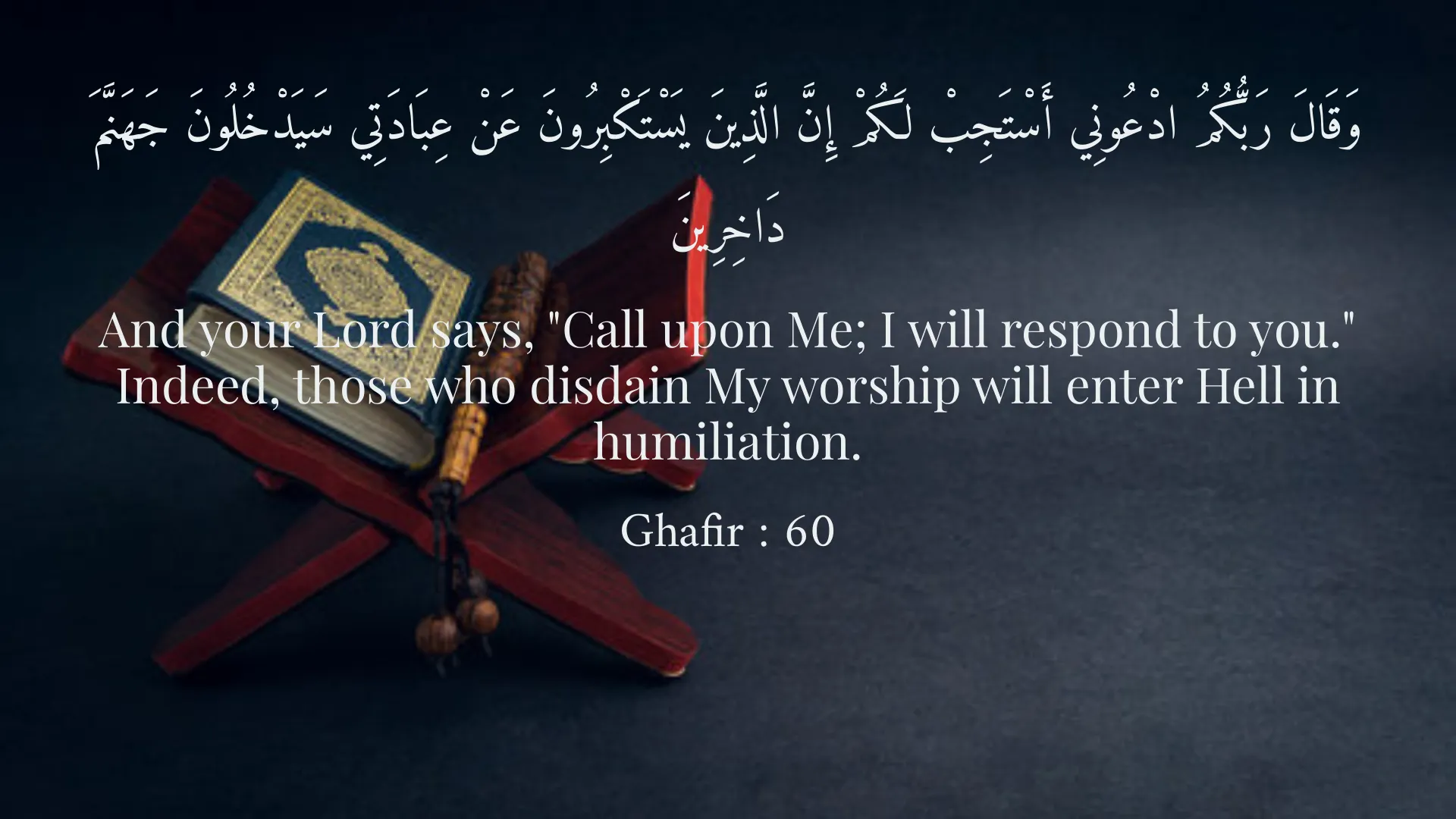
وَقَالَ رَبُّكُمُ ادْعُونِي أَسْتَجِبْ لَكُمْ إِنَّ الَّذِينَ يَسْتَكْبِرُونَ عَنْ عِبَادَتِي سَيَدْخُلُونَ جَهَنَّمَ دَاخِرِينَ
And your Lord says, "Call upon Me; I will respond to you." Indeed, those who disdain My worship will enter Hell in humiliation.
Ghafir : 60
وَإِذْ تَأَذَّنَ رَبُّكُمْ لَئِن شَكَرْتُمْ لَأَزِيدَنَّكُمْ ۖ وَلَئِن كَفَرْتُمْ إِنَّ عَذَابِي لَشَدِيدٌ
And [remember] when your Lord proclaimed, "If you are grateful, I will surely increase you [in favor]; but if you deny, indeed, My punishment is severe."
Ibrahim : 7
وَإِذَا سَأَلَكَ عِبَادِي عَنِّي فَإِنِّي قَرِيبٌ ۖ أُجِيبُ دَعْوَةَ الدَّاعِ إِذَا دَعَانِ ۖ فَلْيَسْتَجِيبُوا لِي وَلْيُؤْمِنُوا بِي لَعَلَّهُمْ يَرْشُدُونَ
And when My servants ask you, [O Muhammad], concerning Me - indeed I am near. I respond to the invocation of the supplicant when he calls upon Me. So let them respond to Me [by obedience] and believe in Me that they may be [rightly] guided.
Al-Baqarah : 186
Short Story
In ancient times, there lived a wealthy merchant named "Sa'dun" who was never content with his abundant possessions. He constantly complained about perceived deficiencies and always asked God for more wealth and fortune, without ever expressing gratitude for the blessings he already had. It seemed as if the world never matched his desires, and whatever he possessed appeared meager in his eyes. In the same city, there lived a dervish named "Sabir" (meaning patient/thankful), who, although he had nothing but a piece of bread for sustenance and worn clothes for cover, would sit on his prayer mat every morning and evening, offering thanks to God for every breeze and every raindrop. He would say: "Having seeing eyes and hearing ears, and a breath that freely enters and leaves my chest, is an boundless blessing that no worldly wealth can equal." Time passed, and fortunes turned. Sa'dun, during one of his trade journeys, lost all his wealth and became destitute. In his utter poverty and despair, he remembered that he had never been sufficiently grateful and had only pursued accumulation. With a broken heart, he retreated to a corner and for the first time, sincerely prayed to God for forgiveness and help. From then on, whatever he gained, even if small, he was grateful for, and consequently, peace settled in his heart. One day, Sa'dun, who had become a content and grateful man, saw Sabir the dervish. Sa'dun said: "O man of God, I once thought all happiness lay in seeking more, but now I understand that both asking from God and being grateful to Him are necessary. Asking for what you don't have, and being grateful for what you do." Sabir smiled and said: "You spoke truly, my friend, for the true servant is one who humbly asks their needs from the Lord and is also grateful, by tongue, heart, and action, for everything they possess. For these two are the wings for the soul's flight towards perfection." And thus, Sa'dun realized that true treasure lies not in accumulation, but in the balance between asking and gratitude.