Quranic Answer
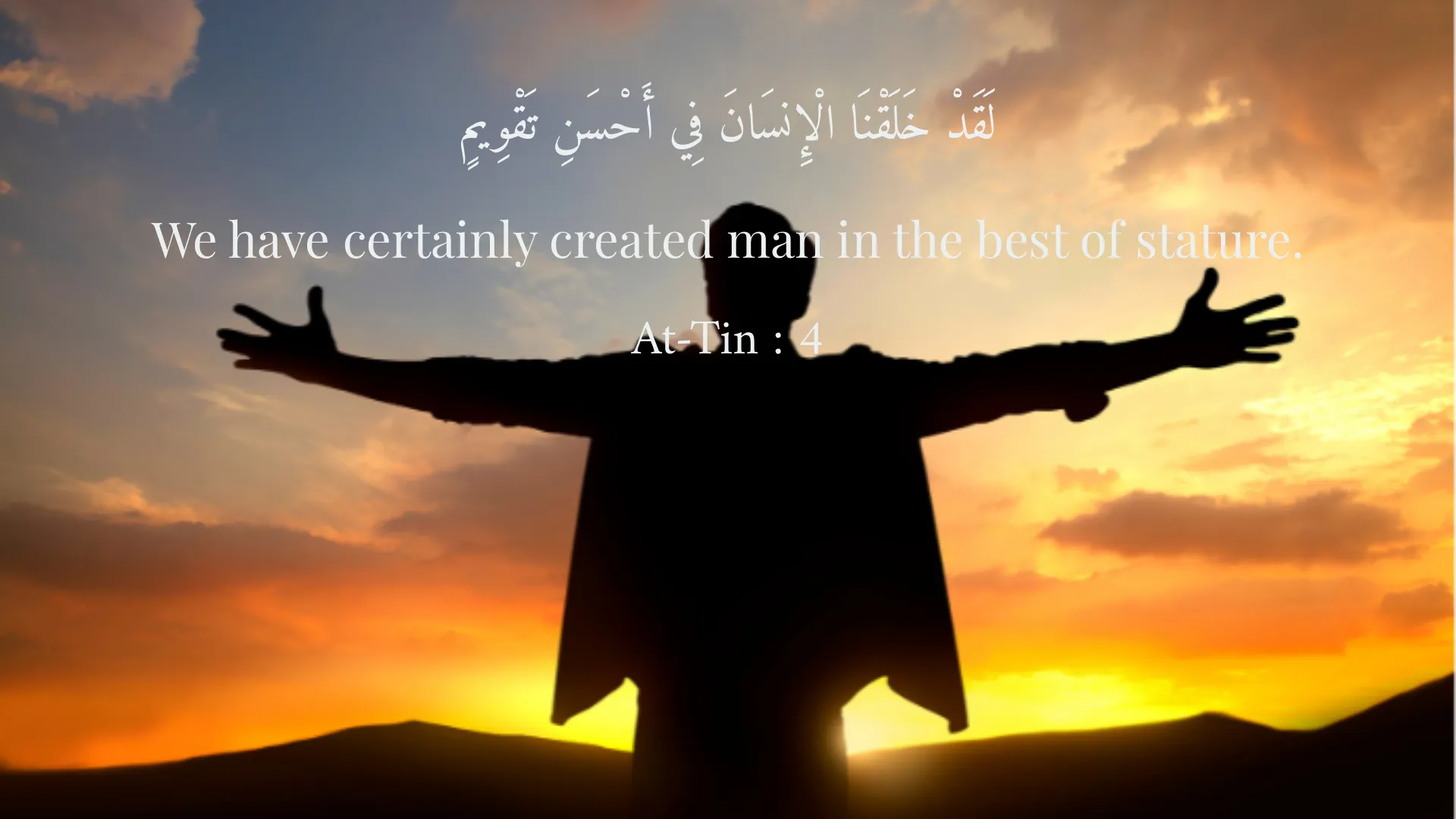
The concept of 'perfection' for human beings has always been one of the most profound and fundamental questions throughout human history. In Quranic teachings, absolute and infinite perfection belongs solely to Allah, the Most High. But can a human being also achieve a relative perfection, commensurate with their station and capacity? The Quran's answer to this question is a firm and hopeful 'yes,' but with a precise and distinct definition from what is generally understood by perfection. The Holy Quran has opened the path for humans to reach the highest stages of growth and excellence, even considering it the primary purpose of their creation. The Quran introduces humanity as a being with infinite potential. Allah says in Surah At-Tin, verse 4: “Indeed, We created man in the best of stature.” This 'best stature' does not merely refer to the physical structure of humans but also encompasses their spiritual, intellectual, rational, and moral capabilities. Potentially, humans possess the capacity to reach high degrees of knowledge, morality, and spirituality. This potential is a divine trust that must be actualized. The primary purpose of human creation, as stated in Surah Adh-Dhariyat, verse 56, is: “And I did not create the jinn and mankind except to worship Me.” This 'worship' is not limited to performing ritual acts of worship but includes a complete and comprehensive life in accordance with divine will and pleasure. This true worship is a path to transcendence and growth, where humans, through deeper knowledge of their Lord, purify their souls and align all aspects of their being with the divine path. This path, by itself, leads to human perfection. One of the most crucial pillars of human perfection in the Quran is 'Tazkiyat al-Nafs,' or the purification and cultivation of the soul. Surah Ash-Shams, verses 7 to 10, clearly states: “And [by] the soul and [by] Him who proportioned it 8 And inspired it [with discernment of] its wickedness and its righteousness 9 He has succeeded who purifies it 10 And he has failed who corrupts it.” These verses show that Allah has placed the ability to discern good and evil in human nature, and salvation – which is equivalent to reaching perfection and success – is contingent upon the purification and cultivation of the soul. This cultivation involves abstaining from blameworthy qualities and adorning oneself with virtuous morals. In the Quran, perfection is discussed not only in individual dimensions but also in social ones. A perfect human being is not merely someone who is personally pure but also one who strives for justice, benevolence, and the promotion of good in society. Many verses emphasize the importance of 'enjoining good and forbidding evil,' helping the needy, respecting the rights of others, and establishing equity and justice. These activities contribute to the maturation of human character and elevate individuals to a level of humanity where they illuminate not only themselves but also their surroundings. Therefore, human perfection in the Quran is a comprehensive perfection that encompasses both individual and social dimensions. The path to perfection is a continuous and gradual journey requiring 'jihad' and continuous effort. The Quran says: “And those who strive for Us – We will surely guide them to Our ways. And indeed, Allah is with the doers of good.” (Al-Ankabut: 69). This verse indicates that the path to perfection is through striving in the way of Allah. This striving includes both 'Jihad al-Akbar' (the greater struggle, battling the self) and 'Jihad al-Asghar' (the lesser struggle, striving in Allah's cause and resisting oppression). On this path, Allah Himself supports and guides those who sincerely seek Him. Human perfection in the Quran is also intertwined with 'knowledge' and 'wisdom.' The first divine command to the Prophet (PBUH) was 'Iqra' (read), signifying the importance of knowledge and insight. Knowing Allah through His signs in the universe and within oneself, gaining a deeper understanding of life's purpose, and attaining wisdom are among the ways that guide humans toward intellectual and spiritual perfection. The perfect human is not only virtuous but also knowledgeable and discerning. Ultimately, this pursuit of perfection progresses to a stage where the human being reaches the 'Nafs al-Mutma’innah' (the tranquil soul). In Surah Al-Fajr, Allah addresses this soul: “O tranquil soul, Return to your Lord, well-pleased and pleasing [to Him], And enter among My [righteous] servants And enter My Paradise.” (Al-Fajr: 27-30). This is the peak of perfection a human can achieve in this world: a state of absolute tranquility, being pleased with Allah and Allah being pleased with them, and ultimately, entering the station of Allah's favored servants and eternal Paradise. This journey of perfection not only culminates in this world but its reward in the Hereafter also guarantees eternal bliss. In summary, the Holy Quran allows humans to transform into the best version of themselves by utilizing their inner and outer faculties and by following divine teachings. This perfection is not about becoming absolutely flawless (which belongs solely to God), but rather about reaching the highest possible level of piety, ethics, knowledge, and servitude that leads to happiness in this world and the hereafter. This path is an ongoing journey of growth and improvement, where with every step taken in the way of Allah, one draws closer to their ultimate destination: proximity to the Divine.
Related Verses
لَقَدْ خَلَقْنَا الْإِنسَانَ فِي أَحْسَنِ تَقْوِيمٍ
We have certainly created man in the best of stature.
At-Tin : 4
وَنَفْسٍ وَمَا سَوَّاهَا
And [by] the soul and [by] Him who proportioned it,
Ash-Shams : 7
فَأَلْهَمَهَا فُجُورَهَا وَتَقْوَاهَا
And inspired it [with discernment of] its wickedness and its righteousness,
Ash-Shams : 8
قَدْ أَفْلَحَ مَن زَكَّاهَا
He has succeeded who purifies it,
Ash-Shams : 9
وَقَدْ خَابَ مَن دَسَّاهَا
And he has failed who corrupts it.
Ash-Shams : 10
وَالَّذِينَ جَاهَدُوا فِينَا لَنَهْدِيَنَّهُمْ سُبُلَنَا ۚ وَإِنَّ اللَّهَ لَمَعَ الْمُحْسِنِينَ
And those who strive for Us – We will surely guide them to Our ways. And indeed, Allah is with the doers of good.
Al-Ankabut : 69
Short Story
It is narrated that in the time of Sa'di of Shiraz, there lived a devout and reclusive man who had spent many years of his life in worship and remembrance of God. He believed that with every prostration and genuflection, he took a step towards perfection. One day, while in solitude, he pondered if he had truly reached the pinnacle of perfection. Just then, he saw a child rushing past him, chasing a butterfly. The child was so engrossed in his play that he tripped over a stone, fell, and began to cry. Upon seeing this, the devout man instinctively rose and hurried towards the child. He lifted him from the ground, dusted off his clothes, and consoled him with kindness until the child calmed down and smiled. At that moment, he heard a voice in his heart saying: 'O My servant, for years you have sought perfection in seclusion, but now that you have extended a hand of kindness to someone in need and gladdened a heart, you have come closer to a perfection found not only in prostration but also in serving creation. True perfection lies in an awakened heart and a helping hand.' The devout man realized that perfection is not solely in worship, but in sincere service and compassion for God's creation, and from that day on, he dedicated his life to service and benevolence to achieve that true perfection.