Quranic Answer
Hope, defined as 'Rajaa' (reliance on and expectation of Divine mercy and grace), is one of the most beautiful and vital pillars of faith in Islam. This feeling is a light that illuminates the believer's heart in the darkness of despair and guides them towards repentance, self-correction, and returning to the path of truth. Allah Almighty, in the Holy Quran, repeatedly invites believers not to despair of His boundless mercy, even for those who have transgressed greatly against themselves. This hope in Divine benevolence and forgiveness is not only permissible but is considered a great virtue and a powerful driving force for repentance, returning to rectitude, and continuously moving towards good deeds and spiritual growth. However, a profound question arises: can this hope, if it transcends its boundaries of moderation or is misinterpreted superficially, lead to 'ghaflah' (negligence or heedlessness)? The answer from the Holy Quran and comprehensive Islamic teachings to this question requires careful consideration, extending beyond a simple 'yes' or 'no.' In the Islamic tradition, true hope (Rajaa' Sadiq) is never separated from righteous action, diligent effort in the path of Allah, and constant adherence to Taqwa (God-consciousness). The hope emphasized in the luminous verses of the Quran is a strong motivator for steadfastness on the path of truth, patient endurance of life's hardships and tribulations, and sincere repentance from mistakes and sins. When a believer hopes in Allah's vast and limitless mercy, they are liberated from the snare of despair, which itself is a major and destructive sin. They always see an open door for return, self-correction, and making amends for past wrongdoings. This hope propels them forward, ensuring they never cease striving and always move towards human perfection. Verse 53 of Surah Az-Zumar exquisitely highlights this point: "Say, 'O My servants who have transgressed against themselves [by sinning], do not despair of the mercy of Allah. Indeed, Allah forgives all sins. Indeed, it is He who is the Forgiving, the Merciful.'" This verse presents an image of boundless Divine mercy that rekindles hope in the heart of every human being, even those who have reached the peak of sin, calling them back with open arms to repentance. However, the main and dangerous challenge begins when this sublime concept of hope is understood in an exaggerated manner, without considering individual responsibilities and Divine obligations. Excessive or misinterpreted hope can transform into a form of 'ghurur' (self-deception) or 'false security,' the ultimate outcome of which is 'ghaflah' (negligence). Ghaflah, in the Quranic worldview, signifies deliberate ignorance, conscious forgetfulness, or indifference and inattentiveness towards the fundamental truths of existence and weighty human responsibilities. One who falls into ghaflah is as if a veil has fallen over their heart's eye, rendering them completely unaware of key life realities, such as the lofty purpose of creation, the constant presence and watchfulness of Allah, the certainty of accountability on the Day of Judgment, and the transient and perishable nature of this world. If a person, relying on a vain and baseless hope in Divine mercy and forgiveness, abandons their obligatory duties and religious obligations, commits forbidden acts and sins, or postpones their repentance and rectification of mistakes to an unknown future, they have indeed fallen into the deep pit of ghaflah. This individual, with a deceived mindset, might tell themselves: "Allah is too merciful to punish me and always forgives, so there's no need for me to exert myself now or abstain from my sins; I'll repent whenever I feel like it or an opportunity arises." This line of thinking is a painful and striking example of excessive and false hope that not only fails to lead to righteous deeds but severely results in ghaflah and moral recklessness. Allah Almighty, in the Holy Quran, while strongly encouraging hope in His mercy, sternly and repeatedly warns against the heedless (ghafileen) and those deceived by worldly allurements, emphasizing the consequences of such negligence. Verse 179 of Surah Al-A'raf clearly depicts the state of the heedless: "And We have certainly created for Hell many of the jinn and mankind. They have hearts with which they do not understand, and they have eyes with which they do not see, and they have ears with which they do not hear. Those are like livestock; rather, they are more astray. It is those who are the heedless." This verse explicitly indicates that ghaflah is not merely indifference but the result of ignoring and disabling the vital tools of understanding and perception bestowed by Allah upon humanity, leading to a fall to a level lower than animals and severe negative consequences in the hereafter. One of the key and highly dangerous aspects of ghaflah stemming from excessive hope is an undue and misplaced confidence in the fleeting worldly life, consequently leading to a complete and gradual forgetfulness of the Hereafter. Some individuals become so engrossed in worldly aspirations, hopes for unlimited longevity, and transient material pleasures that they completely forget and overlook the existence of the Day of Reckoning, the certainty of death, and the grand world beyond it. This false and exaggerated confidence in the world is the root cause of ghaflah, which is warningly mentioned in verse 7 of Surah Yunus: "Indeed, those who do not expect the meeting with Us and are satisfied with the worldly life and feel secure in it and those who are heedless of Our signs—those will have their refuge in the Fire because of what they used to earn." This verse clearly reveals the close connection between excessive and boundless contentment with worldly life, the lack of true hope in meeting Allah (which includes accepting accountability, reward, and punishment), and ultimately, absolute heedlessness of Divine signs and verses. In this context, the deceptive role of Satan should not be overlooked. Satan, the ancient and sworn enemy of humanity, cunningly uses false and alluring hopes to encourage people to postpone repentance, delay good deeds, and indulge in fleeting worldly pleasures. His constant justification is: "There is plenty of time; there will always be an opportunity for repentance," or "Allah is so merciful that He will surely forgive, so why torment yourself now?" This skillful deception by Satan is well-illustrated in verse 33 of Surah Luqman: "O mankind, fear your Lord and fear a Day when no father will avail his son, nor will a son avail his father at all. Indeed, the promise of Allah is truth, so let not the worldly life delude you, nor let the Deceiver delude you concerning Allah." Here, the word 'Al-Gharoor' (the great deceiver) refers to Satan, and one of his most powerful and dangerous methods of deception is to create pride (ghurur) and a false, baseless confidence in Allah's unconditional mercy without any action, repentance, or effort. Therefore, the sublime and wise Islamic solution for human salvation is neither succumbing to sheer despair nor immersing oneself in excessive and baseless hope, but rather a precise and delicate 'balance between Khawf (fear of Allah) and Rajaa' (hope in Allah).' The true believer is one who always lives between these two spiritual states: on one hand, they hope in Allah's infinite mercy and grace, and on the other hand, they fear His justice and punishment, seeing themselves as accountable. This delicate balance constantly keeps them on the path of moderation, vigilance, and piety. Hope in Divine mercy allows them to quickly repent after a slip or sin, escape despair, and return to Allah; and fear of Divine justice and accountability compels them to shun sins, not to neglect their duties and obligations, and to always be mindful of their actions and words. This wise balance guarantees the awakening and life of the heart, and is a strong antidote to prevent ghaflah and perdition. In conclusion, it can be asserted that excessive hope in itself is not inherently bad; rather, it is a type of hope that is accompanied by negligence in action, disregard for warnings, and indifference to religious and moral responsibilities that is highly dangerous and destructive. Legitimate and sound hope is that which drives a person towards more righteous deeds, genuine and continuous repentance, and a constant remembrance of death and the eternal life of the Hereafter. If hope, instead of being a catalyst for action, leads to complacent inaction, laziness, and excuses for not adhering to Divine commands, then it is no longer true hope; rather, it is a form of self-deception, false pride, and illusion, which will result in nothing but ghaflah from realities and its dire consequences in this world and the Hereafter. Hence, every believer must always be awake, vigilant, and responsible in every moment of their life, live with hope in Allah's expansive mercy, but never neglect their duties and responsibilities, and know that every one of their deeds, whether good or bad, will be fully presented before their Lord and they will be held accountable for it. This continuous vigilance and deep sense of responsibility are the true essence of faith and the primary antidote for rooting out ghaflah from the human soul.
Related Verses
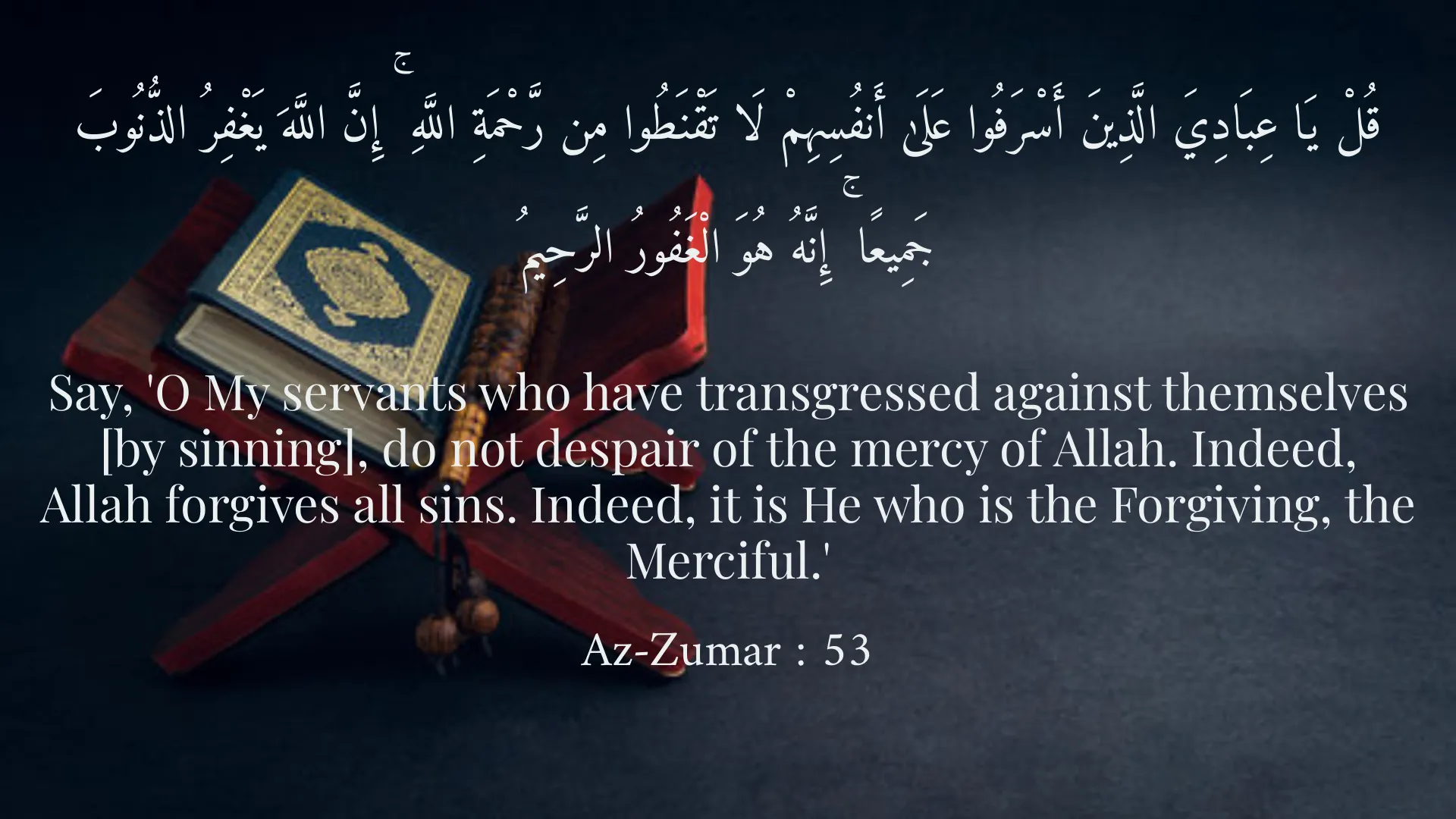
قُلْ يَا عِبَادِيَ الَّذِينَ أَسْرَفُوا عَلَىٰ أَنفُسِهِمْ لَا تَقْنَطُوا مِن رَّحْمَةِ اللَّهِ ۚ إِنَّ اللَّهَ يَغْفِرُ الذُّنُوبَ جَمِيعًا ۚ إِنَّهُ هُوَ الْغَفُورُ الرَّحِيمُ
Say, 'O My servants who have transgressed against themselves [by sinning], do not despair of the mercy of Allah. Indeed, Allah forgives all sins. Indeed, it is He who is the Forgiving, the Merciful.'
Az-Zumar : 53
وَلَقَدْ ذَرَأْنَا لِجَهَنَّمَ كَثِيرًا مِّنَ الْجِنِّ وَالْإِنسِ ۖ لَهُمْ قُلُوبٌ لَّا يَفْقَهُونَ بِهَا وَلَهُمْ أَعْيُنٌ لَّا يُبْصِرُونَ بِهَا وَلَهُمْ آذَانٌ لَّا يَسْمَعُونَ بِهَا ۚ أُولَٰئِكَ كَالْأَنْعَامِ بَلْ هُمْ أَضَلُّ ۚ أُولَٰئِكَ هُمُ الْغَافِلُونَ
And We have certainly created for Hell many of the jinn and mankind. They have hearts with which they do not understand, and they have eyes with which they do not see, and they have ears with which they do not hear. Those are like livestock; rather, they are more astray. It is those who are the heedless.
Al-A'raf : 179
يَا أَيُّهَا النَّاسُ اتَّقُوا رَبَّكُمْ وَاخْشَوْا يَوْمًا لَّا يَجْزِي وَالِدٌ عَن وَلَدِهِ وَلَا مَوْلُودٌ هُوَ جَازٍ عَن وَالِدِهِ شَيْئًا ۚ إِنَّ وَعْدَ اللَّهِ حَقٌّ ۖ فَلَا تَغُرَّنَّكُمُ الْحَيَاةُ الدُّنْيَا وَلَا يَغُرَّنَّكُم بِاللَّهِ الْغَرُورُ
O mankind, fear your Lord and fear a Day when no father will avail his son, nor will a son avail his father at all. Indeed, the promise of Allah is truth, so let not the worldly life delude you, nor let the Deceiver delude you concerning Allah.
Luqman : 33
Short Story
It is narrated that during a severe famine, there was a benevolent man in a city who possessed abundant wheat, and people sought his help. One day, amidst the needy, a dervish appeared who for years had grown accustomed to idleness, merely hoping for sustenance without effort. The benevolent man said to him, "O Dervish, what ails you that you always sit and beg for wheat? Go forth and work, that you may earn lawful sustenance." The dervish, with a semblance of false hope and pride, replied, "O great man, have you not heard that Allah is the Provider, and He provides for every creature? I place my hope in His promise!" The benevolent man smiled and said, "Indeed, Allah is the Provider, but He provides for those who rise and strive for it, not for those who sit idly with vain hope and neglect effort and work. Hope in Allah's mercy without action merely leads one to negligence." The dervish, awakened by the wise words of the benevolent man, abandoned his laziness thereafter, and sought his livelihood with true hope and diligent effort.