Quranic Answer
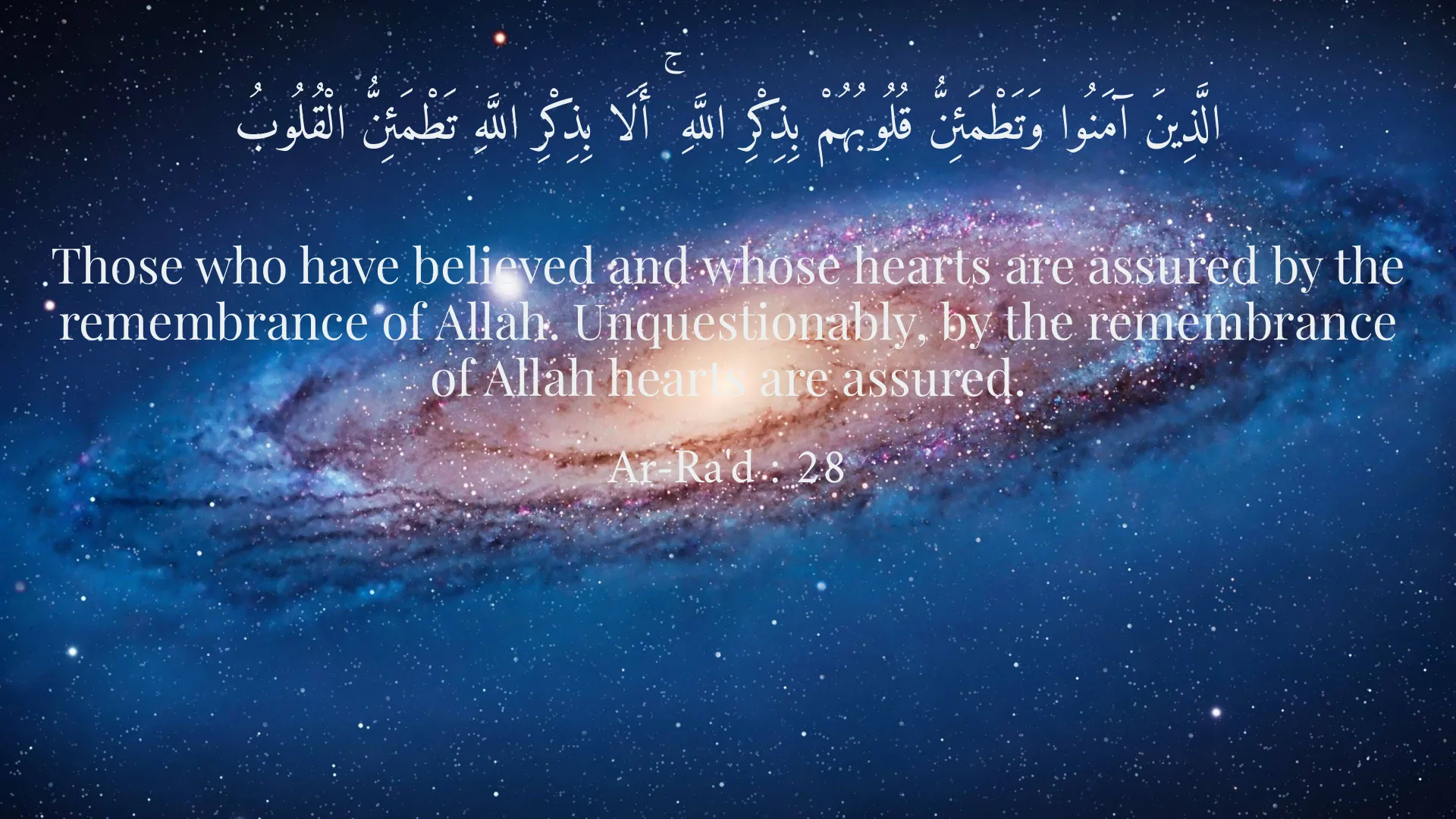
The Importance of Remembrance of God in Achieving Tranquility and Reducing Fear In today's fast-paced and often chaotic world, the search for inner peace and tranquility has become a universal pursuit. People increasingly find themselves grappling with fear, anxiety, and stress, leading them to seek solace and comfort through various means. Among these methods, the remembrance of God stands out as a profound source of peace and reassurance. The Holy Quran emphasizes the importance of this practice, illustrating how the constant remembrance of God can foster tranquility in the hearts of believers and diminish their fears. In Surah Ar-Ra'd, verse 28 of the Quran, it is proclaimed: "Those who have believed and whose hearts are assured by the remembrance of Allah. Unquestionably, by the remembrance of Allah hearts are assured." This verse serves as a powerful reminder of the calming effect that the remembrance of God can have on individuals. It clearly indicates that when people cultivate a connection with the Divine through remembrance, they experience a profound sense of security and peace. This is particularly relevant in times of distress, as believers find comfort in knowing that they are not alone in their struggles, but rather accompanied by a loving and supportive Creator. Furthermore, the Quran goes on to state in Surah Al-Anfal, verse 2: "The believers are only those who, when Allah is mentioned, their hearts become fearful..." This verse highlights the dual nature of God's remembrance; it evokes a mix of reverence and empowerment in believers. Fear in this context is not merely a feeling of anxiety or apprehension; rather, it represents an awareness of God's greatness and power. This awareness can serve as a source of strength, helping believers confront life’s challenges with resilience and resolve. The realization that God is all-knowing and all-powerful is, in itself, a comforting thought that diminishes overwhelming emotions such as fear and anxiety. Prayer and supplication form a critical component of the remembrance of God. They serve as tangible acts of devotion, allowing believers to connect with their Creator in meaningful ways. Through prayer, individuals express their hopes, fears, and gratitude, providing them with an opportunity to reflect on their lives and seek guidance. It is during these moments of connection that believers often experience a profound sense of comfort and tranquility. In stark contrast to the noise and distractions of the outside world, prayer creates a sacred space for reflection, grounding believers and reminding them of the ever-present companionship of God. Engaging in regular prayer and supplication enables believers to not only remember God but also to seek His assistance in navigating life's difficulties. The act of turning to God in times of need serves as a reminder that they are inherently supported and cared for. This reinforces their faith, leading to a more profound and trusting relationship with the Almighty. The assurance of divine assistance becomes an anchor amidst the turbulent waters of life, helping to mitigate feelings of fear and anxiety. Beyond the individual benefits, the remembrance of God also fosters a sense of community among believers. When individuals come together in prayer, they create supportive networks that nurture spiritual growth and reinforce the value of collective remembrance. Community prayer gatherings, such as congregational prayers in mosques, serve to bring people together, creating an environment conducive to peace and mutual support. This sense of belonging, along with the shared purpose of worship, makes it easier for believers to confront their fears and challenges as a united front. Moreover, the practice of dhikr (remembrance of God) can take various forms, including repetitive phrases or prayers that align with the teachings of Islam. Whether through personal reflection, communal worship, or the chanting of praises, these acts serve to draw believers closer to God. The repetitive nature of dhikr allows individuals to focus their minds and emotions, offering a break from the chaos of daily life. In this way, the practice of remembrance becomes a form of mental conditioning that gradually instills a deep-seated sense of tranquility and assurance. In addition to spiritual benefits, scientific studies have also indicated a correlation between religious practices, such as prayer and mindfulness, and reduced levels of anxiety and stress. Research findings suggest that engaging in spiritual practices fosters psychological well-being by promoting feelings of hope, purpose, and connectedness. The inherent rituals involved in prayer and remembrance serve as coping mechanisms that empower individuals to manage life's uncertainties more effectively. Achieving tranquility through the remembrance of God is not merely an abstract concept confined to theological discussions; it has practical implications for mental health and emotional well-being. Individuals who make a conscious effort to integrate acts of remembrance into their daily routines—whether through prayer, meditation, or reflection—often report feeling more balanced and equipped to handle stressors in their lives. This inner sense of calm translates into healthier relationships, improved emotional resilience, and an overall enhanced quality of life. In conclusion, the practice of remembering God as illustrated in the Holy Quran holds a transformative potential for individuals seeking tranquility and strength against fears and anxieties. Through the verses of the Quran, we are reminded of the profound impact that divinely-oriented remembrance can have on our hearts, empowering us to face life with resilience and confidence. Regular engagement in prayer and supplication allows us to connect deeply with the Almighty and fosters a supportive community of believers. As we navigate an increasingly complex world, the power of remembrance is an invaluable tool, inviting us to cultivate peace and assurance through our relationship with the Divine.
Related Verses
الَّذِينَ آمَنُوا وَتَطْمَئِنُّ قُلُوبُهُمْ بِذِكْرِ اللَّهِ ۚ أَلَا بِذِكْرِ اللَّهِ تَطْمَئِنُّ الْقُلُوبُ
Those who have believed and whose hearts are assured by the remembrance of Allah. Unquestionably, by the remembrance of Allah hearts are assured.
Ar-Ra'd : 28
إنما المؤمنون الذين إذا ذكر الله وجلت قلوبهم...
The believers are only those who, when Allah is mentioned, their hearts become fearful...
Al-Anfal : 2
Short Story
Once upon a time, a student named Amir found peace in stressful and anxious times by remembering God. Whenever he felt fear and worry, he would recall the verses of the Quran and pray in his heart. This remembrance led to feelings of calm and reassurance that helped him through many difficult situations. One day, he decided to dedicate more time to prayer and supplication, and this had a significant impact on his life.