Quranic Answer
Understanding the concept of worldly happiness and its connection to God's favor and grace is one of the profound and pivotal questions in the Islamic worldview. The Holy Quran addresses this topic with a comprehensive and balanced perspective, clarifying its various dimensions. Answering this question requires deep reflection on divine verses to avoid any superficial or incorrect interpretations. Generally, worldly happiness, which includes material prosperity, health, social status, and peace in this life, can be one of the manifestations of God's universal grace and mercy. However, it is not, by itself and without considering other factors, a definitive and absolute sign of God's specific pleasure and love. The Quran explicitly states that sustenance, provisions, and worldly blessings are bestowed upon both believers and disbelievers. Allah is Al-Razzaq (The Provider), sustaining all His creatures, regardless of their faith or deeds. In Surah Hud, verse 6, it says: "And there is no creature on earth but that upon Allah is its provision..." This verse indicates that the provision of basic needs, and even more, is part of God's universal mercy that encompasses all His servants. Therefore, merely possessing wealth or a high social standing does not mean that an individual holds a high rank with God or has been directly favored by Him with His special grace. Time and again, the Quran warns that the world and its adornments are deceptive and transient. In Surah Al-Kahf, verse 46, we read: "Wealth and children are [but] adornment of the worldly life. But the enduring good deeds are better to your Lord for reward and better for [one's] hope." This verse shows that what is outwardly considered happiness in this world is merely a temporary adornment, and true value lies in righteous deeds and the reward in the Hereafter. How many are those who enjoy worldly prosperity but are devoid of spiritual and psychological peace, and in reality, are drifting away from God and neglecting the true purpose of their creation? Sometimes, the increase in worldly blessings for individuals who have deviated from the path of truth is not a sign of favor but rather a form of 'Istidraj' – a gradual leading to destruction or a gradual drawing them towards punishment, seemingly through ease and comfort. Allah says in Surah Al-A'raf, verse 182: "And those who deny Our verses - We will progressively lead them [to destruction] from where they do not know." These verses teach us not to be deceived by appearances; a person might be immersed in worldly pleasures, but in reality, these pleasures are distracting him from remembering God and leading him towards punishment. The story of Qarun in the Quran is a prime example of someone whose immense wealth brought him no happiness but rather led to his destruction because he did not attribute it to God's favor and instead indulged in arrogance and corruption. So, what are the true signs of God's special favor and grace? The Quran emphasizes that God's true favor lies in faith, guidance, inner peace, success in performing good deeds, insight, wisdom, and ultimately, the great triumph in the Hereafter. In Surah An-Nahl, verse 97, it states: "Whoever does righteousness, whether male or female, while a believer - We will surely cause him to live a good life, and We will surely give them their reward [in the Hereafter] according to the best of what they used to do." 'Hayat Tayyibah' or a good life, includes inner peace, contentment, satisfaction, and a sense of security that is not necessarily accompanied by material wealth but rather results from connecting with the divine source and acting upon religious teachings. Worldly happiness can only be considered a sign of God's favor and grace when it is accompanied by gratitude, the proper use of blessings in God's way, and not neglecting the ultimate purpose of life. If an individual, despite possessing worldly blessings, uses them to help the needy, promote justice, and uphold the word of truth, and remains humble and grateful, then these blessings are not merely a test but can be a manifestation of God's special favor, providing them with opportunities for service and earning greater reward. Otherwise, as the Holy Quran explicitly states, wealth and power can lead to arrogance, corruption, and distance from the truth. In summary, Islam teaches us not to view worldly happiness as the ultimate goal but as a means to achieve eternal felicity. God bestows upon His servants both worldly and otherworldly blessings, but true value lies in permanence and perpetuity. God's most significant favor is guidance to the straight path and success in attaining proximity to Him. Therefore, while we can enjoy worldly blessings and thank God for them, we must never forget that the real criterion for God's favor and grace is the depth of our faith, piety, and righteous deeds, not merely the extent of our material possessions. This perspective prevents excessive attachment to this world and leads one towards acquiring moral and spiritual virtues, resulting in true peace and happiness in both worlds.
Related Verses
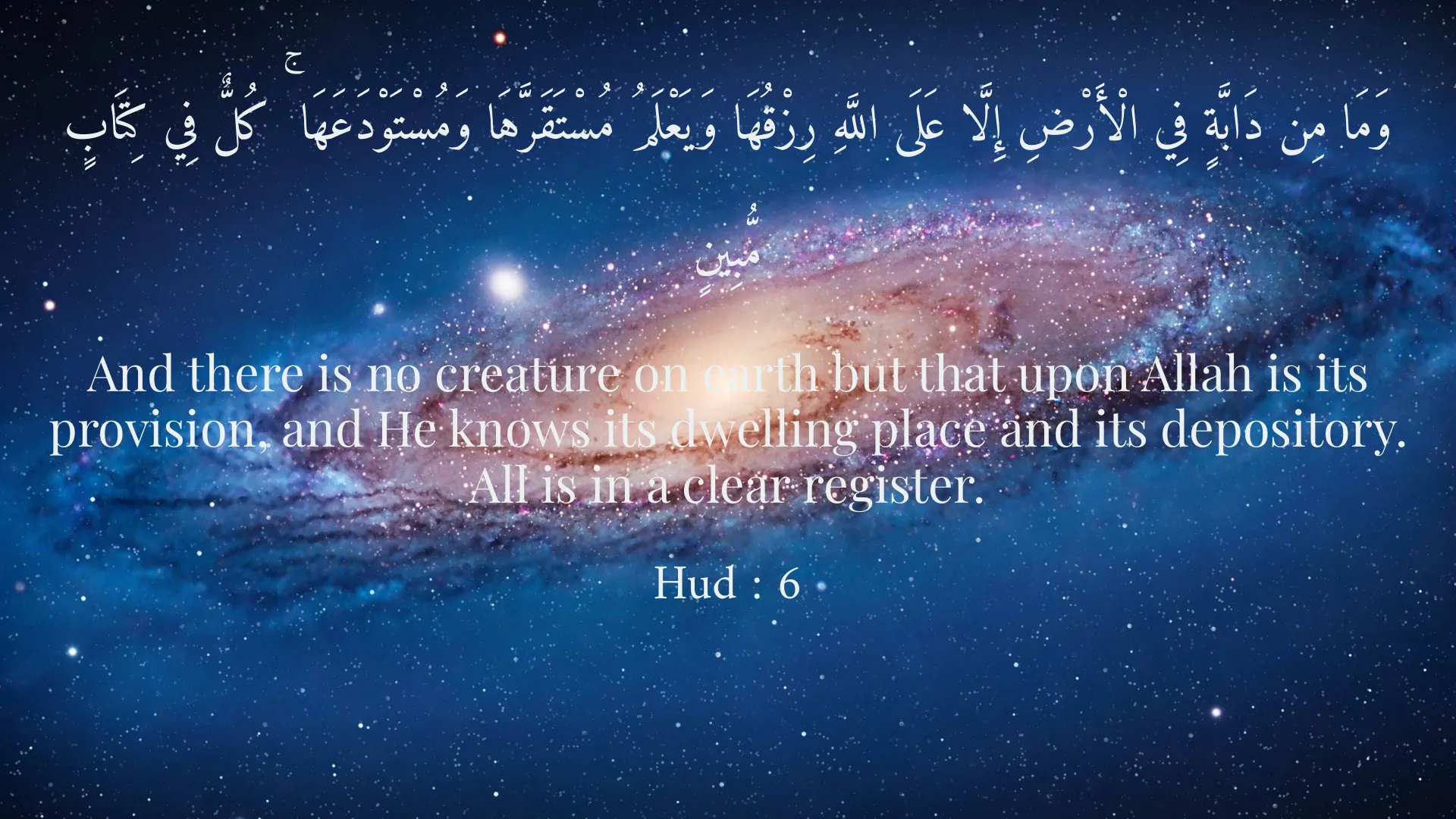
وَمَا مِن دَابَّةٍ فِي الْأَرْضِ إِلَّا عَلَى اللَّهِ رِزْقُهَا وَيَعْلَمُ مُسْتَقَرَّهَا وَمُسْتَوْدَعَهَا ۚ كُلٌّ فِي كِتَابٍ مُّبِينٍ
And there is no creature on earth but that upon Allah is its provision, and He knows its dwelling place and its depository. All is in a clear register.
Hud : 6
الْمَالُ وَالْبَنُونَ زِينَةُ الْحَيَاةِ الدُّنْيَا ۖ وَالْبَاقِيَاتُ الصَّالِحَاتُ خَيْرٌ عِندَ رَبِّكَ ثَوَابًا وَخَيْرٌ أَمَلًا
Wealth and children are [but] adornment of the worldly life. But the enduring good deeds are better to your Lord for reward and better for [one's] hope.
Al-Kahf : 46
مَنْ عَمِلَ صَالِحًا مِّن ذَكَرٍ أَوْ أُنثَىٰ وَهُوَ مُؤْمِنٌ فَلَنُحْيِيَنَّهُ حَيَاةً طَيِّبَةً ۖ وَلَنَجْزِيَنَّهُمْ أَجْرَهُم بِأَحْسَنِ مَا كَانُوا يَعْمَلُونَ
Whoever does righteousness, whether male or female, while a believer - We will surely cause him to live a good life, and We will surely give them their reward [in the Hereafter] according to the best of what they used to do.
An-Nahl : 97
فَأَمَّا الْإِنسَانُ إِذَا مَا ابْتَلَاهُ رَبُّهُ فَأَكْرَمَهُ وَنَعَّمَهُ فَيَقُولُ رَبِّي أَكْرَمَنِ
And as for man, when his Lord tries him and [thus] is generous to him and favors him, he says, "My Lord has honored me."
Al-Fajr : 15
وَأَمَّا إِذَا مَا ابْتَلَاهُ فَقَدَرَ عَلَيْهِ رِزْقَهُ فَيَقُولُ رَبِّي أَهَانَنِ
But when He tries him and restricts his provision, he says, "My Lord has humiliated me."
Al-Fajr : 16
Short Story
It is narrated in Saadi's Gulistan that a dervish, despite being poor, constantly spoke of his contentment and peace of mind, always expressing gratitude. In contrast, there was a king who, despite all his treasures and royal splendor, lived in constant fear and anxiety, never experiencing true comfort. One day, the king asked the dervish, "With all my kingdom and wealth, I do not have a moment's peace, yet you, with your poverty, are so joyful?" The dervish replied, "O King! You are a slave to your wealth and kingdom, while I am a slave to my God. He who is a slave to God is free from the world, and he who is a slave to the world will never taste freedom or peace." The king pondered these words and realized that true comfort lies not in the abundance of wealth, but in contentment of the heart and acceptance of divine destiny. This story illustrates that real happiness and peace are found not in the quantity of possessions, but in the quality of one's outlook on life and connection with the Creator.