Quranic Answer
The question, "Do only specific believers hear the voice of God?", delves into a profound and nuanced aspect of divine communication from an Islamic perspective, particularly as understood through the Quran. To answer this, it's crucial to clarify what "hearing the voice of God" truly means. The Quran does not describe a literal, physical hearing of God's voice, as humans hear material sounds with their ears, for any group of believers, whether ordinary or "special," except in extremely rare and unique instances restricted to prophets and messengers. Even in those cases, the nature of this "hearing" transcends conventional human perception and is primarily understood as a form of "revelation" (Wahy) or divine "speech" (Kalam) that is not necessarily an audible sound but a manifestation of God's will and words. God Almighty communicates with His servants in various ways, and these methods transcend our simple five-sense perception. 1. Divine Revelation (Wahy) – Exclusive to Prophets: This is the primary and most direct form of communication between God and His prophets. Wahy occurred in various forms: First, Inner Inspiration (Ilham); where God would inspire a message directly into the prophet's heart. Second, From Behind a Veil; as described in the Quran, concerning God's communication with Moses (peace be upon him) at Mount Sinai. The Quran states, "It is not for any human being that Allah should speak to him except by [divine] inspiration or from behind a veil or by sending a messenger to reveal by His permission what He wills. Indeed, He is Exalted in Might and Wise." (Surah Ash-Shura, 42:51). This "behind a veil" does not imply Moses heard a physical voice, but rather a manifestation of divine speech that transcends material sensory perception, through which the divine message was conveyed to him. Third, Through an Angel (Gabriel); where the angel of revelation would convey God's message to the prophet. This was the most common form of revelation, by which the major part of the Quran was revealed to the blessed heart of Prophet Muhammad (PBUH). This type of "speech" and "hearing" is exclusive to prophets and messengers and is not accessible to ordinary individuals, even particularly pious believers, because it requires special spiritual and moral preparedness and capabilities found only in prophets. 2. Signs (Ayat) in Creation and Scripture: A vast portion of God's "message" or "speech" to humanity is conveyed through "signs" (Ayat) found throughout the natural world, within human beings themselves, and within the revealed scriptures (like the Quran). True believers are those who "see" and "hear" these signs and derive lessons from them. This "hearing" is metaphorical; it signifies deep contemplation, understanding, and profound comprehension of divine messages. The Quran repeatedly refers to "those of understanding" (Ulul-Albab) who are capable of discerning these signs: "Indeed, in the creation of the heavens and the earth and the alternation of the night and the day are signs for those of understanding." (Surah Al Imran, 3:190). These signs are present in every corner of existence, from the astounding order of stars and planets to the growth of a tiny seed in the soil, and from the astonishing complexity of the human body to the laws governing societies. Each of these is a language conveying divine majesty and wisdom, which awakened hearts can perceive, and this is the hearing of meaning. 3. Inner Guidance and Inspiration (for all Believers): God illuminates the hearts of believers with the light of faith and guidance. This form of "hearing God's voice" actually means perceiving divine guidance in one's life, discerning right from wrong, and receiving inner peace and reassurance. Such inspirations and internal guidance are accessible to every believer who opens their heart to the truth. The Quran states, "And those who strive for Us – We will surely guide them to Our ways. And indeed, Allah is with the doers of good." (Surah Al-Ankabut, 29:69). This implies the opening of channels of understanding and perception to "hear" God's spiritual messages; messages that might appear as a sudden thought, a new insight into a problem, or a strong feeling of the rightness or wrongness of an action. This type of hearing requires self-purification, sincerity of intention, and continuous effort in the path of servitude. 4. The Quran as the Word of God: The Quran itself is the manifest Word of God (Kalam Allah). Every believer who recites the Quran is, in essence, communicating with God's words and "hearing" and understanding His message. Therefore, "hearing God's voice" for ordinary believers primarily means reflecting upon the verses of the Quran, acting upon its commandments, and comprehending its profound messages. This "hearing" requires a sound heart, deep thought and contemplation, and spiritual readiness. The Quran is not just a guide book; it is itself a great "sign" and the speaking word of God that, through its words and meanings, communicates with humans and shows them the right path. Understanding and acting upon the Quran enhances the depth of this hearing. So, Who "Hears" God's Voice? From these explanations, it becomes clear that "hearing God's voice" in a literal, physical sense does not exist for anyone, including "special believers," except in the highly specific and unique cases of prophets through revelation. However, "hearing God's voice" in the sense of understanding His message, feeling His guidance, and responding to His call, is possible for all believers, and indeed, for all humanity, at various levels. This is a universal invitation to reflection and insight. What Does This "Hearing" Require? * A Pure and Awakened Heart: Those who purify their hearts from impurities and keep them awakened are better able to perceive divine messages. This purity includes abstaining from sins, greed, arrogance, and envy. * Reflection and Contemplation: "People of understanding" are those who reflect on God's signs in the horizons and within themselves, discovering the hidden messages therein. This reflection is not superficial but a deep exploration of the wisdom behind creation. * Obedience and Piety: The closer one draws to God and acts upon His commands, the more one's insight increases, and their ability to perceive divine signs and inspirations grows. Piety acts as a light that illuminates the path for the heart. * Recitation and Understanding of the Quran: The Quran itself is God's word, and through it, one can achieve a deeper understanding of God's message and "voice." Reading with contemplation and striving to understand its meanings and apply them in life is the key to this hearing. Therefore, the assertion that only "specific believers" hear God's voice is incorrect if it refers to a physical voice. If it refers to a deeper understanding and higher insight, then it can be said that the level of this understanding and insight varies among believers, and those with greater piety, faith, and knowledge naturally receive the "voice" of divine guidance more clearly and profoundly. This is not an exclusive privilege for a select group, but rather a result of effort and striving in God's path, and purity of heart, which is attainable by any believer who moves in that direction. The Quran constantly invites humans to reflect, remember, and contemplate so that they can "hear" and "see" what has been placed in the universe and in the divine word for their guidance. This hearing is with the ear of the heart and soul, not with the physical ear. This is the fundamental difference between God's speech with prophets (revelation) and divine understanding and reception for ordinary believers (inspiration, contemplation of signs). Everyone can "hear," but the type and level of hearing differ and depend on each individual's piety and effort.
Related Verses
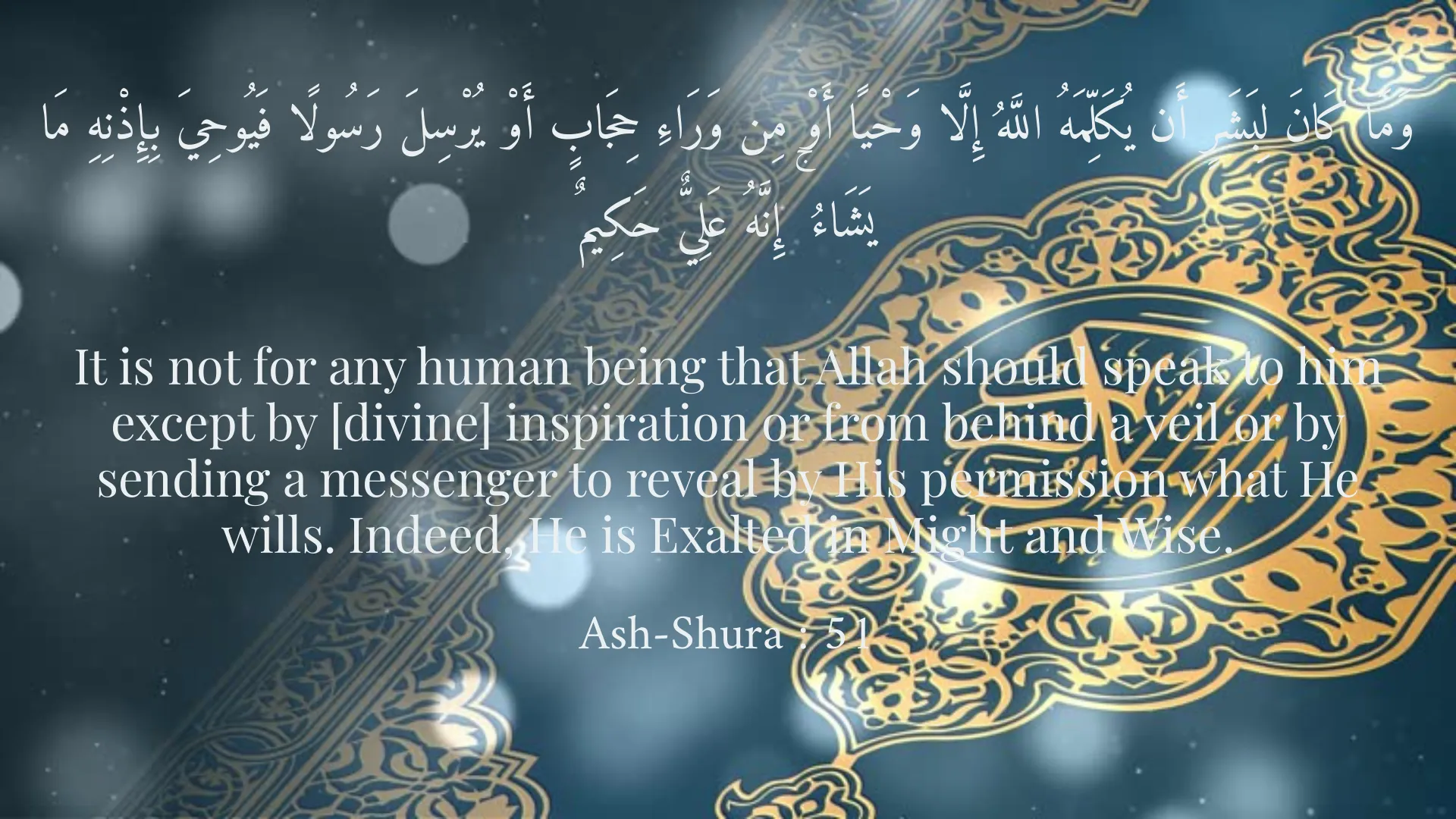
وَمَا كَانَ لِبَشَرٍ أَن يُكَلِّمَهُ اللَّهُ إِلَّا وَحْيًا أَوْ مِن وَرَاءِ حِجَابٍ أَوْ يُرْسِلَ رَسُولًا فَيُوحِيَ بِإِذْنِهِ مَا يَشَاءُ ۚ إِنَّهُ عَلِيٌّ حَكِيمٌ
It is not for any human being that Allah should speak to him except by [divine] inspiration or from behind a veil or by sending a messenger to reveal by His permission what He wills. Indeed, He is Exalted in Might and Wise.
Ash-Shura : 51
إِنَّ فِي خَلْقِ السَّمَاوَاتِ وَالْأَرْضِ وَاخْتِلَافِ اللَّيْلِ وَالنَّهَارِ لَآيَاتٍ لِّأُولِي الْأَلْبَابِ
Indeed, in the creation of the heavens and the earth and the alternation of the night and the day are signs for those of understanding.
Al Imran : 190
وَالَّذِينَ جَاهَدُوا فِينَا لَنَهْدِيَنَّهُمْ سُبُلَنَا ۚ وَإِنَّ اللَّهَ لَمَعَ الْمُحْسِنِينَ
And those who strive for Us – We will surely guide them to Our ways. And indeed, Allah is with the doers of good.
Al-Ankabut : 69
Short Story
It is narrated that a wise old man sat on a dry branch and spoke to it. A young man passing by, surprised, asked, "O Sheikh, to whom are you speaking? This is just a dry branch and has no voice!" The wise old man smiled and said, "O young man, if you open the ear of your heart, you will hear the call of Truth not only from this dry branch but from every particle of the universe. Trees, stars, rivers, all glorify the Truth; but the ears of the head only hear the clamor of the marketplace, while the ears of the heart hear the secret of the universe. The true believer is one who hears the call of their Creator with every beat of their heart and takes a step towards Him with every breath. This kind of hearing requires an ear that has been cleansed from the dust of the world."