Quranic Answer
Love and mercy towards children is a theme that resonates deeply through the verses of the Holy Quran. This sacred text not only serves as a spiritual guide but also lays the foundation for familial and societal relationships, particularly emphasizing the importance of children. Numerous references throughout the Quran highlight the significant responsibilities and obligations that parents have when it comes to nurturing and protecting their children. The role of a parent in Islam is depicted not merely as a biological one but as a comprehensive role that encompasses emotional, moral, and spiritual guidance. In Surah Al-Isra, verse 31, Allah advises parents to not despair regarding the future of their children. The verse states, "And do not kill your children for fear of poverty. We provide for them and for you. Surely, killing them is a great sin." This powerful message serves as a reminder that sustenance is guaranteed by Allah for all living beings, alleviating the worries that parents may have about the economic and social challenges of raising children. This indicates that the love and concern for children are not just human instincts but are also fundamentally entwined with the religious duty parents hold in the eyes of God. Moreover, Surah At-Tahrim, verse 6 expands on this nurturing role by commanding parents to protect themselves and their families from the hellfire. The verse imparts a profound obligation upon parents to guide their children not just physically by providing necessities but also spiritually by leading them towards righteous conduct and faith. The message here is clear: it is imperative for parents to create a nurturing environment filled with affection, support, and positive reinforcement, aimed at fostering a generation that upholds the values and teachings of Islam. The Prophet Muhammad (peace be upon him) placed immense importance on the act of showing love and compassion to children, frequently stating that such actions are among the hallmarks of true faith. In various narrations, he is depicted as engaging with children in playful and affectionate ways, offering a model for how parents should interact with their offspring. This nurturing behavior fosters emotional attachment and a profound sense of belonging, helping children feel secure and valued. Islamic teachings emphasize that love for children is not merely about emotional sentiment; it extends to their upbringing, education, and moral development. Parents are entrusted with the responsibility to not only provide for their children’s physical needs but also to instill Islamic morals and values. It is through this comprehensive approach—combining love, respect, education, and spiritual nurturing—that children can grow into responsible, morally upright, and fulfilled individuals. The Quran recognizes the intrinsic bond between parents and children, where love functions as the bedrock of familial connections. This relationship is reminiscent of a garden wherein the seeds of affection, care, and instruction are sown, allowing the children to flourish and grow in a healthy environment. The cultivation of these values is essential for shaping children who are not only aware of their rights and duties but also mindful of their role in building a compassionate society. Moreover, parents are encouraged to engage in open communication with their children. Islam advocates for a relationship grounded in dialogue, understanding, and mutual respect. This dynamic allows children to express their thoughts and feelings, fostering an environment where they feel heard, valued, and safe. When children see their parents practicing love and care, they learn to emulate those behaviors, leading to the gradual formation of a compassionate character. As children grow, it is not uncommon for the challenges of adolescence to arise, including peer pressure, identity crises, and ethical dilemmas. During these critical years, the love and guidance of parents become even more paramount. Parents are urged to remain vigilant and proactive in their roles, providing the kind of support that enables their children to navigate such challenges while maintaining their religious values and identity. Instilling confidence in children through love and encouragement equips them to face life's trials with resilience and integrity. Furthermore, the Islamic perspective on love extends beyond the immediate family. Parents are urged to instill in their children a sense of responsibility towards the wider community. Kindness, generosity, and empathy are virtues that the Quran promotes, and children are encouraged to practice these values in their interactions with others. This broader understanding of love helps to create a more harmonious society, as children grow to care for others and contribute positively to their communities. In conclusion, the teachings of the Quran regarding love and mercy towards children are indicated as both a natural human impulse and an essential religious obligation. The responsibilities carried by parents encompass physical sustenance, moral guidance, and the cultivation of a loving environment. By adhering to these teachings, families do not only ensure the well-being of their children but also contribute to the overall growth and moral fabric of society. In Islam, the love for children is a divine mandate that echoes through generations, emphasizing the importance of nurturing future leaders who embody compassion, integrity, and responsibility. Parents are thus called to engage actively in raising their children with the love and guidance essential for a better tomorrow.
Related Verses
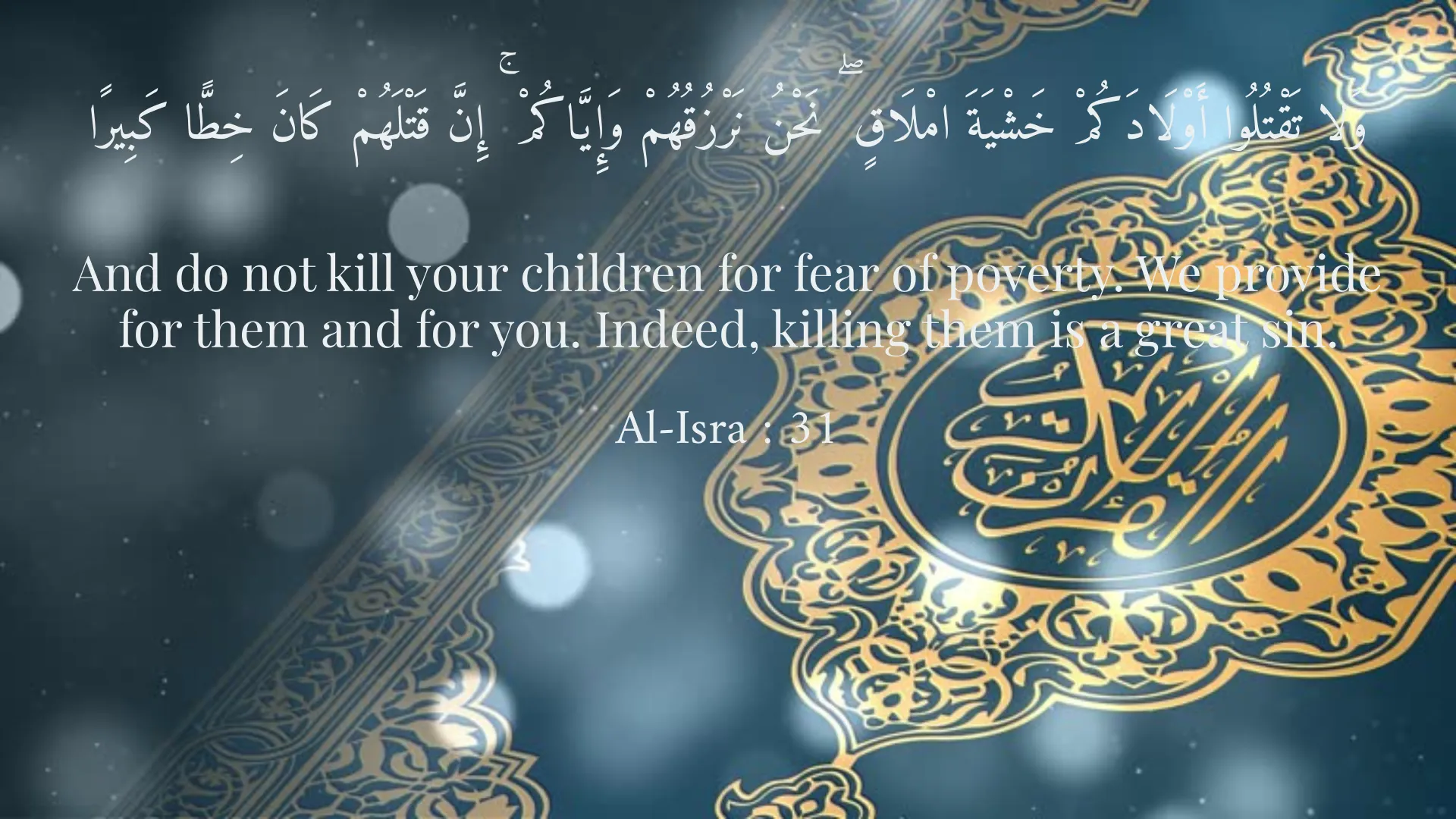
وَلا تَقْتُلُوا أَوْلَادَكُمْ خَشْيَةَ امْلَاقٍ ۖ نَحْنُ نَرْزُقُهُمْ وَإِيَّاكُمْ ۚ إِنَّ قَتْلَهُمْ كَانَ خِطًّا كَبِيرًا
And do not kill your children for fear of poverty. We provide for them and for you. Indeed, killing them is a great sin.
Al-Isra : 31
يَا أَيُّهَا الَّذِينَ آمَنُوا قُوا أَنفُسَكُمْ وَأَهْلِيكُمْ نَارًا ۖ قُودُهَا النَّاسُ وَالْحِجَارَةُ
O you who have believed, protect yourselves and your families from a Fire whose fuel is people and stones.
At-Tahrim : 6
Short Story
One day in a small neighborhood, a father named Ali decided to show more affection to his children. He recalled the Quranic verses that consider love for children essential. Ali started his day by hugging his children and playing with them. His children not only became happy, but Ali also felt joyful. He realized that loving his children was not only a duty but a source of happiness and peace in life.