Quranic Answer
From the perspective of the Holy Quran and Islamic teachings, work and striving to earn a livelihood and meet life's needs are not only permissible but are considered commendable, and even obligatory. Islam encourages its followers not to be idle but to exert effort in seeking lawful sustenance. The Prophet Muhammad (peace be upon him) even described working and earning a lawful living as a form of Jihad in the way of Allah. However, the crucial question is whether this extensive effort and work can reach a point where it makes a person heedless of God and their spiritual duties. The Quran's answer to this question is precise and wise: 'Excessive work' itself is not necessarily the cause of heedlessness; rather, it is the 'excessive attachment to worldly life and forgetting the ultimate purpose of creation and the Hereafter' that leads to heedlessness. The Holy Quran addresses this issue in several verses. For instance, Surah Al-Jumu'ah, verses 9 and 10, clearly outline the balance between work and worship. In verse 9, Allah states: "O you who have believed, when [the adhan is] called for the prayer on the day of Jumu'ah, then proceed to the remembrance of Allah and leave trade. That is better for you, if you only knew." This part indicates that during crucial moments of worship, priority must be given to the remembrance of Allah, even to the extent of abandoning trade temporarily. However, immediately in verse 10, it adds: "And when the prayer has been concluded, disperse through the land and seek from the bounty of Allah, and remember Allah often that you may succeed." This verse explicitly states that after completing the prayer, one can return to work and striving, but with a very important condition: "And remember Allah often (dhikrullah kathiran)." This implies that mindfulness and remembrance of Allah must be maintained in all aspects of life, even amidst intense worldly activities. The concept of 'Ghaflah' (heedlessness) in the Quran refers to unawareness and inattention to the significant realities of life, especially divine truths and the Day of Judgment. The Quran repeatedly warns humanity against heedlessness. In Surah An-Nur, verse 37, Allah praises men "whom neither commerce nor selling distracts from the remembrance of Allah and performance of prayer and giving of zakah." This verse provides a golden standard: it's not the work itself, but its impact on one's relationship with God that matters. A true believer is someone who, even amidst peak economic activities, does not become heedless of their Lord and fulfills their prayers and charity. This demonstrates a spiritual balance and maturity that can harmonize material and spiritual needs. Heedlessness of God typically occurs when the worldly life becomes the ultimate goal, rather than a means to the Hereafter. Surah At-Takathur beautifully illustrates this danger: "Competition in worldly increase diverts you until you visit the graveyards." These verses warn that the pursuit of accumulating wealth and status can so engross a person that they forget the ultimate purpose of life and suddenly find themselves at the doorstep of death, having made no provision for their Hereafter. This is a profound warning against allowing worldly ambitions to consume one's entire being, leading to spiritual oblivion. Therefore, the Quranic solution is not to abandon the world and work, but to 'moderate' and 'purposefully direct' it. Work should be for the sake of Allah's pleasure and to earn lawful sustenance so that it can be used for good and righteousness. The remembrance of Allah (dhikrullah) must be continuous in all aspects of life. This remembrance includes the five daily prayers, recitation of the Quran, supplications (dua), contemplation of divine signs, and gratitude for blessings. A worker, farmer, or merchant can remember Allah even while working; by being honest in transactions, respecting the rights of others, refraining from injustice and fraud, and with the intention of helping their family and community, they can transform their work into a great act of worship. Moreover, the Quran emphasizes that this worldly life is merely a passage, and the true abode is the Hereafter. In Surah Al-Qasas, verse 77, it states: "But seek, through that which Allah has given you, the home of the Hereafter; and [yet], do not forget your share of the world." This verse offers a comprehensive framework: the world is a means to the Hereafter, and one should not devote all their efforts to it, yet nor should they abandon it entirely. Instead, one should utilize the world in a manner that does not compromise their Hereafter. In conclusion, any amount of work, if accompanied by divine intention, adherence to Islamic guidelines, and maintaining a connection with Allah, is not a cause for heedlessness. On the contrary, it can be a means of drawing closer to God. What is dangerous is when work becomes an idol and God is forgotten. One must constantly guard their heart so that worldly attachments, including profession and wealth, do not create a veil between them and their Creator. Remembrance of God, prioritizing worship, and viewing the world as a tool rather than an end will serve as strong barriers against heedlessness, helping individuals to live their best lives in this world while securing their ultimate success in the Hereafter.
Related Verses
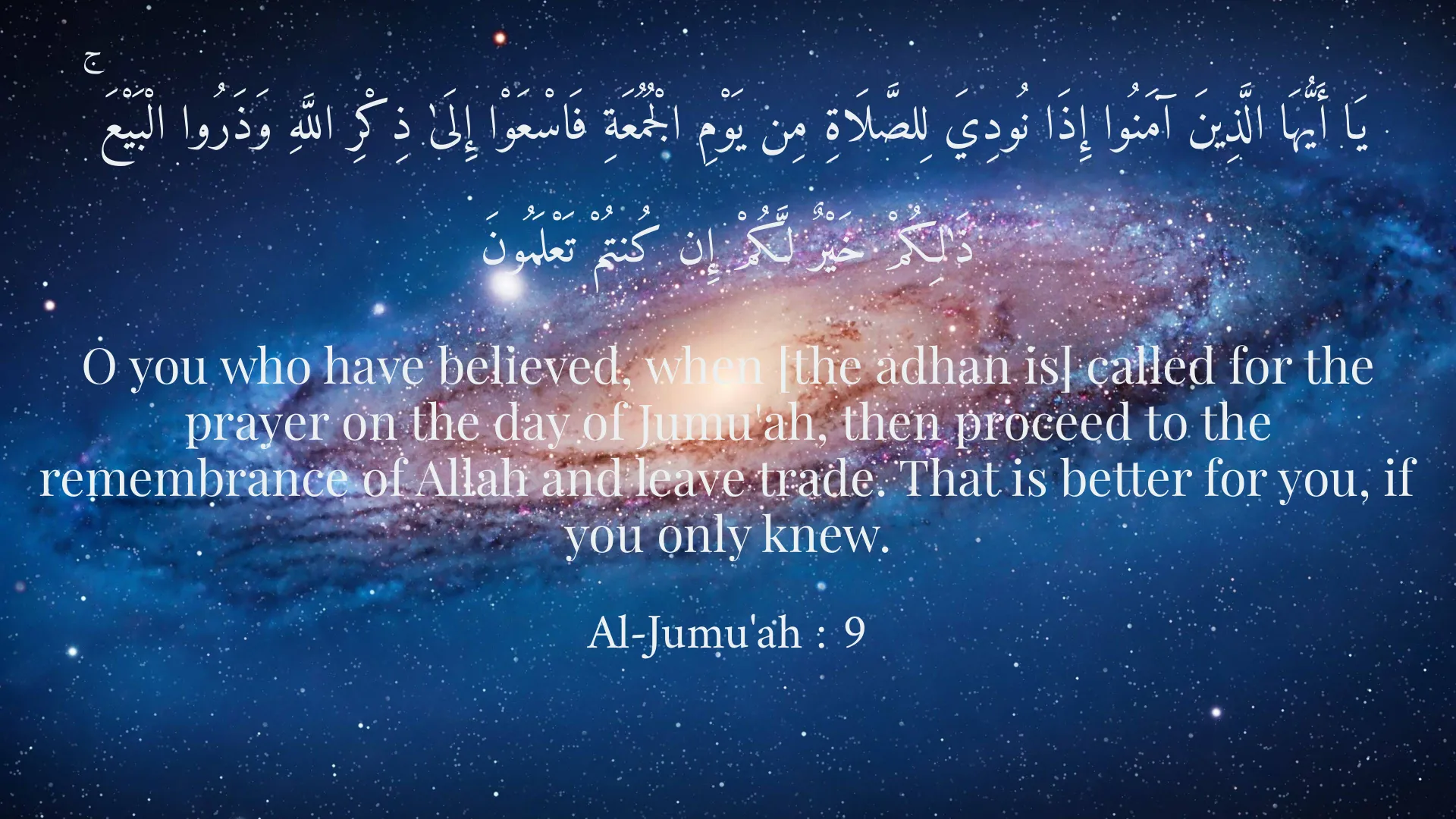
يَا أَيُّهَا الَّذِينَ آمَنُوا إِذَا نُودِيَ لِلصَّلَاةِ مِن يَوْمِ الْجُمُعَةِ فَاسْعَوْا إِلَىٰ ذِكْرِ اللَّهِ وَذَرُوا الْبَيْعَ ۚ ذَٰلِكُمْ خَيْرٌ لَّكُمْ إِن كُنتُمْ تَعْلَمُونَ
O you who have believed, when [the adhan is] called for the prayer on the day of Jumu'ah, then proceed to the remembrance of Allah and leave trade. That is better for you, if you only knew.
Al-Jumu'ah : 9
فَإِذَا قُضِيَتِ الصَّلَاةُ فَانتَشِرُوا فِي الْأَرْضِ وَابْتَغُوا مِن فَضْلِ اللَّهِ وَاذْكُرُوا اللَّهَ كَثِيرًا لَّعَلَّكُمْ تُفْلِحُونَ
And when the prayer has been concluded, disperse through the land and seek from the bounty of Allah, and remember Allah often that you may succeed.
Al-Jumu'ah : 10
رِجَالٌ لَّا تُلْهِيهِمْ تِجَارَةٌ وَلَا بَيْعٌ عَن ذِكْرِ اللَّهِ وَإِقَامِ الصَّلَاةِ وَإِيتَاءِ الزَّكَاةِ ۙ يَخَافُونَ يَوْمًا تَتَقَلَّبُ فِيهِ الْقُلُوبُ وَالْأَبْصَارُ
Men whom neither commerce nor selling distracts from the remembrance of Allah and performance of prayer and giving of zakah. They fear a Day in which hearts and eyes will [fearfully] turn about.
An-Nur : 37
أَلْهَاكُمُ التَّكَاثُرُ
Competition in worldly increase diverts you,
At-Takathur : 1
حَتَّىٰ زُرْتُمُ الْمَقَابِرَ
Until you visit the graveyards.
At-Takathur : 2
Short Story
Once upon a time, in the city of Shiraz, lived a diligent merchant named Bahram. He was so engrossed in his business that from dawn till dusk, and sometimes even past midnight, he would be busy counting coins and closing deals. His wealth grew day by day, but slowly, he became heedless of his family, his friends, and most importantly, his prayers and remembrance of God. His heart, once vibrant with spiritual peace, now felt heavy under the burden of worldly anxieties. One cold evening, an old dervish passing by saw Bahram toiling alone under the dim lamp, long after all other shops had closed. The dervish called out gently and kindly: "O Bahram, how much do you gather for your body, but what do you gather for your soul?" Startled by the voice, Bahram looked up, and for the first time in a long while, he reflected deeply. He realized that while his coffers were full, his spirit felt empty of light and peace. From that day on, Bahram continued his trade with diligence, but he learned to dedicate specific time for his spiritual duties, his family, and to express gratitude for the blessings he already possessed. He understood that true prosperity was a balance between worldly endeavor and the continuous remembrance of God. After this realization, Bahram not only became more successful in his trade but also found a tranquility and blessing in his life that no amount of wealth had ever given him.