Quranic Answer
Charity holds a significant place in Islamic teachings, underlined by a multitude of verses in the Holy Quran and various hadiths of the Prophet Muhammad (peace be upon him). This article explores the essence of charity in Islam, focusing on its spiritual significance, the moral imperatives behind it, and its transformative impact on individuals and society as a whole. Through deepening our understanding of these teachings, we can appreciate charity not only as an obligatory act of worship but as an avenue leading towards divine mercy and societal progress. ### The Fundamental Concept of Charity in Islam In Islam, charity, or "sadaqah" and "zakat," is viewed as a vital component of a believer's faith and practice. Sadaqah refers to voluntary charity, while zakat is a mandatory form of almsgiving that constitutes one of the Five Pillars of Islam. Both forms of charity are fundamental to fostering a sense of community and responsibility among believers. The Quran makes numerous references to charity, illustrating its importance in the life of a Muslim and its role in the fabric of society. In Surah Al-Baqarah, Allah instructs the believers to offer pure and valuable charity as stated in verse 267: "O you who have believed, spend from the good things which you have earned and from that which We have produced for you from the earth. And do not aim toward the defective thereof, out of which you would not take except with closed eyes. And know that Allah is Free of need and Praiseworthy." This verse emphasizes not only the importance of giving but also the quality of what is offered. It encourages individuals to donate from their best possessions rather than from what they deem worthless. ### The Invitation to Pursue Goodness In Surah Al-Mu’minun, verse 60, the Quran presents an additional dimension to charity: "And those who are, to their prophet, the righteous, will surely be in gardens, having a high rank." This asserts that those who engage in charitable acts and assist others will be rewarded with honor in the sight of Allah. The notion that charity elevates one's status in the afterlife serves as a powerful motivator for believers to practice generosity. Moreover, the Quran continually invites people to engage in good deeds, emphasizing that true belief is demonstrated through compassion, generosity, and acts of service toward others. These directives are rooted in the belief that one's faith should naturally result in a commitment to enhancing the lives of others and contributing positively to society. ### Charity as a Spiritual Mechanism While the Quran does not explicitly state that giving charity prevents calamities, it is essential to understand the spiritual relationship between charity and divine mercy. Engaging in charitable acts fosters spiritual growth and development, ultimately drawing believers closer to Allah. This connection is elaborated upon through various hadiths where the Prophet Muhammad (peace be upon him) illustrates that charity acts as a means to avert misfortunes and brings about Allah’s blessings. One of the hadiths states: "Charity does not decrease wealth. Rather, it increases it, and the act of giving will be counted as a source of goodness in the Hereafter." Such teachings illuminate the idea that even during times of hardship, engaging in charity fosters a sense of optimism and strength. It instills hope in both the giver and the recipient, reinforcing the interconnectedness of the Muslim community. ### The Ethical Dimension of Charity Charity in Islam goes beyond the mere act of giving financial assistance. It embodies a deep-rooted ethical principle that underscores the importance of altruism and compassion in human interactions. The Quran emphasizes that acting with kindness and facilitating the well-being of others reflects a person's character and faith. The ethical dimensions of charity challenge us to rethink our relationship with wealth and highlight the social responsibilities tied to financial prosperity. Moreover, the practice of charity encourages believers to cultivate qualities such as empathy, humility, and gratitude. By helping those in need, individuals are reminded of their privileges and encouraged to appreciate the blessings they have been granted. This reciprocity fosters a society where compassion and understanding can flourish, further strengthening communal bonds. ### Charity’s Impact on Society The implications of widespread charitable giving are profound. When individuals engage in charity, they contribute to social stability and economic equality. By distributing wealth and resources more equitably, communities can alleviate poverty, provide education, and improve living conditions for the less fortunate. Consequently, this eradication of inequality leads to a more harmonious and prosperous society, which is a fundamental objective in Islam. In Islamic history, numerous charitable institutions were established, playing a pivotal role in social welfare. The waqf (charitable endowment) was one such mechanism that facilitated extensive charitable activities. This practice allowed donors to pledge their resources for public benefit, supporting everything from education to infrastructure. Such historical contexts serve as a reminder of the importance of structured charitable initiatives within Muslim communities. ### Conclusion: The Transformative Power of Charity In conclusion, the significance of charity within the Islamic framework extends far beyond material gain. It embodies a spiritual and ethical quest that transforms both givers and receivers. Engaging in acts of charity is a multidimensional endeavor that fosters divine mercy, relates to communal well-being, and aligns with the very core of Islamic teachings. The Quran and the hadiths collectively encourage believers to embrace generosity and highlight the rewarding nature of sincere charitable acts. In a contemporary world often marked by division and disparity, the ethical principles surrounding charity in Islam present a compelling call to action. As individuals and communities, we must strive to embody these teachings by making charity an integral part of our lives, ultimately leading to a more compassionate, equitable, and united society. Through these efforts, we can witness the transformative power of charity, bringing forth lasting change in the lives of others while deepening our relationship with the Creator.
Related Verses
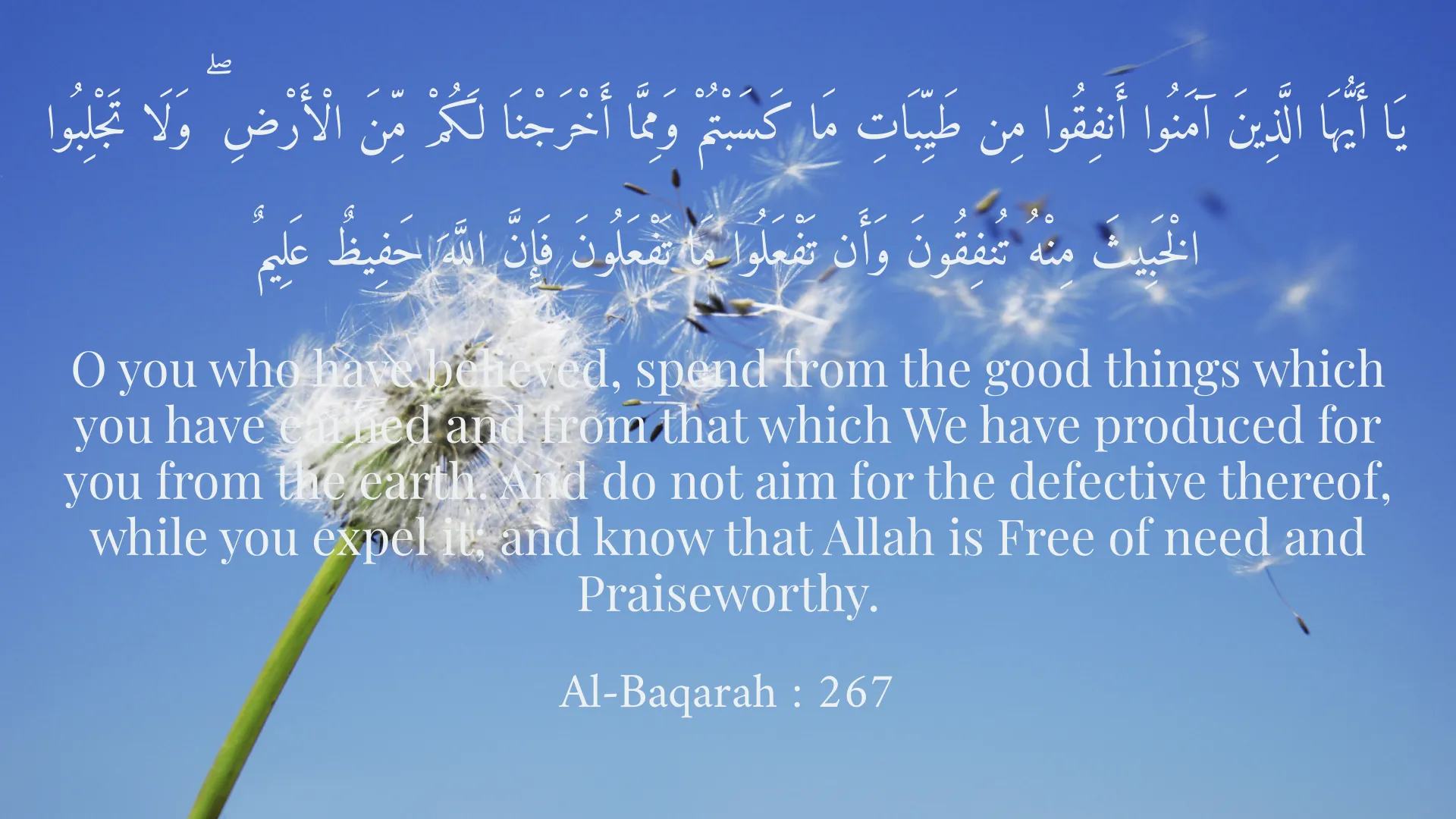
يَا أَيُّهَا الَّذِينَ آمَنُوا أَنفِقُوا مِن طَيِّبَاتِ مَا كَسَبْتُمْ وَمِمَّا أَخْرَجْنَا لَكُمْ مِّنَ الْأَرْضِ ۖ وَلَا تَجْلِبُوا الْخَبِيثَ مِنْهُ تُنفِقُونَ وَأَن تَفْعَلُوا مَا تَفْعَلُونَ فَإِنَّ اللَّهَ حَفِيظٌ عَلِيمٌ
O you who have believed, spend from the good things which you have earned and from that which We have produced for you from the earth. And do not aim for the defective thereof, while you expel it; and know that Allah is Free of need and Praiseworthy.
Al-Baqarah : 267
وَالَّذِينَ هُمْ لِزَكَاتِهِمْ فَاعِلُونَ
And they who are dutiful to their zakah.
Al-Mu'minun : 60
Short Story
One day, a man sat by the street, observing how people continued with their lives. He decided to give some of his wealth to the needy. With this act, he not only made others happy, but also found peace and happiness himself. He realized that by doing so, he had, in a way, distanced himself from calamities and difficulties.