Quranic Answer
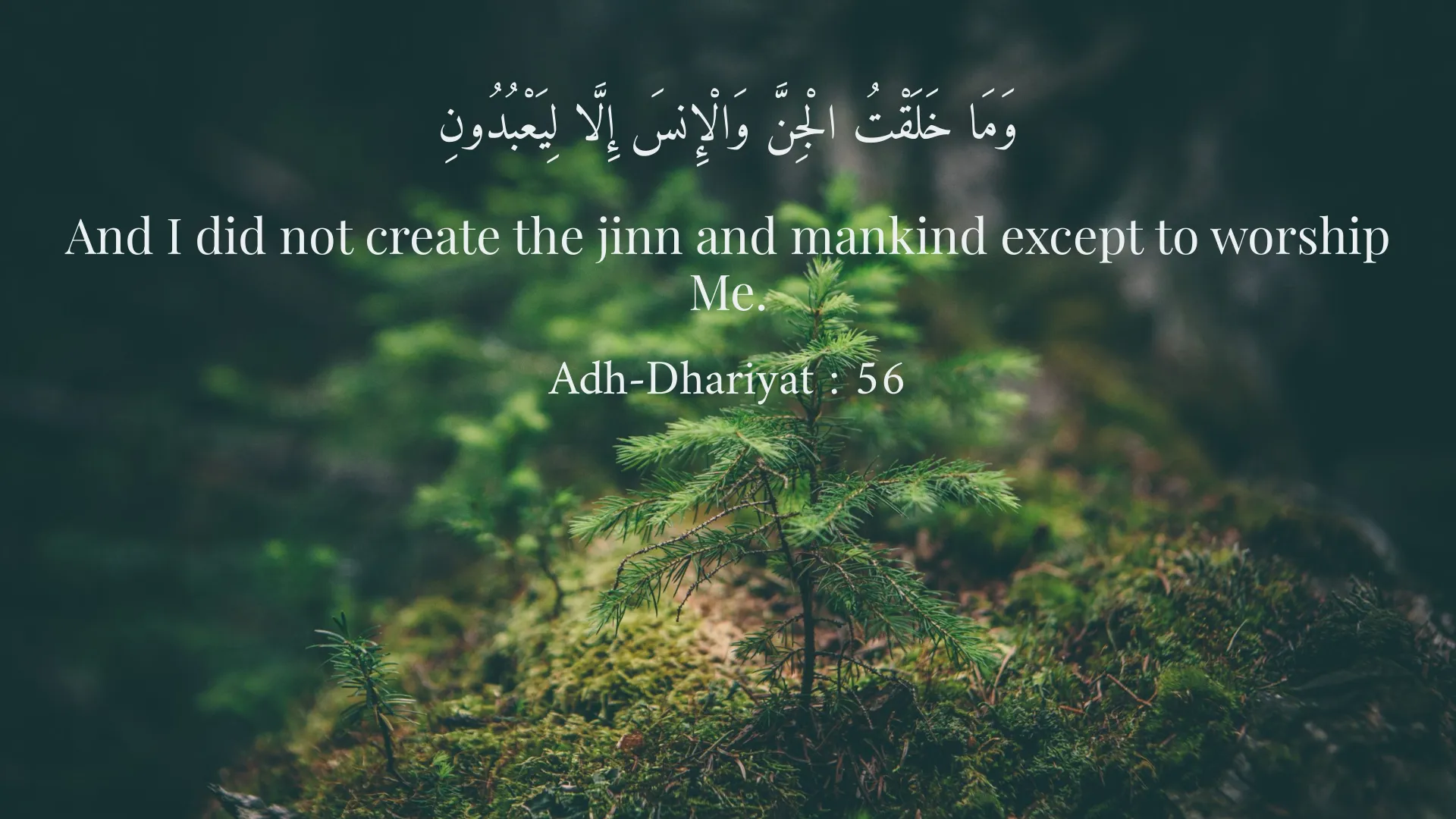
It is profoundly important to understand that the Holy Quran does not consider human beings to be purposeless or meaningless entities. On the contrary, it posits that human existence is deeply intertwined with, and fundamentally dependent on, a specific and profound meaning and purpose. This dependence on meaning is not merely a philosophical inclination but a foundational truth regarding the creation and existential core of humanity from the Quranic perspective. The Quran explicitly states that humanity was created for a higher purpose, and this purpose serves as the central axis and primary reason for its existence, imbuing life with significance. One of the most evident verses in this regard is Surah Adh-Dhariyat, verse 56, which states: "And I did not create the jinn and mankind except to worship Me." This noble verse clearly identifies the primary purpose of human creation as "worship" (Ibadah) of Allah. However, 'worship' in the Quranic view is not limited to mere ritualistic prayers or fasting; it encompasses a much broader and more comprehensive concept that includes all aspects of an individual's personal and social life. Worship, in this context, signifies knowing, submitting, obeying, and living according to the divine will. When human life is grounded in this divine purpose, every action, every thought, and every decision transforms into a purposeful act. This perspective teaches humanity that even the smallest daily activities can be directed towards acts of servitude, thereby freeing life from emptiness and meaninglessness. This ultimate purpose provides humans with a sense of value, responsibility, and direction, saving them from existential confusion and distress. The Quran also introduces humanity as "Khalifah" or vicegerent of Allah on Earth, as mentioned in Surah Al-Baqarah, verse 30: "And [mention, O Muhammad], when your Lord said to the angels, 'Indeed, I will make upon the earth a successive authority.'" This status of vicegerency bestows deep meaning upon human existence. As Allah's vicegerents, humans are responsible for developing the Earth, establishing justice, preserving the environment, and guiding others towards the truth. This heavy responsibility is not merely a duty but an unparalleled opportunity to realize one's existential meaning and elevate human status. A life lived in pursuit of this crucial responsibility will be replete with meaning, sacrifice, and spiritual and material accomplishments. Humanity's dependence on meaning here stems from the necessity to understand the purpose, grasp the duty, and find the correct path to fulfill such a grand role, all of which emerge from the core of Quranic meaningfulness. Furthermore, human nature, or 'Fitra,' is depicted in the Quran in a way that inherently guides it towards meaning and truth. The Quran speaks of "Fitrat Allah" (the natural disposition of Allah) upon which humanity is created. This Fitra is the innate inclination towards monotheism and the pursuit of truth. Humans are inherently beings who seek meaning, justice, and beauty. If this innate need is not properly guided, individuals fall into confusion, emptiness, and anxiety. The Quran satisfies this innate need by providing answers to the most fundamental existential questions – where do I come from, where am I going, and what is the purpose of life – thereby granting humanity a sense of peace and completeness. This implies that a lack of meaning or absence of purpose in life is an unnatural and painful state for humans, as they instinctively seek to understand their place in existence. Numerous verses in the Quran emphasize reflection and contemplation on the creation of the heavens and the Earth and the divine signs. For example, in Surah Al-Imran, verse 191, Allah praises those who "contemplate the creation of the heavens and the earth, [saying], 'Our Lord, You did not create this in vain; exalted are You [above such a thing].'" This verse demonstrates that a believing human does not perceive existence as meaningless or accidental; rather, they find a sign of divine wisdom and purpose in every part of it. This search for meaning in creation is itself a meaningful process that helps in gaining a deeper understanding of humanity's place in the universe. Therefore, from the Quranic perspective, humanity is a being created to find, understand, and live according to meaning. This meaning originates from connecting with the Creator of existence, accepting one's role as His vicegerent, following divine guidance in all aspects of life, and striving for justice and goodness in society. A life devoid of this meaning, however materially successful, is considered spiritually and existentially incomplete and empty. The Quran invites humanity towards a meaningful life where every moment is linked to a divine purpose, leading to perfection and eternal happiness. This dependence on meaning is not an added burden on humanity; rather, it is the greatest gift that fills life with purpose, tranquility, and hope, leading to the pinnacle of excellence and contentment.
Related Verses
وَمَا خَلَقْتُ الْجِنَّ وَالْإِنسَ إِلَّا لِيَعْبُدُونِ
And I did not create the jinn and mankind except to worship Me.
Adh-Dhariyat : 56
وَإِذْ قَالَ رَبُّكَ لِلْمَلَائِكَةِ إِنِّي جَاعِلٌ فِي الْأَرْضِ خَلِيفَةً ۖ قَالُوا أَتَجْعَلُ فِيهَا مَن يُفْسِدُ فِيهَا وَيَسْفِكُ الدِّمَاءَ وَنَحْنُ نُسَبِّحُ بِحَمْدِكَ وَنُقَدِّسُ لَكَ ۖ قَالَ إِنِّي أَعْلَمُ مَا لَا تَعْلَمُونَ
And [mention, O Muhammad], when your Lord said to the angels, 'Indeed, I will make upon the earth a successive authority.' They said, 'Will You place upon it one who causes corruption therein and sheds blood, while we declare Your praise and sanctify You?' Allah said, 'Indeed, I know that which you do not know.'
Al-Baqarah : 30
الَّذِينَ يَذْكُرُونَ اللَّهَ قِيَامًا وَقُعُودًا وَعَلَىٰ جُنُوبِهِمْ وَيَتَفَكَّرُونَ فِي خَلْقِ السَّمَاوَاتِ وَالْأَرْضِ رَبَّنَا مَا خَلَقْتَ هَٰذَا بَاطِلًا سُبْحَانَكَ فَقِنَا عَذَابَ النَّارِ
Those who remember Allah while standing or sitting or [lying] on their sides and contemplate the creation of the heavens and the earth, [saying], 'Our Lord, You did not create this in vain; exalted are You [above such a thing]; then protect us from the punishment of the Fire.'
Al-Imran : 191
Short Story
It is narrated that a wise man was walking on a path when he saw a purposeless youth standing at a crossroads, unsure which way to go. The wise man asked him, "Young man, why are you so bewildered?" The youth replied, "I don't know which way to go, life seems meaningless to me." The wise man smiled and said, "Young man, the world is like a garden, and you are its gardener. If you don't know what to plant and why, the garden will remain fruitless. But if you know that your Lord has created you to cultivate this garden and gather good fruits, then every step you take will find meaning. A meaningless life is like a ship without a captain, lost in a turbulent sea; but upon finding a purpose, even storms will show the way to the shore." Hearing these words, a light shone in the youth's heart, and he found his path, realizing that purpose gives meaning to every step he takes.