Quranic Answer
The Holy Quran: A Guiding Light for Nurturing Children with Kindness and Compassion The Holy Quran, as the seminal religious text for Muslims, serves not only as a book of divine guidance but also as a comprehensive manual for life's most fundamental responsibilities, including the vital role of raising children. It underscores the significance of nurturing children with kindness and compassion, portraying parents as representatives of God among their offspring. This exalted status brings with it a profound duty to guide their children in the best possible manner, ensuring they grow into responsible and moral adults. Child-rearing is not merely a social obligation; it is a spiritual calling rooted deeply in the teachings of the Quran. One of the fundamental principles highlighted in this holy book is the necessity of expressing love and mercy towards children. This compassionate approach lays the groundwork for a trusting and nurturing relationship between parents and children, allowing children to flourish in an environment filled with emotional support and understanding. Surah Luqman, a chapter found in the Quran, offers invaluable insights into child education and upbringing. It provides specific verses that guide parents on how to cultivate their children's character and beliefs. Verses 13 to 19 present several key teachings that are essential for effective child-rearing. In verse 13 of Surah Luqman, the narrative begins with a pivotal piece of advice from Luqman to his son: he urges him never to associate partners with Allah. This counsel emphasizes the importance of monotheism and establishes a foundational belief system that is vital for a good upbringing. Instilling this belief helps children understand their relationship with God, fostering a sense of accountability and moral responsibility. Moving to verse 14, Luqman focuses on the importance of love and attention that parents must offer their children. This nurturing aspect of parenting cannot be overstated. Children who feel loved and valued are more likely to develop secure attachments, leading to better emotional and social development. As parents shower their children with affection, they instill a sense of belonging and security, which is critical for their overall well-being. Verse 15 of Surah Luqman introduces another crucial element: the need for wisdom and diligence in fulfilling religious and moral obligations. This reinforces that parenting is not a casual endeavor; it demands intentional effort and deep reflection on the part of parents. They must model the behaviors and ethical standards they wish to instill in their children. By practicing what they preach, they provide a powerful example, allowing children to learn through observation and experience. Subsequent verses in the chapter continue to offer guidance for proper and ethical child-rearing. They elaborate on the importance of teaching children the distinction between good and bad, highlighting that moral education is a continuous process. Parents are encouraged to engage in structured educational practices, laying the groundwork for critical thinking and ethical decision-making. In a broader perspective, the Quran advocates for the integration of morality and ethical values into everyday parenting. It reminds parents that they play a significant role in shaping their children’s values and beliefs. It is imperative for parents to not only instruct their children on what is right and wrong but also to engage them in discussions that promote understanding and reflection. This dialogue nurtures an environment where children feel safe to express their thoughts and doubts, enabling them to grow into independent thinkers who can navigate life's complexities. Furthermore, the Quran encourages parents to embody the virtues they seek to instill in their children. This principle of leading by example not only reinforces lessons on morality but also builds trust and respect between parents and children. As children observe their parents practicing kindness, honesty, and compassion, they are more likely to adopt these qualities themselves. The role of parents as representatives of God also signifies a spiritual journey that is integral to child-rearing. By nurturing a sense of spirituality in their children, parents can help them develop a strong moral compass that guides their actions throughout their lives. Teaching children about the importance of prayer, gratitude, and empathy fosters a deeper connection to their faith and forms the basis for ethical behavior. In addition to the spiritual and moral dimensions, the Quran also highlights the importance of providing children with a nurturing environment. This encompasses not only emotional support but also physical needs. A secure and loving home is the first place where children learn about relationships and the world around them. By ensuring that children have their physical needs met and that they are raised in a safe and supportive environment, parents lay the groundwork for their children to confidently explore and engage with their surroundings. Moreover, the Quran advocates for patience and perseverance in parenting. Just as Luqman offered wise advice to his son, parents are reminded that the path of raising children is often fraught with challenges. Yet, through patience and unwavering commitment, they can navigate these obstacles. Understanding that parenting is a long-term investment encourages parents to consistently apply the teachings of the Quran, fostering a nurturing atmosphere that promotes emotional growth and moral learning. In conclusion, the teachings of the Quran serve as a rich wellspring of guidance for Muslims regarding the upbringing of their children. It emphasizes the importance of love, compassion, moral education, and the responsibility of parents as role models. The lessons in Surah Luqman specifically outline key principles that, when embraced, can lead to the nurturing of well-rounded individuals who are not only aware of their faith but also capable of making ethical choices in their lives. As the world continues to evolve, the foundational principles laid out in the Quran remain timeless and relevant, echoing the significance of raising children with kindness and compassion. It is through the application of these teachings that parents can cultivate a generation that embodies the virtues of empathy, integrity, and a strong commitment to their faith.
Related Verses
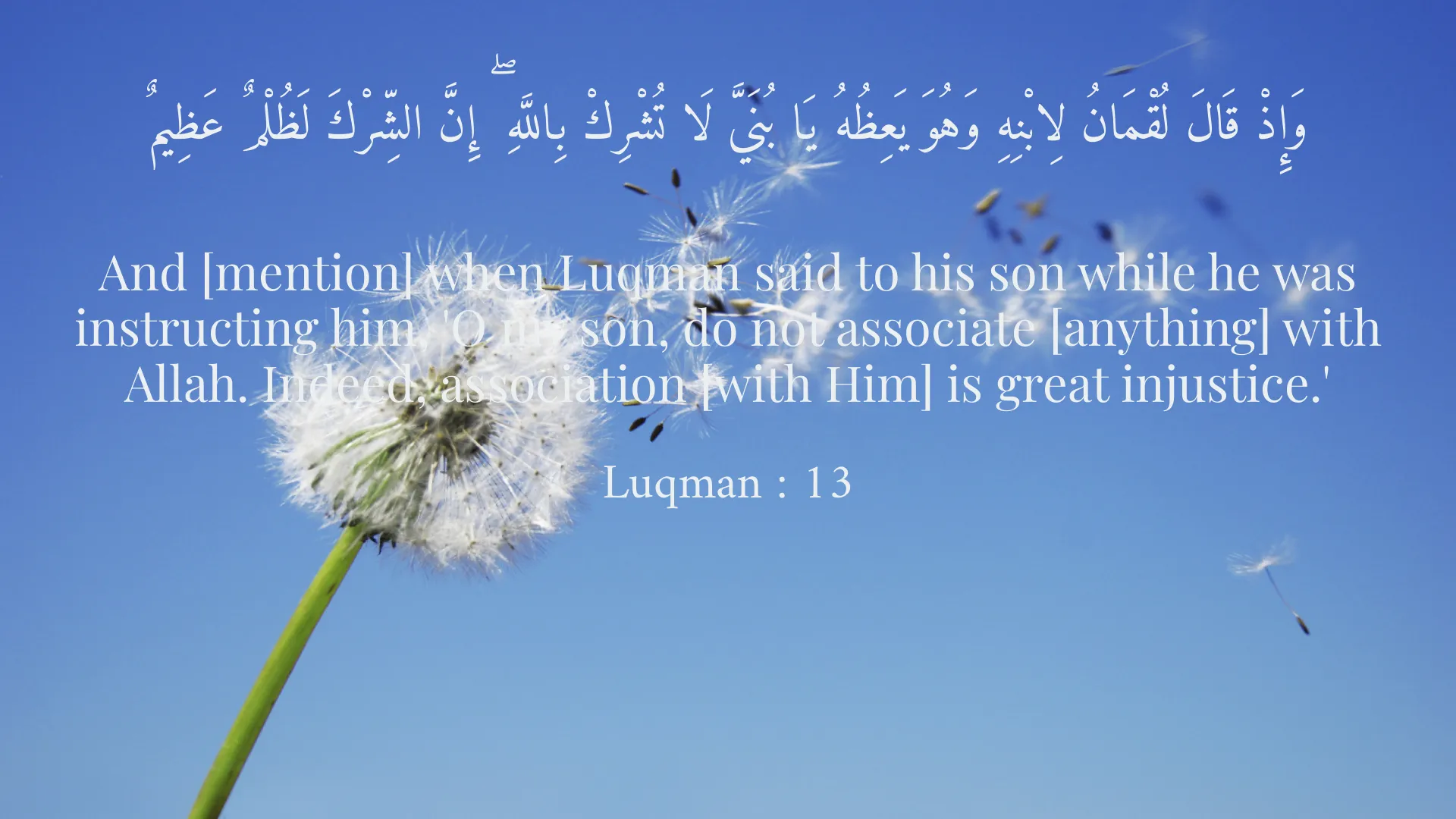
وَإِذْ قَالَ لُقْمَانُ لِابْنِهِ وَهُوَ يَعِظُهُ يَا بُنَيَّ لَا تُشْرِكْ بِاللَّهِ ۖ إِنَّ الشِّرْكَ لَظُلْمٌ عَظِيمٌ
And [mention] when Luqman said to his son while he was instructing him, 'O my son, do not associate [anything] with Allah. Indeed, association [with Him] is great injustice.'
Luqman : 13
وَوَصَّيْنَا الْإِنسَانَ بِوَالِدَيْهِ ۚ أَنِ اشْكُرْ لِي وَلِوالِدَيْكَ إِلَيَّ الْمَصِيرُ
And We have enjoined upon man [care] for his parents. But if they endeavor to make you associate with Me that of which you have no knowledge, do not obey them. To Me is your return, and I will inform you about what you used to do.
Luqman : 14
وَإِن جَاهَدَاكَ عَلَى أَن تُشْرِكَ بِي مَا لَيْسَ لَكَ بِهِ عِلْمٌ فَلَا تُطِعْهُمَا ۚ إِلَيَّ مَرْجِعُكُمْ فَأُنَبِّئُكُمْ بِمَا كُنتُمْ تَعْمَلُونَ
But if they endeavor to make you associate with Me that of which you have no knowledge, do not obey them. To Me is your return, and I will inform you about what you used to do.
Luqman : 15
Short Story
Once upon a time in a small village, there was a man named Hamid who was very diligent in raising his children. He taught them how to believe in their Creator and encouraged good behavior, much like Luqman did with his son. Each night, he would read from the Quran and discuss its meanings with them. His children respected him and gradually learned how to behave properly. As a result, their family was known as a model family in that village.