Quranic Answer
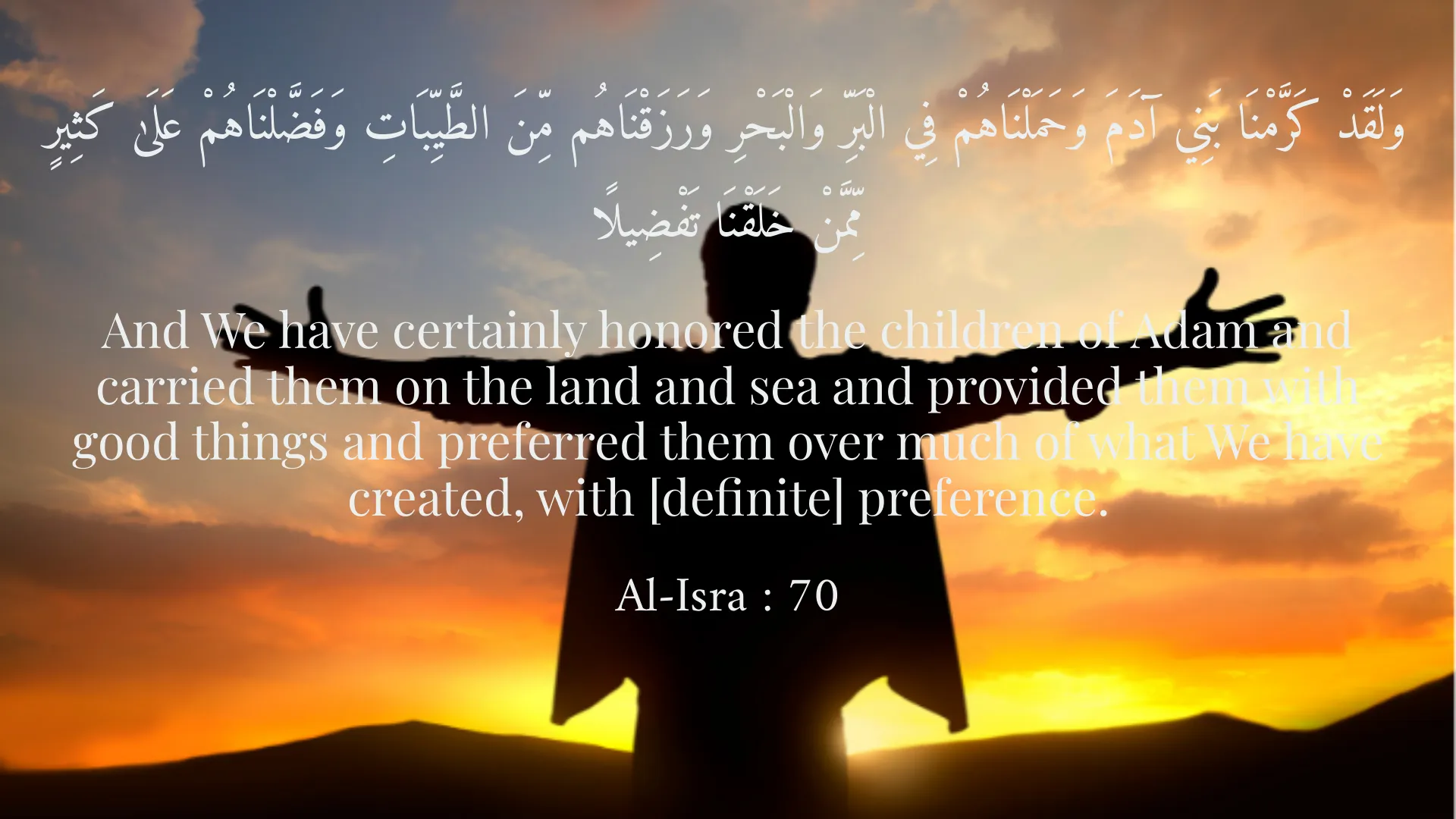
Yes, absolutely! The Holy Quran, as a divine word and a complete guide for life, offers profound and effective solutions for overcoming feelings of worthlessness and strengthening genuine self-esteem. These teachings are not merely temporary comforts but provide a solid foundation for a meaningful life, full of hope and sustainable self-confidence. Feelings of worthlessness often stem from external comparisons, past failures, perceived deficiencies, or a lack of understanding of one's true place. The Quran, with a comprehensive approach, addresses these roots and transforms one's perception of oneself, the purpose of life, and their connection with the Creator. The first and perhaps most crucial Quranic teaching that combats feelings of worthlessness is the emphasis on "inherent human dignity." In numerous verses, God describes humanity as a noble and honored creation. In Surah Al-Isra, verse 70, it states: "And We have certainly honored the children of Adam and carried them on the land and sea and provided them with good things and preferred them over much of what We have created, with [definite] preference." This verse clearly indicates that human dignity and worth are a divine gift, not tied to worldly achievements, social status, or the approval of others. Humans, by virtue of their creation, are inherently valuable. Furthermore, in Surah At-Tin, verse 4, we read: "We have certainly created man in the best of stature." This verse signifies that the creation of humanity is flawless and beautiful, both physically and spiritually. This divine self-assurance forms a basis for dispelling feelings of worthlessness, reminding individuals that they possess unparalleled worth from the very beginning, and superficial imperfections or past mistakes do not negate this intrinsic value. The second Quranic solution is the elucidation of the "purpose of human creation." When individuals discover a sublime purpose in their lives, they are saved from the aimlessness and emptiness that often contribute to feelings of worthlessness. The Quran defines the purpose of creating jinn and humans as solely for worship and servitude to God (Surah Adh-Dhariyat, verse 56: "And I did not create the jinn and mankind except to worship Me."). Worship here does not merely mean performing rituals but encompasses living according to divine will and pleasure, discovering one's talents, serving others, and developing the earth. When a person understands that every step taken in the path of God's pleasure is valuable and impactful, their sense of purpose and self-confidence is strengthened. This purpose imbues meaning into every action they perform and keeps them away from emptiness and feelings of uselessness. Third, the teaching of "reliance on God (Tawakkul) and trust in His power." Often, feelings of worthlessness arise from an inability to control situations or a fear of failure. The Quran teaches believers to rely on God's infinite power instead of their own perceived inadequacies. This reliance lightens the heavy burden of individual responsibilities, which sometimes exceed human capacity, and brings inner peace. With Tawakkul, one knows that even if the desired outcome is not achieved, God is Wise and All-Knowing and will ordain what is best. This perspective reduces the fear of failure and criticism from others, empowering individuals to navigate life with greater confidence. Fourth, the "emphasis on repentance (Tawbah) and not despairing of God's mercy." Past sins and mistakes can be a heavy burden, fueling feelings of guilt and worthlessness. The Quran, with a message full of hope, calls humanity to repentance and return to God, promising forgiveness. In Surah Az-Zumar, verse 53, we read: "Say, 'O My servants who have transgressed against themselves [by sinning], do not despair of the mercy of Allah. Indeed, Allah forgives all sins. Indeed, it is He who is the Forgiving, the Merciful.'" This verse opens a door of hope for those who feel worthless due to past mistakes, reminding them that the true worth of a human being lies in their essence, not in their sins, which are forgivable. This teaching is liberating from chronic guilt and shame. Fifth, the encouragement of "patience (Sabr) and prayer (Salat)" as means of seeking help. In Surah Al-Baqarah, verse 153, it is stated: "O you who have believed, seek help through patience and prayer. Indeed, Allah is with the patient." Patience here means steadfastness in the face of difficulties and refraining from haste and despair, while prayer is a direct connection with the Creator and the source of tranquility. These two tools help individuals to withstand hardships and negative emotions, regain their inner strength, and achieve inner peace and certainty through connection with God. This peace, in turn, internalizes a sense of security and worthiness. Finally, the Quran emphasizes the importance of "righteous deeds (Amal Saleh) and service to creation." When individuals strive in the path of God and benefit others, they not only earn eternal reward but also feel useful and valuable in this world. Helping the needy, speaking the truth, upholding justice, and any good deed done for the sake of God imbues one with a sense of purpose and impact. This active participation in society and the world transforms feelings of worthlessness into a sense of worth and positive empowerment. In summary, the Quran, by presenting a monotheistic and comprehensive view of humanity, speaks of its inherent dignity and elevated status in existence, outlines a sublime purpose for it, and by inviting to reliance on God, repentance, patience, and righteous deeds, shows a clear path to liberation from any feelings of worthlessness and to achieving true and lasting self-esteem.
Related Verses
وَلَقَدْ كَرَّمْنَا بَنِي آدَمَ وَحَمَلْنَاهُمْ فِي الْبَرِّ وَالْبَحْرِ وَرَزَقْنَاهُم مِّنَ الطَّيِّبَاتِ وَفَضَّلْنَاهُمْ عَلَىٰ كَثِيرٍ مِّمَّنْ خَلَقْنَا تَفْضِيلًا
And We have certainly honored the children of Adam and carried them on the land and sea and provided them with good things and preferred them over much of what We have created, with [definite] preference.
Al-Isra : 70
لَقَدْ خَلَقْنَا الْإِنسَانَ فِي أَحْسَنِ تَقْوِيمٍ
We have certainly created man in the best of stature.
At-Tin : 4
قُلْ يَا عِبَادِيَ الَّذِينَ أَسْرَفُوا عَلَىٰ أَنفُسِهِمْ لَا تَقْنَطُوا مِن رَّحْمَةِ اللَّهِ ۚ إِنَّ اللَّهَ يَغْفِرُ الذُّنُوبَ جَمِيعًا ۚ إِنَّهُ هُوَ الْغَفُورُ الرَّحِيمُ
Say, "O My servants who have transgressed against themselves [by sinning], do not despair of the mercy of Allah. Indeed, Allah forgives all sins. Indeed, it is He who is the Forgiving, the Merciful."
Az-Zumar : 53
Short Story
Once upon a time, a man walked through the streets and bazaars, constantly complaining about his life, how poor he was, and that he didn't even have a pair of shoes for his feet. He felt worthless deep down, wondering why he should be deprived of so many blessings. As he walked on, lamenting, he caught sight of a man sitting in a corner who not only had no shoes but had also lost both his legs. Upon seeing that man, he was suddenly ashamed and said to himself: "O God! I was complaining about not having shoes, while he has no feet to wear them!" In that very moment, the feelings of worthlessness and deprivation vanished from his being, replaced by a sense of gratitude and contentment. This story by Saadi teaches us to be thankful for our countless blessings and to know that our true worth is not in material possessions or comparisons with others, but rather in the spirit of divine bestowal and our perspective on existence. When we shift our focus from what we lack to what we possess, and from comparing ourselves to others to connecting with the Creator of existence, we will realize the inherent dignity and worth that has been embedded within us from the very beginning.