Quranic Answer
The Holy Quran pays special attention to the subject of raising children, highlighting its significance and providing a framework for proper child-rearing practices. The teachings found within the Quran are timeless, offering valuable guidance for parents who seek to nurture their children in a holistic manner. Understanding and implementing these principles is crucial for fostering a generation that grows up to be virtuous, responsible, and empathetic individuals. In Surah Luqman, verses 13 to 19, we find a poignant narrative in which Luqman imparts wisdom to his son. His advice encompasses fundamental tenets that lay the foundation for a righteous life. One of the most crucial teachings is the importance of monotheism, emphasizing the need to worship Allah alone and avoid associating others with Him (polytheism). This guidance is vital as it shapes a child's worldview, instilling a sense of morality and ethics grounded in faith. In verse 14, the Quran underscores the sanctity of the parent-child relationship, stating that God has enjoined upon parents to be gracious towards their children and guide them on the righteous path. This divine command highlights the profound responsibility that parents hold, illuminating the necessity of kindness, patience, and understanding in the parenting process. Moreover, the spiritual and emotional well-being of children is another vital aspect of child-rearing emphasized in the Quran. In Surah At-Tahrim, verse 6, it is reiterated, 'O you who have believed, protect yourselves and your families from a Fire.' This verse underscores the idea that the responsibility of raising children is multifaceted, extending beyond mere education; it encompasses the imperative to safeguard their spiritual essence and emotional health. Parents must be vigilant, not only in providing a loving environment but also in leading their children towards positive values and behaviors. This involves mental and spiritual preparation, enabling children to face challenges and temptations with resilience and integrity. The behavior of the Prophet Muhammad serves as a compelling model for how to raise children with love and affection. His interactions with children were characterized by kindness, warmth, and understanding. He emphasized the importance of treating children with gentleness, teaching them through positive reinforcement rather than harsh discipline. Stories of the Prophet's compassionate approach to children reflect an ideal where love is the primary language of communication. Such nurturing fosters a secure attachment, ensuring that children develop self-esteem and trust, which are crucial for their emotional well-being. When discussing the themes of child-rearing presented in the Quran, three essential components emerge: instilling positive emotions, implementing disciplinary education, and cultivating talents and abilities. Instilling positive emotions in children is paramount; it encompasses teaching the values of empathy, respect, and gratitude, allowing children to develop a strong moral compass. Cultivating a sense of gratitude towards God, parents, and the community fosters a positive outlook on life and encourages charitable behavior in children. Disciplinary education, as prescribed in Islam, is about correcting behavior without resorting to physical punishment or verbal abuse. Discipline should be framed within the context of love and support. By using methods such as natural consequences, role modeling, and clear communication, parents can teach their children right from wrong, encouraging them to make better choices. The Quran provides numerous narratives where the importance of patience and understanding in disciplining children is emphasized. A balanced approach to discipline is essential, one that instills accountability while also being rooted in compassion. Finally, the Quran promotes the idea that every child possesses unique talents and abilities that should be nurtured. It is the responsibility of parents to identify these strengths and provide them with the necessary tools and opportunities for growth. This could involve education, extracurricular activities, or life experiences that allow children to explore their passions. The Quran encourages a partnership between parents and children, creating an environment where talents can flourish and where children feel empowered to pursue their aspirations. In conclusion, the principles outlined in the Holy Quran regarding child-rearing form a comprehensive blueprint for nurturing responsible and compassionate individuals. The emphasis on love, respect, and ethical behavior equips parents with the necessary tools to foster an environment where children can thrive both spiritually and emotionally. By embracing these teachings and integrating them into their parenting practices, parents can play a pivotal role in shaping a future generation that contributes positively to society and embodies the values of peace, kindness, and integrity. The teachings of the Quran remain timeless and relevant, shedding light on the sacred duty of raising children with love, care, and moral guidance. Ultimately, the goal is to raise children who are not only knowledgeable but also virtuous and empathetic, capable of making a meaningful impact on the world around them.
Related Verses
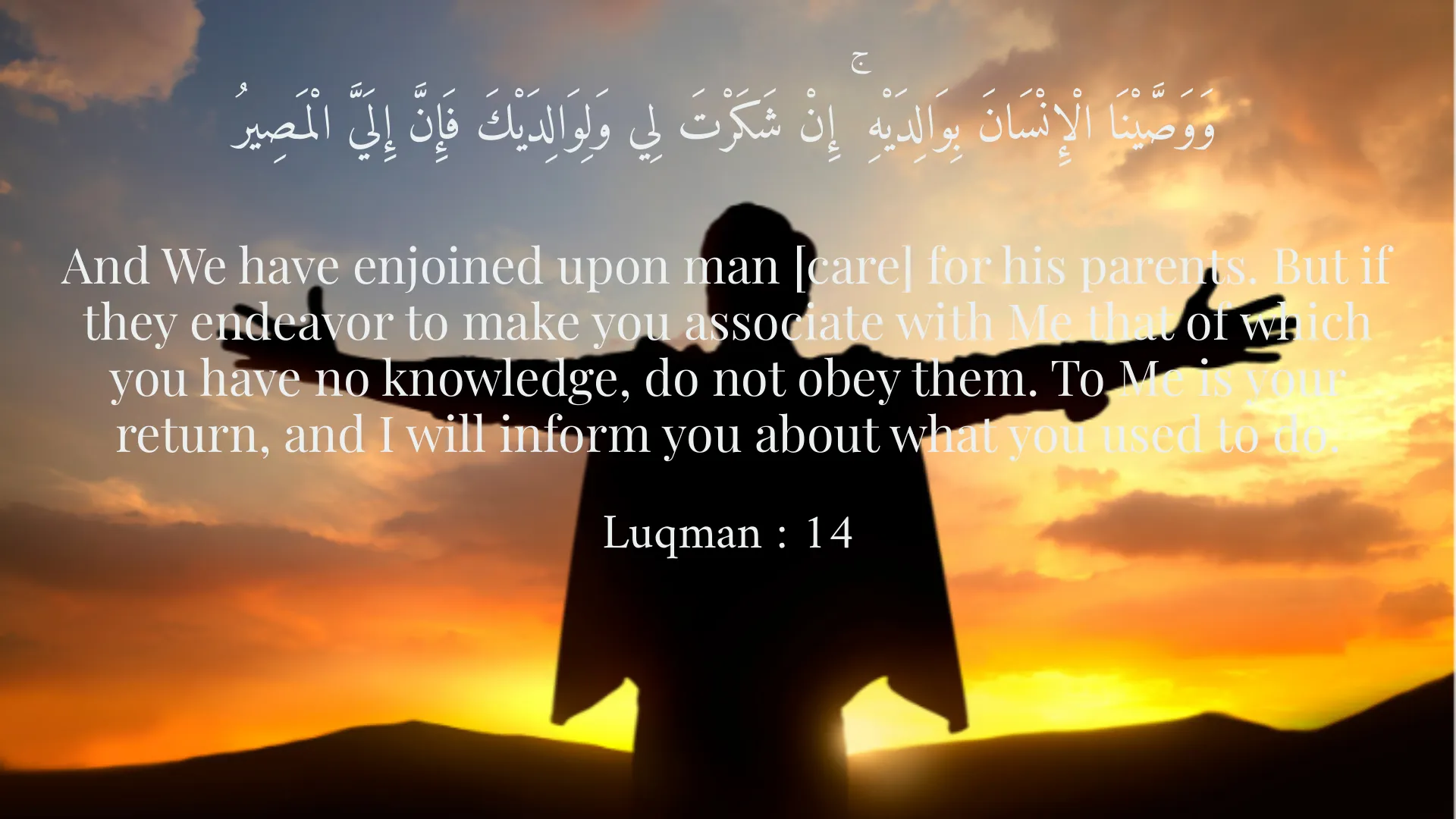
وَوَصَّيْنَا الْإِنْسَانَ بِوَالِدَيْهِ ۚ إِنْ شَكَرْتَ لِي وَلِوَالِدَيْكَ فَإِنَّ إِلَيَّ الْمَصِيرُ
And We have enjoined upon man [care] for his parents. But if they endeavor to make you associate with Me that of which you have no knowledge, do not obey them. To Me is your return, and I will inform you about what you used to do.
Luqman : 14
يَا أَيُّهَا الَّذِينَ آمَنُوا قُوا أَنفُسَكُمْ وَأَهْلِيكُمْ نَارًا
O you who have believed, protect yourselves and your families from a Fire.
At-Tahrim : 6
وَالْوالِداتُ يُرْضِعْنَ أَولادَهُنَّ حَوْلَيْنِ كَامِلَيْنِ لِمَن أرادَ أن يُتِمَّ الرَّضاعةَ.
Mothers may nurse their children two complete years for whoever wishes to complete the nursing [period].
Al-Baqarah : 233
Short Story
Once upon a time, a teacher was educating children in class about what the most important aspect of life is. He told them that love and respect for their parents and establishing a pure connection with God are paramount. One of the children named Ali faced hardships at home, but after hearing these lessons, he decided to help his parents more and show them affection. Over time, he became a good role model in both school and home. Now, the children remember him fondly.