Quranic Answer
The Holy Quran, as a book of divine guidance and light, does not merely address matters of worship and legal rulings; rather, it presents a comprehensive blueprint for human life, within which solutions for achieving inner peace, contentment, and ultimately, true happiness – both in this world and the Hereafter – are embedded. Indeed, the Quran does not explicitly use the phrase "how to be happy" in the modern psychological sense, but it elucidates principles and foundations that, when adhered to, lead an individual to a state of "Hayatan Tayyibah" (a good and pure life) and "Tuma'ninah al-Qalb" (tranquility of the heart), which are essentially the profound concepts of well-being and felicity. This form of happiness is not superficial or fleeting; rather, it is deep-rooted and enduring, as it is based on a proper connection with the Creator and an understanding of the purpose of creation. These teachings transcend mere psychological techniques, delving into the very foundations of human existence and its relationship with the universe. The Quran reminds humanity that it is a purposeful creation, and true satisfaction lies in aligning with divine will and pure human nature. One of the most central teachings of the Quran for attaining this inner peace is the remembrance of Allah (Dhikr). Allah states in Surah Ar-Ra'd (The Thunder), verse 28: "Those who have believed and whose hearts are assured by the remembrance of Allah. Unquestionably, by the remembrance of Allah hearts are assured." This verse presents the key to inner contentment and tranquility. The remembrance of Allah is not limited to verbal invocations; it encompasses contemplation of His signs, performing prayers (Salat), reciting the Quran, and acting upon His commands. When a person places Allah at the center of their life and trusts in His power, wisdom, and mercy, they become liberated from anxieties and worries stemming from worldly attachments. They know that all affairs are in the hands of Allah, and He is the Best Disposer of affairs. This unwavering trust alleviates the heavy burden of trying to control every aspect of life, filling the individual with a profound sense of security and peace, even when facing significant challenges. Another fundamental pathway illuminated by the Quran is gratitude (Shukr) for divine blessings. The Quran repeatedly urges believers to be grateful. Gratitude transforms one's perspective on life; instead of focusing on what one lacks, an individual turns their attention to the abundance of blessings, and this positive outlook becomes a great source of joy and satisfaction. Gratitude enables one to perceive and appreciate the small beauties and blessings that might otherwise be overlooked, significantly contributing to a positive disposition. Even in the face of difficulties, patience (Sabr) and perseverance are also crucial Quranic teachings. Allah states in Surah Al-Baqarah (The Cow), verse 153: "O you who have believed, seek help through patience and prayer. Indeed, Allah is with the patient." Patience here does not mean passive resignation or abandoning effort, but rather steadfastness and resilience in confronting challenges with reliance on Allah. This approach saves individuals from despair and hopelessness, empowering them to cope with difficulties and even learn valuable lessons from them, fostering growth. This process itself is a source of strength and self-reliance, leading to lasting happiness. Furthermore, the Quran emphasizes the importance of righteous deeds (Amal Salih) and kindness to others. In Surah An-Nahl (The Bee), verse 97, it is stated: "Whoever does righteousness, whether male or female, while he is a believer - We will surely cause him to live a good life, and We will surely give them their reward [in the Hereafter] according to the best of what they used to do." Doing good to people, showing kindness to parents, upholding the rights of orphans and the needy, and spreading justice not only reforms society but also imparts a sense of worth, purpose, and inner satisfaction to the individual. Witnessing the positive impact of one's actions on the lives of others is a profound source of happiness that no material pleasure can equal. This feeling of connection and service to creation brings a deep sense of completeness and felicity. The Quran also teaches humanity that this world is transient, and excessive attachment to it is a source of sorrow and grief. In Surah Al-Hadid (The Iron), verse 20, the world is likened to a play and amusement that ultimately fades away. By understanding this truth, individuals become less affected by worldly fluctuations, and their hearts are drawn towards a higher goal: the Hereafter and the pleasure of Allah. This perspective liberates a person from the anxiety of loss and grants them a tranquility that remains stable even in the face of material hardships. When stable and eternal values replace the mutable and perishable values of the world, the human soul finds peace and is freed from life's turmoils. Ultimately, it can be concluded that the Quran defines happiness as divine pleasure and the tranquility of the heart resulting from faith and righteous deeds. This happiness is attained by following divine commands, constant remembrance of Allah, gratitude, patience, kindness to creation, and avoiding excessive attachment to the world. This is a path that frees an individual from inner suffering and guides them towards a meaningful life full of tranquility. This is the everlasting felicity that believers experience in all circumstances, and its joy surpasses any worldly pleasure. Therefore, the answer is yes, the Quran teaches us how to achieve a deeper and more sustainable kind of "happiness" that is rooted in faith and connection with the Creator, leading to a "Hayatan Tayyibah." These teachings are more than mere psychological techniques; they are directives for building a spiritual and ethical life, the fruit of which is true peace and contentment. This peace endures even amidst life's challenges and difficulties, preventing the believer from sinking into despair and hopelessness. By emphasizing Tawhid (monotheism), justice, piety (Taqwa), and good morals, the Quran lays the foundations for true well-being and a joyful existence, showing the path to a tranquil heart and a peaceful soul.
Related Verses
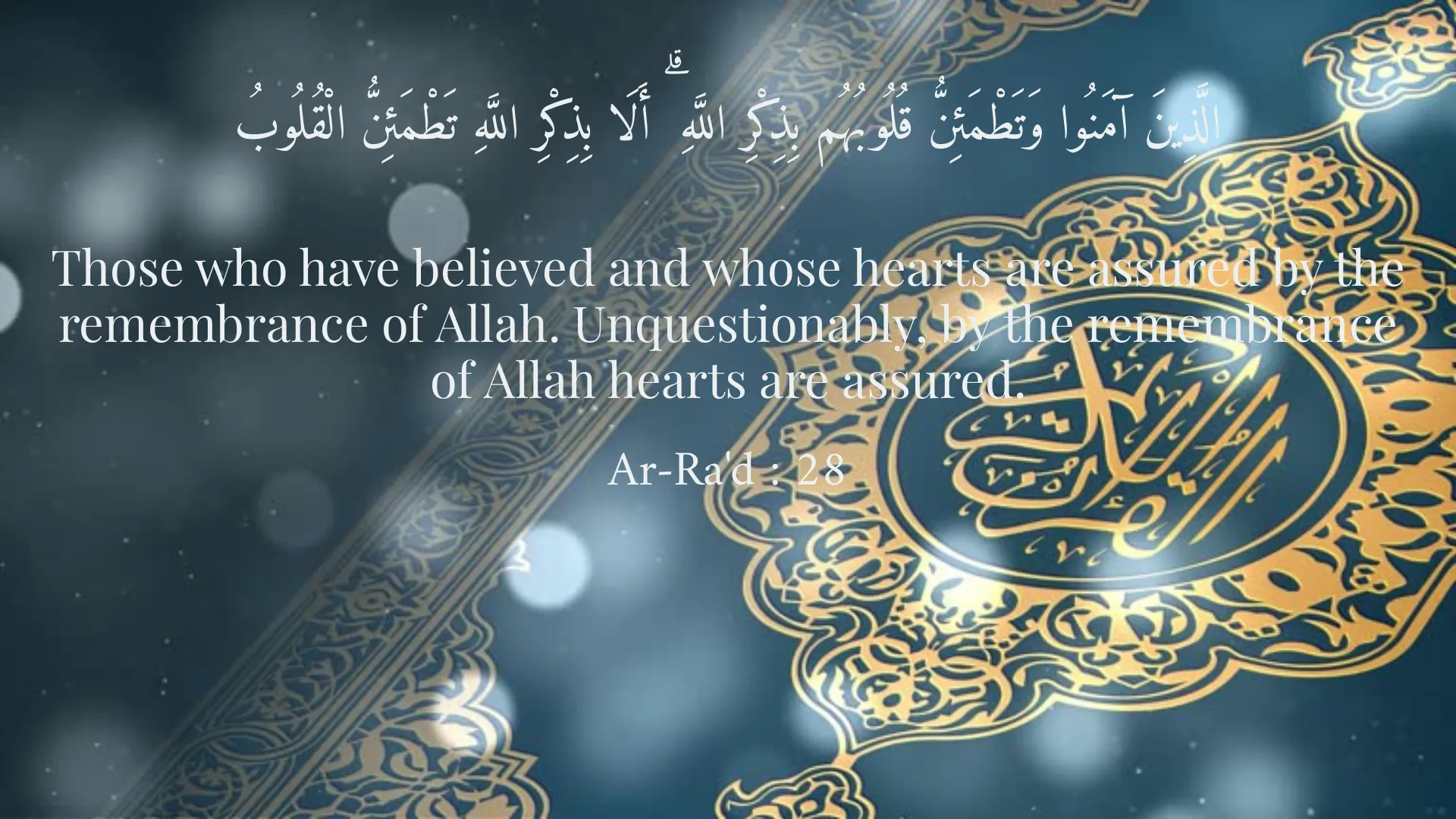
الَّذِينَ آمَنُوا وَتَطْمَئِنُّ قُلُوبُهُم بِذِكْرِ اللَّهِ ۗ أَلَا بِذِكْرِ اللَّهِ تَطْمَئِنُّ الْقُلُوبُ
Those who have believed and whose hearts are assured by the remembrance of Allah. Unquestionably, by the remembrance of Allah hearts are assured.
Ar-Ra'd : 28
يَاأَيُّهَا الَّذِينَ آمَنُوا اسْتَعِينُوا بِالصَّبْرِ وَالصَّلَاةِ ۚ إِنَّ اللَّهَ مَعَ الصَّابِرِينَ
O you who have believed, seek help through patience and prayer. Indeed, Allah is with the patient.
Al-Baqarah : 153
مَنْ عَمِلَ صَالِحًا مِّن ذَكَرٍ أَوْ أُنثَىٰ وَهُوَ مُؤْمِنٌ فَلَنُحْيِيَنَّهُ حَيَاةً طَيِّبَةً ۖ وَلَنَجْزِيَنَّهُمْ أَجْرَهُم بِأَحْسَنِ مَا كَانُوا يَعْمَلُونَ
Whoever does righteousness, whether male or female, while he is a believer - We will surely cause him to live a good life, and We will surely give them their reward [in the Hereafter] according to the best of what they used to do.
An-Nahl : 97
وَلَا تَهِنُوا وَلَا تَحْزَنُوا وَأَنتُمُ الْأَعْلَوْنَ إِن كُنتُم مُّؤْمِنِينَ
And do not lose heart and do not grieve, and you will be superior if you are [true] believers.
Al-Imran : 139
Short Story
I heard of a dervish, though his clothes were tattered and his bed the earth, had a peaceful heart. Every morning he would rise with a smile and thank God. One day, a king passed by him and asked about his state. The dervish replied: "O King, my peace lies in a tranquil heart, not in a full treasury. You, with all your wealth and power, lose sleep every night fearing enemies and the loss of your kingdom, but I, free from all attachments, fall asleep every night and awaken every morning with the remembrance of God, and this is the highest happiness for me." The king took a lesson from his words and realized that true felicity lies in contentment and the remembrance of God, not in the abundance of wealth and status.