Quranic Answer
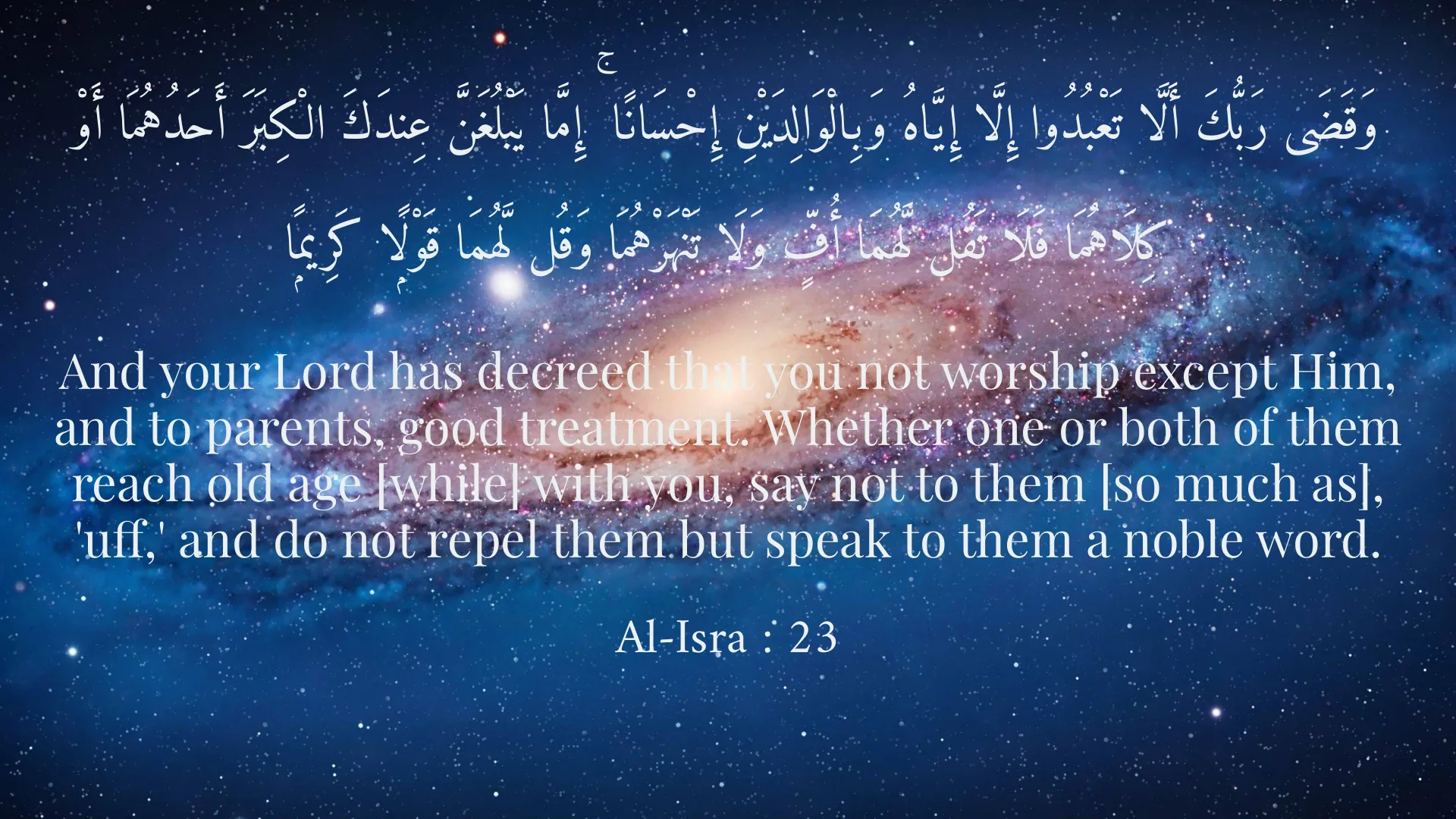
The importance of parental rights in Islam is underscored in the Holy Quran, a testament to the paramount role parents play in the lives of their children and society at large. With a focus on establishing a framework for honoring and respecting parents, the Quran lays down clear guidelines on how children should treat their parents, especially in their old age. This article delves into the teachings of the Quran regarding parental rights, exploring various verses that highlight the significance of honoring one's parents, the responsibilities children have towards them, and the broader implications on family and societal dynamics. In Surah Al-Isra, verse 23, Allah states: 'And your Lord has decreed that you not worship except Him, and to parents, good treatment. Whether one or both of them reach old age [while] with you, say not to them [so much as], 'uff,' and do not repel them but speak to them a noble word.' This verse encapsulates the essence of Islamic teachings on parental respect and kindness. Notably, it emphasizes that the command to honor parents follows immediately after the command to worship Allah alone. This strategic placement serves to illustrate how central the role of parents is in the structure of Islamic etiquette and morality. The command to treat parents with good treatment is vast and all-encompassing. Respect is not merely defined by the absence of negative actions; rather, Allah calls upon us to engage positively with our parents. When verse 23 mentions, 'say not to them [so much as], 'uff,' and do not repel them,' it reflects the deeply ingrained respect that children are urged to manifest. In our daily interactions, we might be tempted to express frustration or impatience, particularly when faced with the challenges that can accompany caring for aging parents. Yet, this verse reminds us not only to mitigate negative responses but to consistently offer noble words and gestures that reflect love and appreciation. The theme of showing kindness to parents during their old age continues in Surah Luqman, verse 14, where Allah states: 'And We have enjoined upon man [care] for his parents. But if they endeavor to make you associate with Me that of which you have no knowledge, do not obey them.' Here, a dual responsibility is established: while children must care for and honor their parents, they must also remain steadfast and committed to their faith in Allah. This verse illustrates that Islamic teachings balance familial loyalty and spiritual integrity. If a parent's wishes conflict with one's commitment to Allah, the latter should take precedence; however, this does not diminish the children's obligation to approach the situation with respect and compassion. Beyond the specific teachings found in the Holy Quran, broader principles of familial and social well-being can be traced to the emphasis placed on parental rights. In Islamic culture, honoring one’s parents goes hand-in-hand with other virtues, such as humility, gratitude, and social responsibility. Such values not only foster strong family bonds but also contribute positively to the social fabric of the community. The elderly, often viewed as the custodians of wisdom and experience, bring a wealth of knowledge to the family dynamic. Thus, treating them with honor enriches the lives of both parents and children, creating a supportive and nurturing environment. The implications of neglecting this vital duty towards parents can lead to broader social repercussions. The erosion of respect for parental authority can breed familial discord and a breakdown in communication; it may also lessen the sense of accountability within family units, leading to wider societal issues. Hence, fulfilling parental rights is not just a familial obligation but a responsibility that has a ripple effect on the community. Children who learn to respect and care for their parents are likely to grow into adults who exhibit compassion and care within their communities. In contemporary society, where individualism often takes precedence, the call to honor one’s parents becomes even more crucial. With the fast pace of modern living, the sanctity of familial relationships can be overshadowed by occupational and personal pursuits. Families may find themselves physically and emotionally distant, overlooking the rights and needs of elderly parents. The reminders presented in the Holy Quran serve as poignant exhortations to re-evaluate our priorities and to remain cognizant of our parents' rights. To implement these teachings in daily life, practical measures can be taken. Simple acts of kindness, patience, and understanding go a long way in fostering a healthy relationship with one's parents. Engaging in regular conversations, spending quality time together, and providing emotional and physical support can strengthen the familial bond and ensure that parents feel valued and respected. Moreover, awareness regarding the rights of parents should be cultivated within our communities. Educational programs and community discussions can promote a culture of appreciation for parental roles, thereby encouraging families to actively uphold these values. Engaging children in conversations about the importance of honoring their parents from a young age embeds these virtues in the fabric of family life, ensuring that forthcoming generations embrace and embody the teachings of the Quran on this matter. In conclusion, the rights of parents, as laid out in the Holy Quran, encompass a significant facet of Islamic teachings. As a society, we must recognize the immense importance of respecting and caring for our parents, particularly as they age. These rights are not merely duties; they are sacred obligations that shape our character, influence our relationships, and ultimately fortify our communities. By honoring and fulfilling these rights, we not only gain Allah's favor and blessings but also foster a sense of unity, compassion, and gratitude within our families and society as a whole.
Related Verses
وَقَضَى رَبُّكَ أَلَّا تَعْبُدُوا إِلَّا إِيَّاهُ وَبِالْوَالِدَيْنِ إِحْسَانًا ۚ إِمَّا يَبْلُغَنَّ عِندَكَ الْكِبَرَ أَحَدُهُمَا أَوْ كِلَاهُمَا فَلَا تَقُل لَّهُمَا أُفٍّ وَلَا تَنْهَرْهُمَا وَقُل لَّهُمَا قَوْلًۭا كَرِيمًۭا
And your Lord has decreed that you not worship except Him, and to parents, good treatment. Whether one or both of them reach old age [while] with you, say not to them [so much as], 'uff,' and do not repel them but speak to them a noble word.
Al-Isra : 23
وَوَصَّيْنَا الْإِنسَانَ بِوَالِدَيْهِ ۚ إِنْ شَكَرْتَ لِي وَلِوَالِدَيْكَ فَإِنَّمَا تَشْكُرُ لِنَفْسِكَ ۖ وَإِنْ كَانَتَا جَاهَدَاكَ عَلَى أَنْ تُشْرِكَ بِي مَا لَيْسَ لَكَ بِهِ عِلْمٌ فَلَا تَطِعْهُمَا ۚ إِلَيَّ مَرْجِعُكُمْ فَأُنَبِّئُكُمْ بِمَا كُنتُمْ تَعْمَلُونَ
And We have enjoined upon man [care] for his parents. But if they endeavor to make you associate with Me that of which you have no knowledge, do not obey them.
Luqman : 14
Short Story
One day, a boy named Ehsan was spending time with his parents when he began to realize how important it is to respect and treat them kindly. On a particular day, when his father couldn't go out due to fatigue, Ehsan lovingly insisted that his father rest while he took care of the grocery shopping. This act brought joy to both his parents and made them feel how he was embodying the teachings of the Quran.