Quranic Answer
Finding God is not solely confined to moments of prayer and supplication; rather, the Divine presence can be observed woven into the very fabric of daily life, in every movement and stillness, in every choice and action. The Holy Quran repeatedly emphasizes that true faith is not merely tied to verbal affirmation and ritualistic worship, but inextricably linked to righteous deeds (amal salih). In essence, any action performed with pure intention and in pursuit of divine pleasure is itself a form of worship and a manifestation of being in God's presence. This perspective transforms the believer's entire life into a vast sanctuary, where signs of the Almighty can be found in every corner. One of the most crucial Quranic concepts in this regard is Taqwa. Taqwa is not merely abstinence or fear; it signifies a perpetual awareness and a heartfelt vigilance regarding God's presence and oversight in all aspects of life. When a person lives with this understanding, every action, from the smallest decision to the most significant choices, becomes influenced by this awareness. If I am conscious that God is present and observing, naturally, I will exercise greater care and precision in my words, deeds, dealings, and relationships with others. It is this Taqwa that leads to Ihsan; Ihsan means doing good and performing tasks in the best possible manner, as if you see God, and if you do not see Him, then know that He surely sees you. This represents the highest level of God's presence in action, where one strives to perfect their deeds and perform them in accordance with divine pleasure. The Noble Quran, in numerous verses, emphasizes the importance of Amal Saleh (righteous deeds). Amal Saleh encompasses not only prayer and fasting but a wide spectrum of ethical and social behaviors. Helping the needy, upholding justice in judgment and transactions, honesty in speech, fulfilling promises, patience in adversity, compassion towards God's creation, and even environmental stewardship – all are manifestations of righteous deeds. When a person, with the intention that 'God sees me and desires me to act in this manner,' helps others or establishes justice, they are, in fact, finding God in their actions. These actions not only earn them reward in the afterlife but also bestow profound peace and meaning upon their worldly life. For instance, in Surah Al-Isra (verses 23 and 24), after commanding the worship of God alone, Allah immediately enjoins kindness to parents. This demonstrates that the connection with the Creator is inseparable from the connection with creation, and serving parents is one of the highest forms of worship and proximity to God. Or in Surah Ar-Rahman, after enumerating countless divine blessings, the recurring question is posed: “Fabi ayyi alaa’i Rabbikuma tukazziban?” (Then which of the favors of your Lord will you deny?) This constant reminder of blessings compels us to show not only verbal gratitude but also practical gratitude; that is, to use blessings in the right way and for the pleasure of God. Proper use of the blessing of intellect in contemplation, of wealth in charity, of power in supporting the oppressed – all these are examples of finding God in daily actions. Our behavior towards others is a reflection of our faith in God. The Prophet Muhammad (peace be upon him) said: “God does not show mercy to His creation, except to one who shows mercy to His servants.” This hadith illustrates the deep link between divine mercy and human mercy. When we treat others with kindness, fairness, and respect, we are in fact manifesting divine attributes within ourselves and drawing closer to God. Interactions with neighbors, colleagues, and even strangers offer opportunities to express Taqwa and Ihsan. Patience in the face of difficulties, forgiveness of others’ mistakes, and controlling anger are all behaviors that demonstrate submission to divine will and trust in His wisdom. Furthermore, taking responsibility in our tasks, adhering to commitments, and performing duties to the best of our ability are also examples of finding God in actions. A worker, student, or employee who performs their job with honesty and diligence, with the intention that God sees them and expects them to fulfill their duties correctly, is indeed worshipping. Earning a lawful livelihood, refraining from corruption and usury, and transparency in financial dealings are all aspects of life that can be platforms for God's presence. This perspective not only makes life purposeful and meaningful but also grants inner peace and contentment, as one knows that every breath and every step is on the path to the Creator's pleasure. Ultimately, finding God in actions means living with Divine Ethics (Akhlaq Ilahi). Ethics rooted in Tawhid (Oneness of God) that guide humanity towards human perfection. Whenever we take a step, utter a word, or make a decision, we can ask ourselves: “Is this action pleasing to my Lord?” This continuous questioning and self-awareness transform our lives into an ongoing, comprehensive act of worship. Thus, God will be found not only in the sanctuary of prayer but in all moments of life and in every single one of our actions, with a vibrant and meaningful presence.
Related Verses
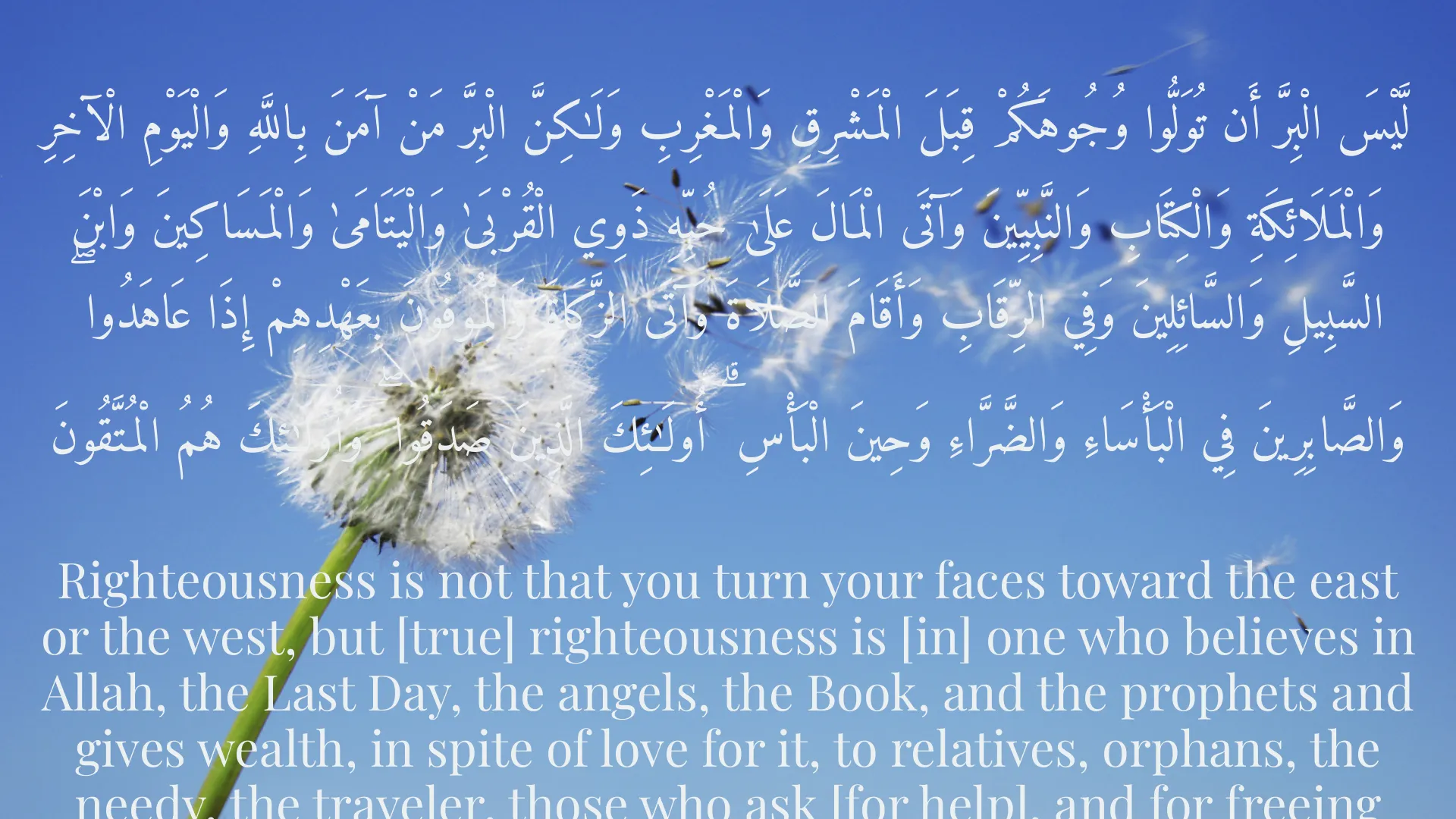
لَّيْسَ الْبِرَّ أَن تُوَلُّوا وُجُوهَكُمْ قِبَلَ الْمَشْرِقِ وَالْمَغْرِبِ وَلَٰكِنَّ الْبِرَّ مَنْ آمَنَ بِاللَّهِ وَالْيَوْمِ الْآخِرِ وَالْمَلَائِكَةِ وَالْكِتَابِ وَالنَّبِيِّينَ وَآتَى الْمَالَ عَلَىٰ حُبِّهِ ذَوِي الْقُرْبَىٰ وَالْيَتَامَىٰ وَالْمَسَاكِينَ وَابْنَ السَّبِيلِ وَالسَّائِلِينَ وَفِي الرِّقَابِ وَأَقَامَ الصَّلَاةَ وَآتَى الزَّكَاةَ وَالْمُوفُونَ بِعَهْدِهِمْ إِذَا عَاهَدُوا ۖ وَالصَّابِرِينَ فِي الْبَأْسَاءِ وَالضَّرَّاءِ وَحِينَ الْبَأْسِ ۗ أُولَٰئِكَ الَّذِينَ صَدَقُوا ۖ وَأُولَٰئِكَ هُمُ الْمُتَّقُونَ
Righteousness is not that you turn your faces toward the east or the west, but [true] righteousness is [in] one who believes in Allah, the Last Day, the angels, the Book, and the prophets and gives wealth, in spite of love for it, to relatives, orphans, the needy, the traveler, those who ask [for help], and for freeing slaves; [and who] establishes prayer and gives zakah; [and those who] fulfill their promise when they promise; and [those who] are patient in poverty and hardship and during battle. Those are the ones who have been true, and it is those who are the righteous.
Al-Baqarah : 177
إِنَّ اللَّهَ يَأْمُرُ بِالْعَدْلِ وَالْإِحْسَانِ وَإِيتَاءِ ذِي الْقُرْبَىٰ وَيَنْهَىٰ عَنِ الْفَحْشَاءِ وَالْمُنكَرِ وَالْبَغْيِ ۚ يَعِظُكُمْ لَعَلَّكُمْ تَذَكَّرُونَ
Indeed, Allah enjoins justice and good conduct and giving to relatives and forbids immorality and wrongdoing and oppression. He admonishes you that perhaps you will be reminded.
An-Nahl : 90
وَالْعَصْرِ
By time,
Al-Asr : 1
إِنَّ الْإِنسَانَ لَفِي خُسْرٍ
Indeed, mankind is in [grave] loss,
Al-Asr : 2
إِلَّا الَّذِينَ آمَنُوا وَعَمِلُوا الصَّالِحَاتِ وَتَوَاصَوْا بِالْحَقِّ وَتَوَاصَوْا بِالصَّبْرِ
Except for those who have believed and done righteous deeds and advised each other to truth and advised each other to patience.
Al-Asr : 3
Short Story
It is narrated that in Saadi's time, there was a man who went to the mosque every day, prayed, and spun his prayer beads, appearing very pious. Yet, he had an old and sick neighbor who needed help, and this man paid him no attention. One day, Saadi was passing by the neighbor's house and saw another man, who less frequently came to the mosque and spoke less of religion, busy helping the old man; he had brought him water and was tidying his home. Saadi smiled and said: "Indeed, where is God present in these actions? Not in the tongue that merely prayed, but in the hand that helped and the heart that gave. True worship is compassion and aiding others, not just words and prayers!"